
Problem-Solving Therapy: The Definitive Guide
Last updated: March 2026
Problem Solving Therapy
The Definitive Guide
Living a healthy and balanced life is the talk of the hour. Everywhere I go these days, I am somehow always roped into a conversation about how someone is using proven tools and methods to maintain a balanced life and deal with any challenges that present in one’s life. This idea of a balanced life is beginning to seep into the minds of young people- teenagers and likewise, which is hardly surprising.
Coaching and therapy are gaining more acceptance and tools like CBT, productivity tools, GROW models, TTM, etc. are becoming household names.
One such tool and method which has proven helpful for me and many others like me is Problem Solving Therapy. The name might seem like quite a giveaway to what the therapy entails but it is much deeper and more sophisticated than one can imagine.
So, in this article, I am going to introduce you to the world of PST and how you can equip your arsenal with this tool to help your coaching clients like never before.
We will look at things such as:
- What exactly is PST and how it works
- The history of PST
- Benefits of PST
- How coaches can use PST in their practice
- Limitations of PST
And much more! So let’s get started!
Contents





Chapter 1:
Problem Solving Therapy 101
In this chapter, we are going to understand the basics of PST, its uses, and then its benefits. I believe you will find all the necessary information to get a comprehensive understanding of PST through this chapter.
So, let’s dive right in!

Problem Solving Therapy
Problem-solving Therapy is a type of psychological treatment that teaches you how to effectively manage the negative impacts of stressful life situations.
Such stressors can be rather severe, such as getting divorced, losing a loved one, losing a job, or being diagnosed with a chronic condition like cancer or heart disease.
Multiple "small" occurrences, such as recurring family problems, financial challenges, constantly dealing with traffic jams, or uncomfortable relationships with coworkers or a supervisor, can all contribute to negative stress.
Problem-solving therapy may be helpful when stressful situations cause psychological problems or exacerbate existing physical issues, such as coping with cancer or difficulties adhering to a drug regimen, either alone or in combination with other techniques.
People with more complex issues, such as "wanting to establish one's personal purpose of life," may also benefit from problem-solving therapy.
You and your client can work together to see how problem-solving therapy can benefit them.
A wide range of issues has been documented to benefit from problem-solving therapy, including:
• Major depressive disorder
• Generalized anxiety disorder
• Emotional distress
• Suicidal ideation
• Relationship difficulties
• Certain personality disorders
• Poor quality of life and emotional distress related to medical illness, such as cancer or diabetes
Problem Solving Therapy can also help having a map to resolve challenges such as:
• Making effective decisions
• Generating creative means of dealing with problems
• Accurately identifying barriers to reaching one’s goals
In short, PST is regarded as an effective therapeutic technique because it assists people in dealing more effectively with a wide range of issues and unpleasant circumstances that arise in daily life.
According to a large body of scientific research, damaging, stressful situations substantially contribute to physical and mental health disorders.
Problem-solving therapy is designed to help people manage stressful life situations more successfully, reducing psychological and emotional distress and improving the quality of life of those suffering from a severe illness.
History of PST
Problem-solving Therapy was founded on a cognitive-behavioral paradigm, which can be traced back to a seminal publication issued by the American Psychological Association in 1971. Thomas D'Zurilla and Marvin Goldfried, psychologists, proposed a training programme that entailed teaching people cognitive and behavioral strategies to help them solve problems and improve their overall health.
Following that, D'Zurilla coached Art Nezu, a clinical psychology graduate student, who looked into the clinical applications of the problem-solving paradigm. D'Zurilla and Nezu worked on the development of the relational/problem-solving model of stress, which provided a framework for applying PST to a wide range of problems and populations, based on their research.
Since then, Nezu and many other clinical researchers have expanded on the earlier approach to include a broader range of issues and individuals.
The problem-solving model has undergone several changes over the years. Nonetheless, PST has evolved into a new approach known as Emotion Centered Problem Solving Therapy (ECPST) while maintaining the core principles. This revised edition includes emotions as a vital component of healing and problem-solving.
PST will most likely continue to undertake investigations and research in areas that require more empirical validation in order to widen therapeutic treatment applications in the future.
Benefits of PST
By now, you must’ve gathered that PST is one of the best methods studied and developed to get actionable results. Now, let’s look at some of the benefits of PST.
- Knowing which stressors cause you to experience bad feelings (e.g., sadness, anger)
- Gaining confidence in your ability to deal with challenges
- Having a methodical approach to dealing with life's issues
- Having a toolbox of solutions to the issues you confront
- Increased self-assurance in finding innovative solutions
- Knowing how to recognise which roadblocks will obstruct your progress
- Knowing how to deal with emotions when they come leads to less avoidance and more action.
- The ability to accept life's unsolvable challenges
- The ability to make good decisions.
- The cultivation of patience (realizing that not all problems have a "quick fix")
These benefits are exponentially better than many other therapies or coaching methods. The best part about PST is that it can be used solo or in conjunction with other coaching methods, making it one of the most versatile techniques.
Now that we have understood the basics of PST let me walk you through the essential steps of PST in chapter 2.
Chapter 2:
How does Problem Solving Therapy work?
Many people think that PST is difficult to use or understand by clients, but that’s hardly the truth. PST, just like any other coaching method, follows detailed steps that one can take to reach the desired results.
In this chapter, I will enlighten you about those very steps and how you can use it in your coaching sessions. So let’s have a look!

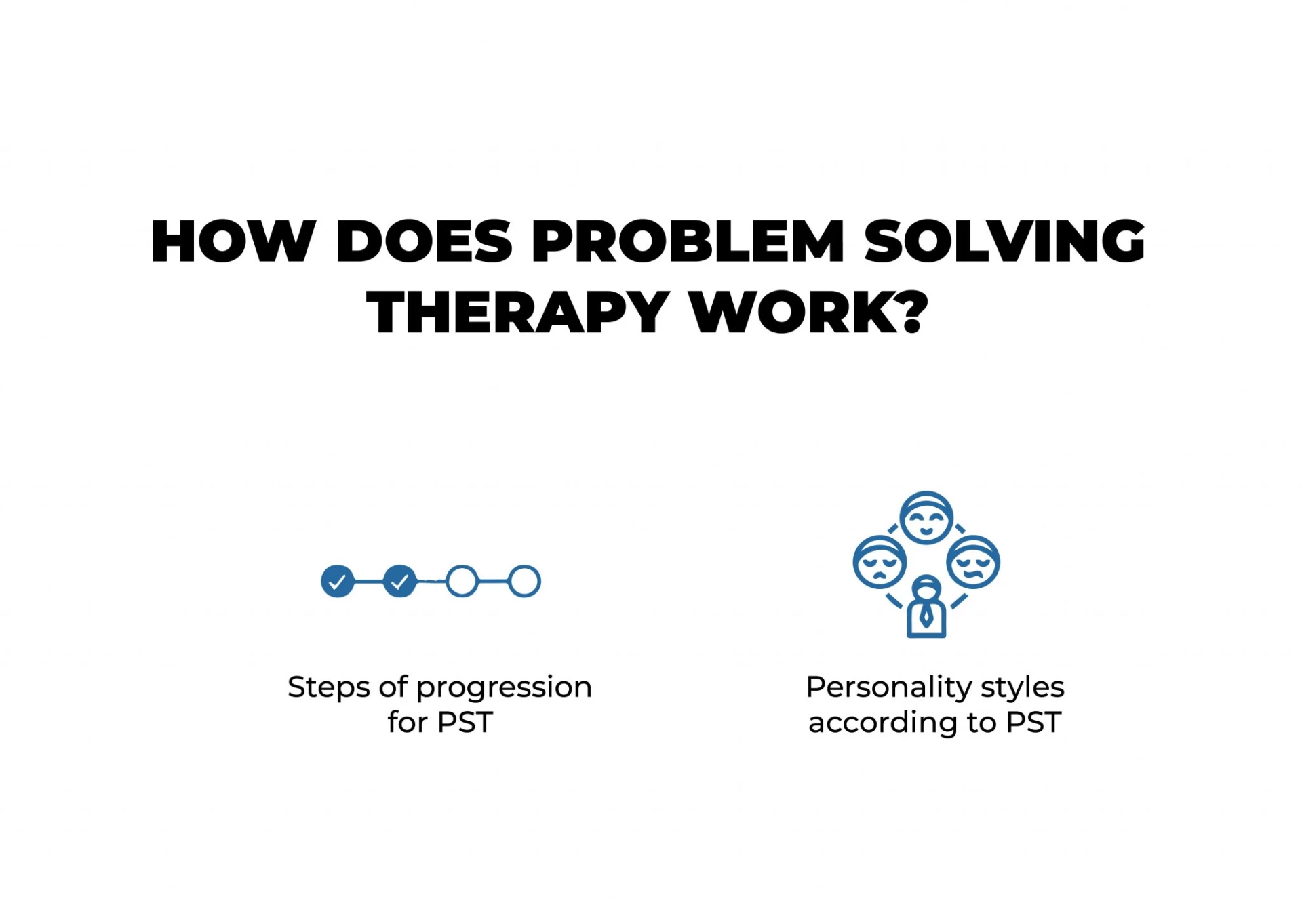
What are the steps in PST?
PST has four main steps which follow a logical order. Many of us, even without thinking, actively employ these steps when we are faced with a problem.
However, a lot of the times, when we find ourselves in difficult situations, our mind doesn’t always follow these steps to come to a conclusion. This usually happens with our clients when they are going through particularly tough situations in their life.
So, when we as coaches employ these four steps which I am about to tell you, we can lead our clients toward long-lasting, effective solutions for their problems.
Four Steps of PST
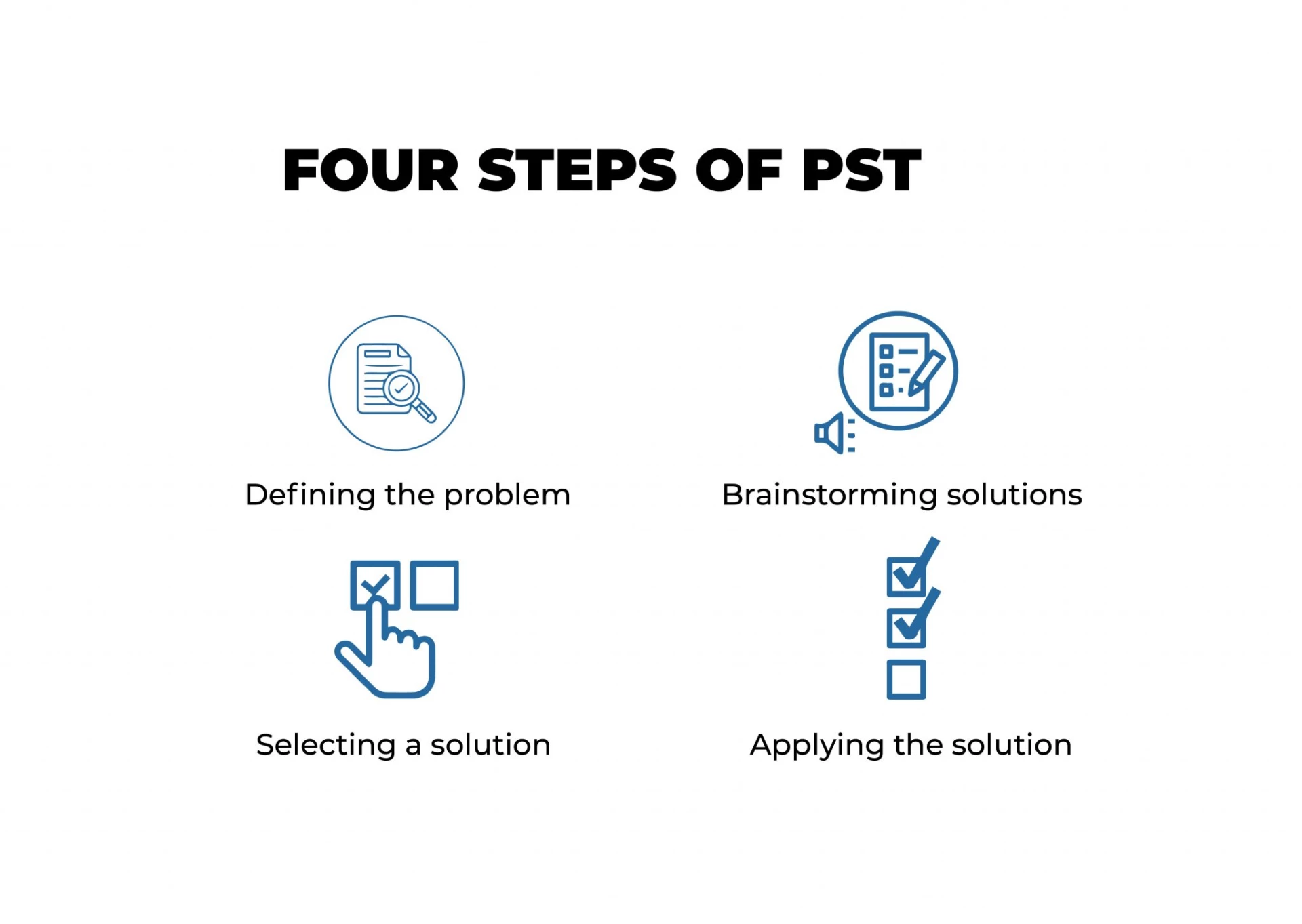
PST follows four logical steps or progressions. A person will define the problem, brainstorm the solutions, select the most logical solution, and then apply the solution according to PST. I am going to now expand upon each of these steps.
Step 1: Defining the Problem
The first phase, describing the problem, entails the objective, explicit, and clear explanation of problems.
The information provided in the problem definition must be such that it can be used to maximize results in the subsequent stages of problem solving while excluding irrelevant information.
In short, the problem needs to be direct, not vague, and solvable.
Step 2: Brainstorming Multiple Possible Solutions
The following brainstorming guidelines apply to the production of alternative solutions: criticism is prohibited, "free-wheeling" is encouraged, quantity is desired, and combination and improvement are sought.
Expressions of uncertainty, intolerance or excitement must not stifle the development of alternate answers.
Step 3: Selecting and Deciding on the Best Possible Solution
The third behavioral phase, decision making, is genuinely rating the anticipated effects of each created option to identify the optimal strategy for the given situation.
The ultimate decision should not be based solely on the client's wish to avoid emotional incomfort or unknown situations.
It is your job as a coach to gently guide your clients in the best possible solution to solve their problem without discouraging them from choosing a difficult path.
Afterall, the client needs to be satisfied with the solution; otherwise there might be friction while implementing the solution.
Step 4: Applying the finalized solution
Implementing the solution is a bit of a longer process than the rest of the steps. It entails determining how and following how accurate the predicted outcome was with respect to the actual outcome.
The majority of this step also entails watching and recording the outcomes of actions. If the result isn't sufficient, the client starts over and looks for a better answer.
The problem-solving procedure is completed if the outcome is satisfactory. The solution must be evaluated against criteria that define the best outcome, not criteria that indicate a reduction in short-lived negative emotions.
These steps can also be looked at as a cycle and sometimes, can also have an overlap. It is important to understand that these steps are a rough guideline to understanding how your client will progress through the PST sessions.
I have curated worksheets and activities in Chapter 4 to help you plan your sessions better using PST.
Even though there are four basic steps of PST, more than one strategy utilizes these steps to gain results. Let us look at them now!
What are the 4 styles of problem-solving strategies based on personality types?
Strategies are not to be confused with steps. Strategies are based on personality styles and how to understand your client’s personality to alter your PST approach for them.
Each strategy will have the four steps of PST embedded in them. But the approach will be based on the clients’ personality. It is important to understand the client’s psyche before starting the PST process with them.
Usually, most of your clients will fall into one of the four personality types I will list below.
Let’s take a closer look.
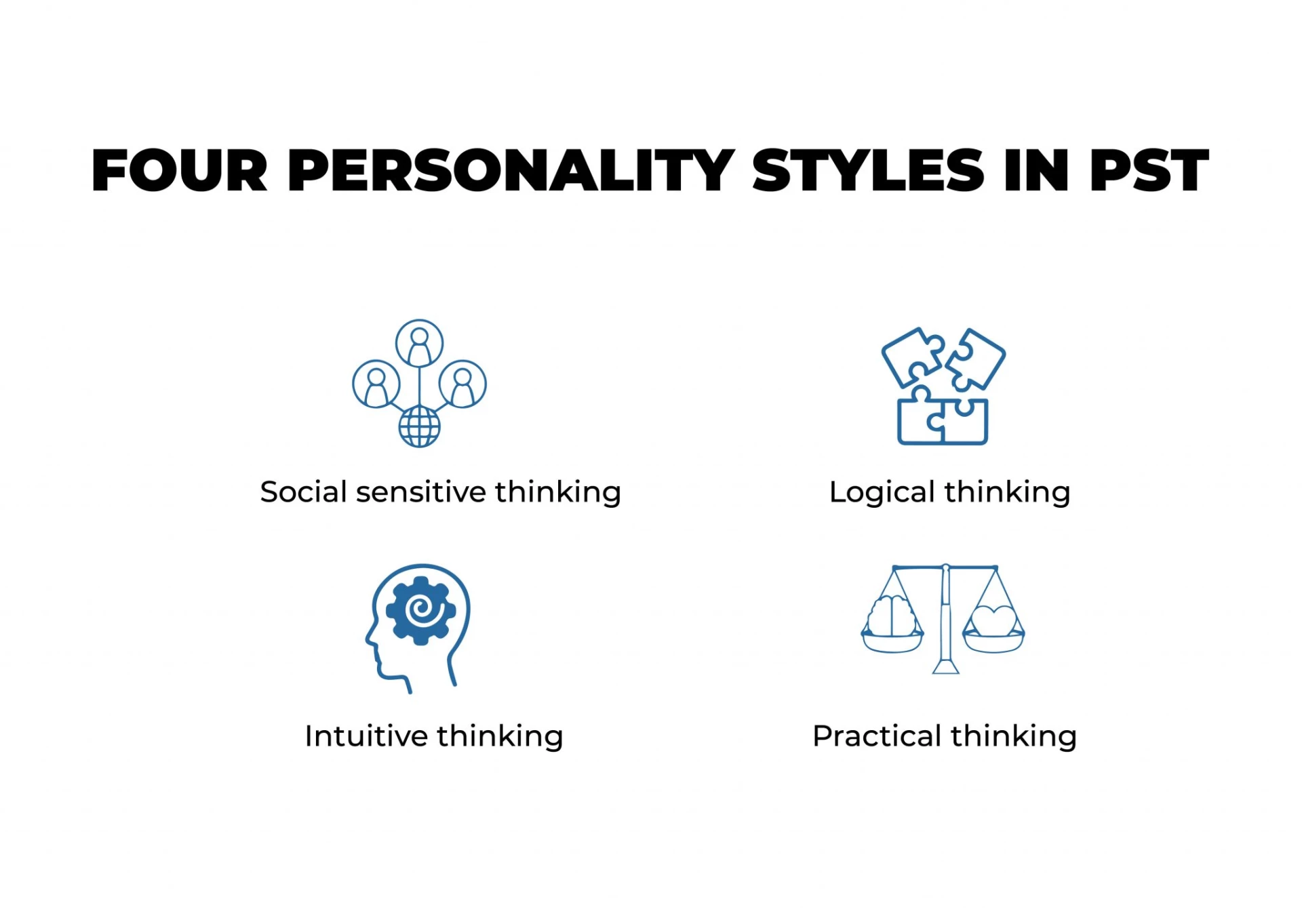
- Social Sensitive Thinking
A socially sensitive problem-solving approach is one in which the person seeks the best solution for all parties involved (focusing primarily on their emotions and values, and are most comfortable when they add emotion to the problem situation.) Rather than focusing on the realities of this new issue, one relies on what has worked for them in the past.
One strives to put themselves in the shoes of the other person in order to identify with them. They handle difficulties using a value system that respects the other persons involved in the circumstance.
Here are some indicators that you can use to confirm your client uses the Social Sensitive Thinking Style:
- They are considerate to others in the situation.
- They are guided by your own personal issues.
- They are compassionate.
- They assess the impact of the problem on other people.
- They want everyone to be satisfied in the situation.
- Others call them caring and/or compassionate.
- They always try to treat others fairly.
- They believe that positive interactions are important in solving problems.
- Logical Thinking
A logical thinking strategy entails investigating the problem as well as the effects of one’s surroundings. Logical thinkers identify the problem that has happened, consider possible solutions, and design a plan for solving the problem based on the information they have gathered. They carefully consider the costs and benefits of different solutions to the situation. Additional information on alternatives and their potential consequences is gathered and considered. A logical issue-solving strategy is used to arrive at the final solution to the problem.
Here are some indicators that you can use to confirm your client uses Logical Thinking Stye:
- They are analytical.
- They look for possible solutions to problems.
- They rely on your good judgment.
- They are reasonable.
- They have good common sense.
- They want everyone to be treated equally.
- They develop solutions and then choose the best options.
- They remove themself emotionally from the situation.
- Intuitive Thinking
A problem-solving method based on intuitive thinking is one in which one solves problems based on gut reactions. These people frequently rely on internal impulses. They find and select a solution they believe is the greatest option for all parties concerned. Before deciding on a solution, they do not spend a lot of time gathering data and information.
When real data is unavailable, this style can be useful. It's critical not to rely on intuition to obtain the knowledge needed to solve the challenge. These people also frequently solve difficulties based on intuition or a sixth sense about the circumstance.
Here are some indicators that you can use to confirm your client uses Intuitive Thinking:
- They consider the future.
- They communicate creatively.
- They develop imaginative solutions to problems.
- They reach solutions quickly, based on your hunches.
- They look for similarities in other problems you have needed to solve.
- They need the problem to make sense to you.
- They are able to see new possibilities.
- They see the big picture.
- Practical Thinking
A practical problem-solving style is when a person takes in clear and accurate information. They like to know what's going on in the situation. They are aware of what is going on around them, particularly the realities and facts.
They may miss repeating patterns in favor of focusing on the specific challenges at hand. They rely on and believe in their previous experience with similar issues.
Here are some indicators that you can use to confirm your client uses Practical Thinking or not:
- They stick with it until you find a solution to a problem.
- They focus on what is really happening.
- They trust your experience from previous problem situations.
- They trust facts rather than other people.
- They are perceptive.
- They are able to remember specific facts about the problem.
- They understand ideas through practical applications.
- They carefully work toward conclusions.
Now that we have understood the four main personality types, I’d like to mention that even if your client falls in one specific “strategy” type, you can use the strengths from each type to build an effective road map for your PST sessions.
Since all of us have all four types in some combination, clients can benefit from using the positives from each of the personality styles during the ideation and implementation stages of the PST model. I talk more about how to utilize PST with the best knowledge of all of the four personality types in this section of the blog.
Chapter 3:
How to get started with Problem Solving Therapy?
We have looked into the crux of PST, but it is also important to address some of the most common concerns and questions related to PST that a coach or a client may face.
In this section of the blog, I am going to answer just those questions and hope to give you a clearer picture before helping you plan PST sessions.

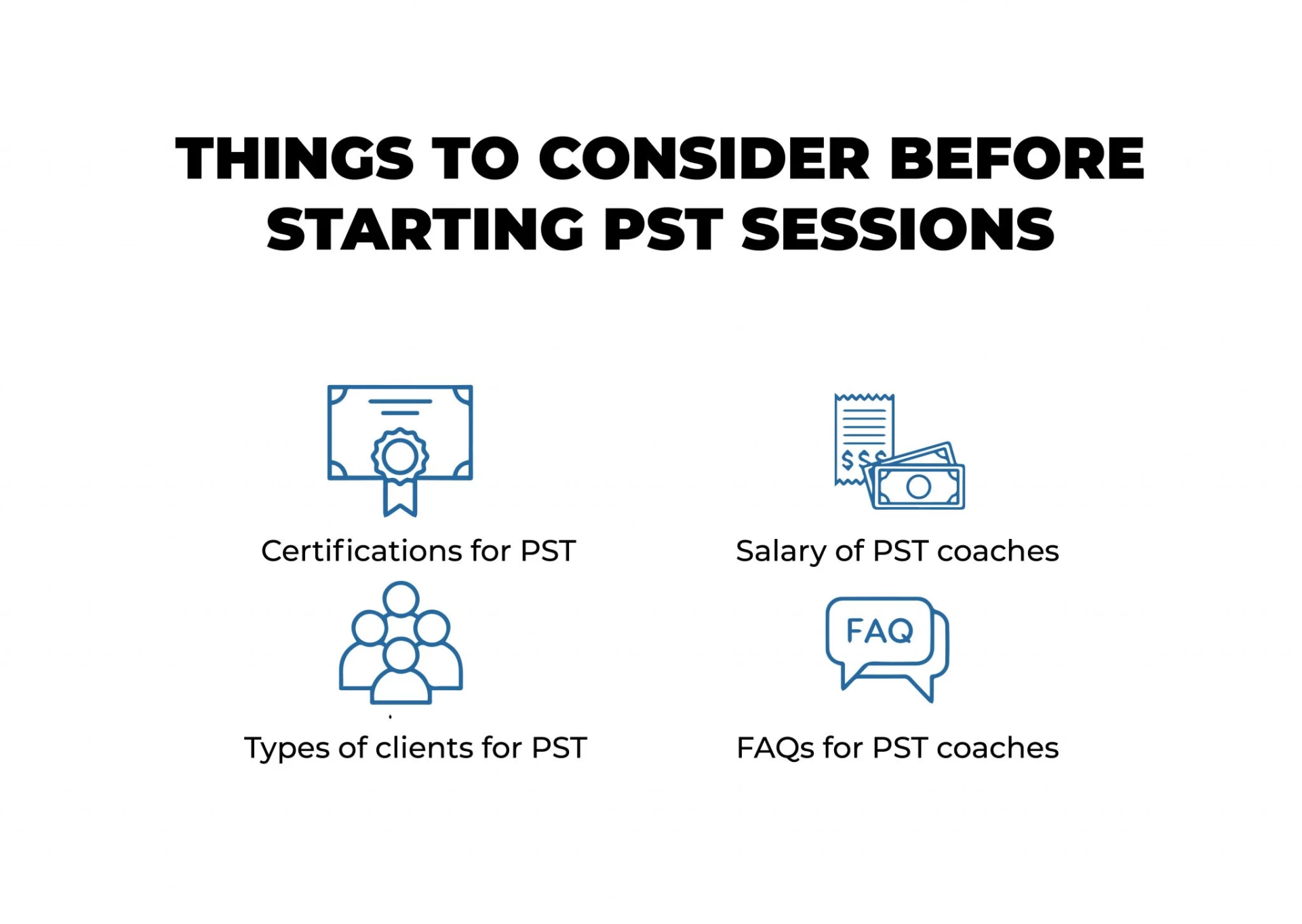
Do I need certifications for PST?
One of the most common questions that coaches have is: “Do I need special training for PST?”
The answer is, it depends! Although no specific qualification is required to deliver PST, various organizations can give specialized training. Psychologists, psychiatrists, physicians, mental health counselors, social workers, nurses, and coaches are among the professionals who can provide problem-solving treatment.
Throughout their careers and continued education, the majority of these professionals have developed valuable problem-solving skills. Thus, fine-tuning their skills and acquaintance with current and relevant PST material may be all that is required. A reasonable degree of knowledge and planning will convey competence and assist clients in comprehending the factors that led to their current condition.
However, if you are concerned and want to take an additional step to ensure your competence in PST, I recommend a stellar course by the AIMS center in the University of Washington, USA.
It is a one of its kind course and will equip you with all the necessary knowledge needed to run PST sessions.
How much can I make from PST sessions?
Another common question I get asked is “how much can I, as a coach, make from PST sessions alone?”
The answer is, the more experience you have the more you may charge for your sessions.
The cost of problem-solving therapy can generally range from $25 to $150 per session.
This is a very basic figure and can change from country to country.
It may also vary depending on the number of sessions needed, the degree of symptoms, the style of practice, the provider's skill level, and the geographic area.
If your client comes from a particularly unstable financial background, you may recommend them to check if their insurance covers the cost of coaching/therapy. The out-of-pocket expenditures per session may be significantly lower if the insurance plan covers behavioral health. Medicare in the US also supports the use of PST by professionally educated practitioners.
In short, you may charge your clients as you see fit as long as you are able to justify your charges with the results you give your clients. Plus, your experience should also justify your charges. So, come to a price which you may see fit based on your knowledge and the results you can guarantee.
Also, one additional tip I want to give you is to register yourself as a PST specialist in the online directory of as many insurance providers, hospitals, and coaching websites. Many people look for PST specialists online these days and it is the best way to reach out to potential clients.
Which clients are best suited to have PST sessions?
PST is not meant to be suitable for everyone. It is best suited for people going through challenging mental problems. I want to highlight some particular sets of people who have shown to benefit the most from PST.
PST's adaptability allows it to be used in a variety of scenarios and formats. Here are a few instances of how the problem-solving therapeutic approach might be useful. 4
Depression
Because of their state of mind and symptoms, people suffering from depression frequently avoid or even try to ignore their difficulties.
PST combines tactics that help people to have a positive attitude about issues and to urge them to use their own coping resources and problem-solving skills.
Individuals can learn to identify and comprehend their emotions in relation to their problems through psychoeducation. Someone can practise adaptive answers to challenging situations by using rehearsal exercises. Symptoms are minimized and mood is enhanced once the sad individual tries to tackle difficulties.
War Veterans
The Veterans Health Administration is currently using Veterans PST as a preventive method in a number of hospital locations across the United States.
This programme teaches veterans how to use various problem-solving skills for challenging situations in order to help them adjust to civilian life in a healthy manner. The ultimate goal is for these individuals to have a lower risk of serious mental health difficulties and, as a result, require less medical and/or psychiatric care.
Patients Receiving Psychiatric Treatment
PST is thought to be quite beneficial and is strongly recommended for people with mental illnesses. These people frequently face issues of daily living and tensions that they cannot seem to overcome.
These unaddressed issues serve as both the catalyst and the sustainer of their mental health issues. As a result, for the treatment of patients with psychological disorders, a problem-solving approach can be critical.
In Compliance with Other Treatments
Clients receiving another mental or physical health treatment can also benefit from PST. PST methods can be utilized in these situations to encourage people to stick to their treatment plans by discussing the benefits of doing so.
PST treatments can also be used to help patients overcome emotional discomfort and other hurdles that can prevent them from adhering to their treatment plan.
FAQs that Clients Ask coaches about PST
This is a very special and important section of this blog. In this section, I am going to provide you with some FAQs that many clients ask coaches before joining PST sessions. The motive behind it is to help you be prepared beforehand with the answers to these questions.
Let’s take a look!
When you are at ease and have a solid working relationship with your client, PST is most effective. Before beginning PST, consider the following questions which clients ask:
- Is problem-solving therapy appropriate for the issues I'm having?
- Could you tell me about your professional background, particularly your experience offering problem-solving therapy?
- Have you worked with any other clients that had concerns similar to mine?
- If they care about cultural considerations, they may ask: Have you worked with people from comparable cultural backgrounds to me?
- What is your PST session and treatment schedule like?
- What is the duration of PST sessions?
- How many sessions do I require?
- What should my expectations be when working with you as a problem-solving therapist?
- What are my responsibilities as a patient during treatment?
- Is PST covered by my insurance, and if not, what are your fees?
- How do you handle cancellations?
Like I mentioned earlier, being prepared for the answers for these questions will help you put your client at ease about considering PST. It will also help you to convince your client why doing PST with you is the best way for the coaching sessions. And, the expectation from both you and your client will be transparent from the start.
Now that we have discussed all we need regarding the ins and outs of PST, let me walk you through the various ways you can plan PST sessions in the next section of the blog.
Chapter 4:
Planning Problem Solving Therapy Sessions
PST practitioners can use a variety of strategies to help clients learn to cope with everyday or one-time trauma.
In this section of the blog, I've selected some of the best worksheets that I personally utilize in my sessions.

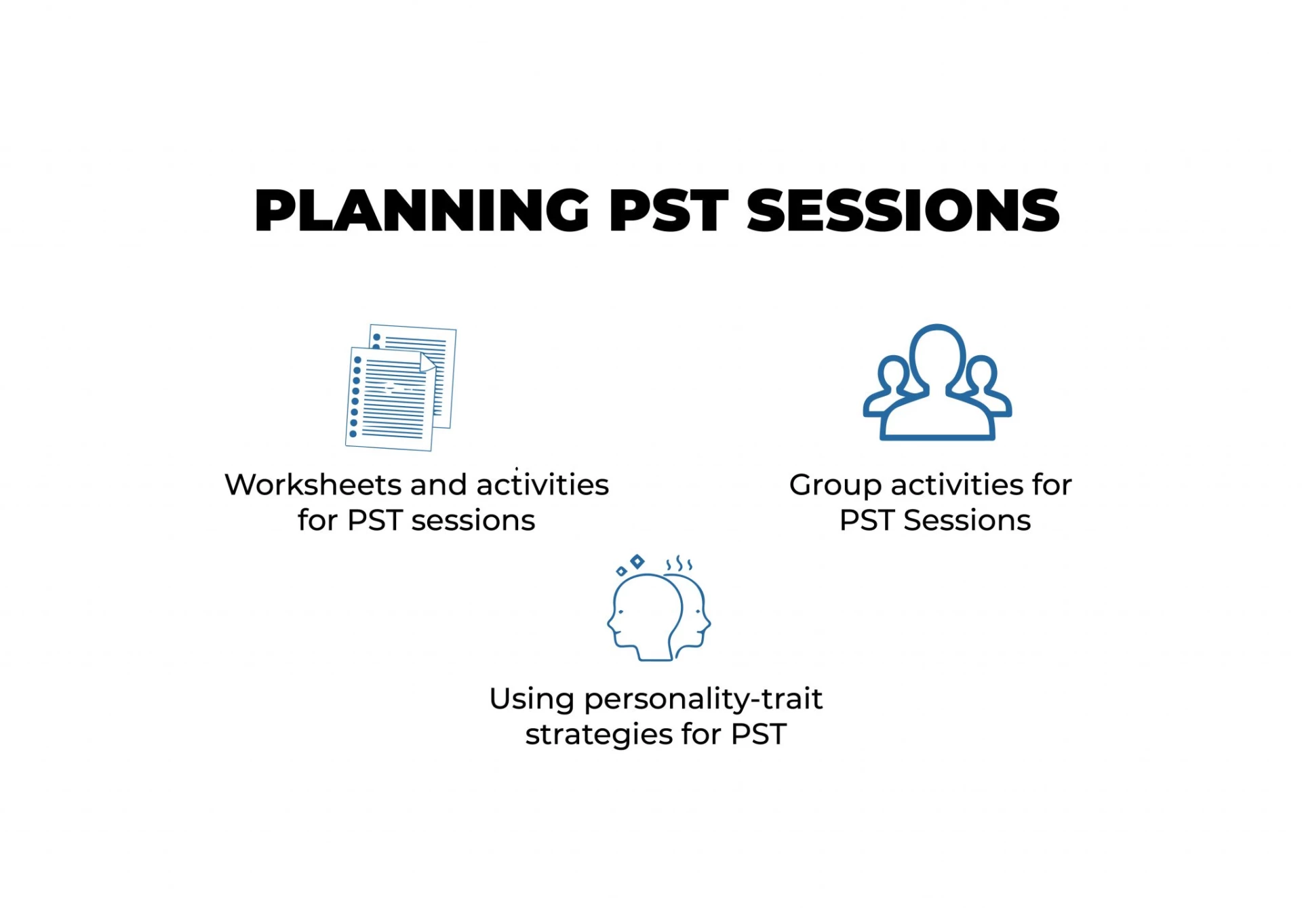
Worksheets for PST
I have given various worksheets related to PST in this next section. They are largely categorized into activities for an individual and activities for a group. However, you can get creative and use these interchangeably as well if you want since these activities are universal and useful for every kind of session.
Individual Activities
I’ve listed out four ways through which you can tackle your client’s problem in an innovative manner by simplifying the approach to integrate Problem Solving Therapy in your practice.
Problem-Solving Self-Monitoring Worksheet
The therapist gets important information about the client's general and specific problem-solving approaches and reactions by answering the questions on the Problem-Solving Self-Monitoring Form (Dobson, 2011).
Request that the customer accomplishes the following tasks before starting the PST sessions:
- Describe the issue you're dealing with.
- What are your objectives?
- So far, what have you tried to remedy the problem?
- What was the result?
You can move onto the problem solving aspect next which is specific in nature. For the client, imagining an actual or possible problem and working through how to fix it can be a useful exercise.
Here’s what I recommend - brainstorm an issue and a goal on the Problem-Solving Worksheet, then evaluate the roadblocks. Then weigh the benefits and drawbacks of several possibilities for reaching the objective to determine the best course of action.
Stress-Related Reactions
Recognizing one's own stress experiences can be beneficial to the client. Do they lash out, withdraw, or surrender as a reaction to stress? (Dobson, 2011)
The client can be given the Reactions to Stress worksheet as homework to record stressful experiences and their reactions. They can spot recurrent patterns by recording how they felt, behaved, and thought.
What Are Your Own Personal Triggers?
Helping clients identify the sources of their anxious reactions might help them regulate their emotions.
Clients can stop the experience or slow down their emotional reaction by identifying factors that may lead to a negative reaction (Dobson, 2011).
The worksheet assists the client in determining their triggers (e.g., conflict, relationships, physical environment, etc.).
Obtaining Information to Gather Facts
Recognizing facts against assumptions and getting the required information can help clients effectively manage difficulties and pick the best course of action (Dobson, 2011).
Answer the following questions clearly and unambiguously using the Getting the Facts worksheet:
- Who are the players?
- What happened, if anything, and how did it annoy you?
- Where did it take place?
- When did it occur?
- What went wrong?
- What was your reaction?
These worksheets should help you understand your client better and help them understand themselves better too. This, in turn, will ensure that you and the client are on the same page about the session, its desired outcomes, and the time it will take to achieve those outcomes.
But what if you have more than one client in one session? Don’t worry, you can either ask each individual client to fill out these worksheets for themselves, or use the following group activities to get amazing results with PST.
Group-based Activities for PST
If you are a coach who welcomes group sessions and are looking for ways to use PST in your sessions, I have highlighted two activities to use for group sessions. They are quite straightforward but have a tremendous effect when put into practice. Let’s take a look!
Developing Alternative Solutions and Making Better Decisions
A group setting can be an excellent environment for discussing a problem and identifying potential solutions from diverse perspectives.
Ask the client to explain the situation or problem to the group, as well as the hurdles in the road, using the worksheet Generating Alternative Solutions and Better Decision-Making.
If the individual wants more feedback, they can share their decision-making process with the group once the methods have been documented and analyzed.
Visualization
Visualization can be used individually or in a group context to assist clients in a variety of ways, including (Dobson, 2011):
- Clarifying the issue by considering it from many angles.
- To develop and get more practice, mentally rehearse a solution.
- Visualize a “safe spot” for stress management, relaxation, and slowing down.
Guided imagery is very useful for encouraging the group to take a "mental vacation" and relax.
Begin with slow, deep breathing that fills the entire diaphragm with the group. Then ask them to imagine a relaxing setting (actual or imagined), such as a gentle flowing river, a summer meadow, or a beach.
The more senses you use, the more perience becomes. Inquire about what the group can hear, see, touch, smell, and even taste.
Encourage them to take in as much of the situation as they can, immersing themselves and enjoying their safe haven.
Clients may be able to fall asleep faster, relieve stress, and be more prepared to address difficulties if they feel relaxed.
We have looked at activities for both groups and individuals but I wanted to go a step further and talk about how we benefit from using a mixed approach combining the four different personality types.
The next section will walk you through that process in detail.
Using a Combination of Personality Strategies for PST
I had mentioned earlier that we all fall into four main personality types when it comes to PST. In this section, I am going to give one way to use the best of all of these four types to form an effective PST session/s.
There is no straightforward step-by-step approach that will ensure one has a solution to every challenge one faces in life. The search for and implementation of the best available solution for a specific problem is the problem-solving process.
Clients will develop their own method for solving problems as a problem solver for this exercise. Using the most effective components of the four different styles is one of the greatest ways to do this. The steps to integrating the four styles into the problem-solving process are outlined below.
To get started, ask the client to write down a problem they're currently dealing with before they begin. Use this problem to guide your through the following steps:
Step 1: Define the issue by applying practical thinking qualities to see the situation as it is. Client can do so by responding to some of the questions below:
- Who or what created the issue?
- Where did it take place?
- What went wrong?
- When did it occur?
- Who did it happen with?
- What went wrong?
- What role did you play in the incident?
- What was the outcome?
Step 2 – Consider the possibilities by brainstorming all possible solutions to the problem utilizing intuitive thinking traits. The client can do so by responding to some of the questions below:
- What other perspectives did you have about the issue?
- What did the information you acquired teach you?
- What ties did they have to the greater picture?
- What role did the other characters play in this scenario?
- What do you believe caused the issue?
- What were some potential approaches to the problem?
Step 3 – Using logical thinking traits, weigh the consequences of several courses of action to address the problem. The client can do so by responding to some of the questions below:
- What were the advantages of each choice?
- What were the disadvantages of each choice?
- What do you believe the outcomes of each option would have been?
- What was the outcome for each participant?
Step 4 – Using social sensitive thinking qualities, weigh the options to each course of action. The client can do so by responding to some of the questions below:
- How did each option correspond to your values?
- What impact did the situation have on the other people involved?
- What was the impact of each option on everyone involved?
- In what ways did each option improve pleasant interactions?
Step 5 – Determine which components of Steps 1–4 will be most useful in resolving this issue.
Once the client goes through steps 1-4 in detail, they will understand which type of thinking qualities will best help them with the problem at hand. It can also be a combination of various qualities.
After assessing that, the client will be expected to finalize a solution/decision regarding the best way to resolve their issue using PST.
Step 6: Put the decision into action.
After finalizing the decision, the client will have to put the said decision into action. You, as a coach, will have to be like a guide/mentor for your client to make sure they follow through with their decision with the PST format.
Step 7: Determine whether the issue was successfully resolved.
This is more of a subjective step than an objective one. When your client has applied the solution to get a satisfactory result, this step is achieved. But what constitutes “satisfactory” will vary from person to person. So, it will be fully up to you and your client to decide when the goal has been achieved.
Now that we have looked into detail some of the best exercises to use PST, let me take you through some of the criticisms of the model in Chapter 5 so that you can gain a fuller perspective.
Chapter 5:
Limitations of Problem Solving Therapy
In this chapter, I will walk you through some of the most common limitations of the PST model. Just like any other therapy model, even PST has its limitations which one should consider before using this kind of an approach in sessions.
With that being said, PST is still a very good model to achieve stellar results regardless of its limitations, in my opinion.

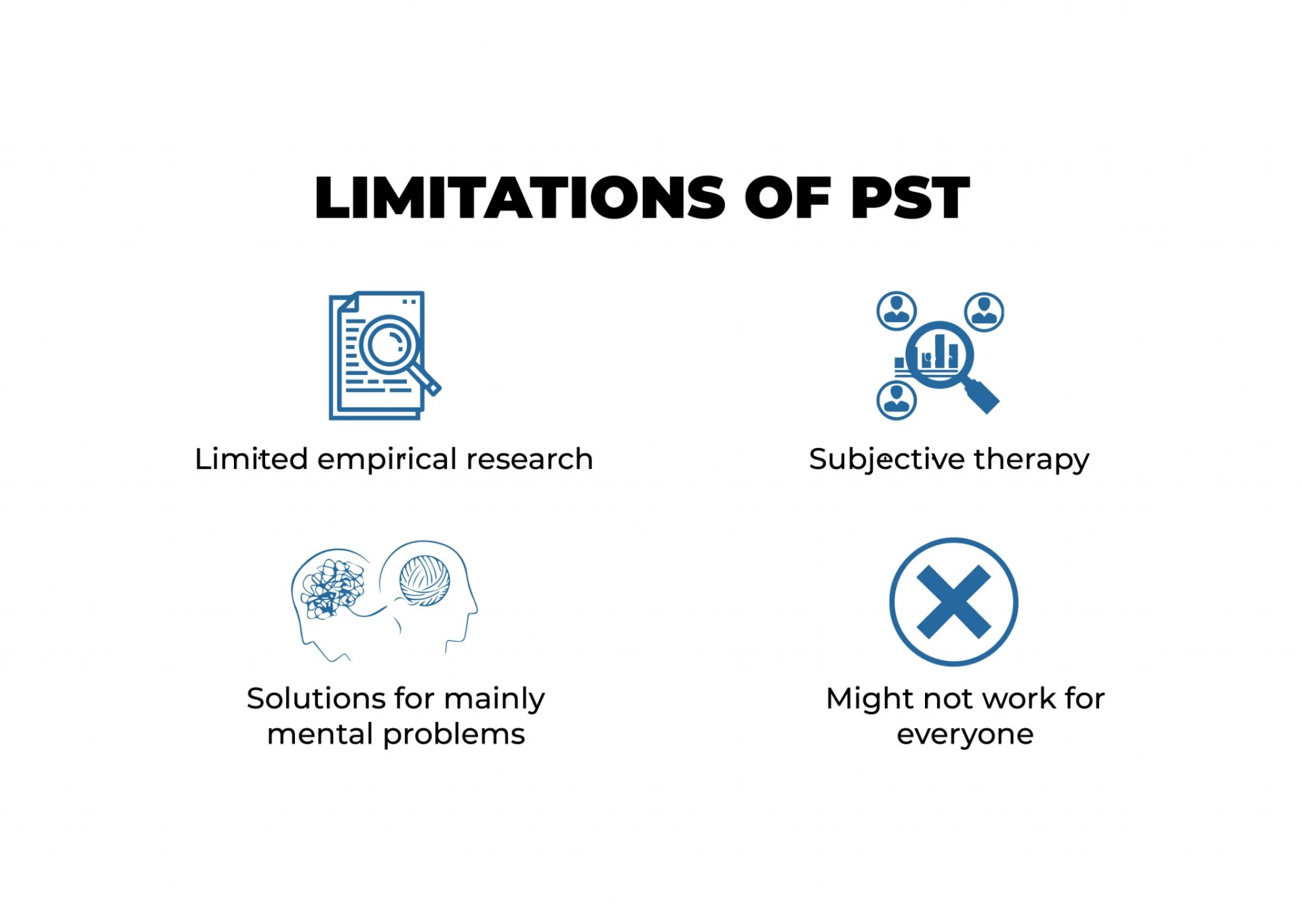
Subjective Therapy
Since PST is a subjective treatment, it will show different results for different individuals. Because of this, there is no guaranteed success whether it will work out and show effective results in a stipulated amount of time.
Problem-Solving Therapy likewise aims to address individual issues rather than general behaviors or mental patterns.
Might Not Work For Everyone
Because of its subjective natue, it is highly likely that this treatment might not work for everyone. So not every individual is a good fit for undertaking Problem-Solving Therapy.
It may not be effective in dealing with difficulties that lack clear solutions, such as the search for meaning and purpose in life.
It's also vital to keep in mind that problem-solving therapy isn't a main treatment option for mental illnesses.
If you're suffering from the symptoms of a major mental disease like bipolar disorder or schizophrenia, you may require additional therapy using evidence-based methods or even medicines.
Offers Solutions for Mainly Mental Problems Only
Problem-solving therapy is most suited for those who have a mental or physical problem that is being treated independently, but who also have life concerns that aren't being addressed.
For example, if you can't clean your house or pay your bills due to depression, or if a cancer diagnosis is affecting your quality of life, it may be beneficial.
However, it can’t be beneficial if one has a broken limb or it, by itself, cannot treat complicated physical conditions such as cancer or jaundice.
Think of PST as teaching someone to have a positive, healthy approach toward life, regardless of the difficulties one may face in life. But be cautious that PST is not a way to make someone believe in “fake positivity” or that nothing bad can happen to them.
Also, PST strives to educate people to achieve balance in life and not just a one-sided approach to things.
Limited Empirical Research
One of the last limitations of PST is that although there is a lot of research on the topic, it is not as empirical as some of the other models present in therapy and coaching. It is complicated to have empirical findings of PST since it is an intangible and highly subjective concept.
So, the results can vary from person to person. It can also have the risk of not being suitable for everyone. As a coach, you will need to be cognizant about when PST might not be working for a client and be open to trying other methods in such instances.
Conclusion
I would like to thank and congratulate you for sticking with me throughout this article. I hope it was helpful and that you learnt something new. Problem Solving Therapy is an approach that even we as coaches can implement in our daily lives, outside of our coaching. It is beneficial even for us to develop a problem-solving attitude, and PST can be of tremendous help with it.
I would love to hear stories from you about your involvement with PST- on a personal basis and even with clients. I am sure many of you will have stellar results by using PST in your sessions. So do comment and share your stories below!
I look forward to meeting you again soon with another interesting concept that you can use in your sessions!
