
Top 7 Positive Psychology Group Exercises
Last updated: March 2026
Top 7 Positive Psychology Group Exercises
Positive psychology is a relatively new field of research in branches of psychology but it has already made enormous gains in understanding what makes people happy. This is especially true when it comes to positive psychology group exercises. A lot of people are oblivious of the factors that affect their satisfaction day to day.
Positive psychology is based on the idea that by shifting their attention from the negative to a more balanced viewpoint, people can have happier, more meaningful and fulfilled lives.
In this article we will top 7 best positive psychology group exercises that will not only enhance your happiness but will also leave a meaningful impact in your life.
Let’s begin
What is positive psychology?
“A branch of psychology known as "Positive psychology" is concerned with the qualities and actions that help people to create meaningful lives and prosper rather than just survive.”
The goal of positive psychology is to supplement more established areas of psychology rather than to replace them. Stressing the research of healthy human development could improve our knowledge and application in other domains, specifically those that have a stronger clinical and scientific foundation because they might result in a constrained perspective and knowledge.
Fostering a positive sense of self-worth and self-image is another area where positive psychology has placed a lot of attention. Although positive psychologists, who have a less humanist bent, tend to pay less attention to these issues Psychology has frequently emphasized how flawed people are in comparison to their potential.
Positive psychology concentrates on the possibilities. Instead of focusing on finding solutions, it is investigating topics that make life meaningful. Though it doesn't solely deal with happy or joyful feelings, positive psychology places emphasis on factors like optimism, hope, happiness, and joy. Click here to learn more about the benefits of positive psychology.
The study of character characteristics, self-esteem, and wellbeing as they relate to our daily lives, careers, and interpersonal interactions is another area covered by this branch of psychology. It also examines how these traits interact to help us lead fulfilling lives.
Now let’s talk about 7 best positive psychology exercises!
7 Positive Psychology Exercises
With the right exercises, you can practice positive psychology for a very long period without getting bored or feeling like you've done it before. Some positive psychology exercises won't change no matter how many times you use them; they always have the same beneficial benefits on your mental health.
By performing these top 7 positive psychology exercises, you can improve your mental health since the more you do them, the better. The top 7 exercises for positive psychology are listed below.
1. Start your next meeting with recognitions:
Participating in meetings and groups is the first and most crucial exercise. By talking with others, you will not only be able to express your thoughts and feelings but also identify your mistakes.
By tolerating largely critical feedback, the majority of us miss out on the finest work produced by our team. While criticizing mistakes may occasionally be important, failing to recognize success fosters a hostile environment and switches our brains into "minimize risk" mode. Instead, you can promote a wider and more positive response by purposefully setting out time to express gratitude at the beginning of meetings.
Gratitude is a strong emotion that increases happiness, fosters a positive environment for workshops and meetings, and stimulates the brain's creative and problem-solving functions. During meetings you should be generous with your compliments. We don't do this very often because it can be challenging for us to take compliments at times.
If someone compliments us on our work or something similar, we tend to disagree and focus on our shortcomings rather than all of our accomplishments. This is not beneficial at all. So try to show gratitude and generosity in meetings to engage yourself in a healthy and happier environment. Here’s a little help on how to show more gratitude.
2. Show act of kindness:
We are always happy after performing acts of kindness, and this is one of the best positive psychology exercises. Count the kind deeds, money exchanged, and pleasant encounters that make your day meaningful. These may include a friend's encouraging words, a stranger's grin, or a coworker's favor. You can refocus attention away from worldly rewards and toward the things that really count by emphasizing kindness.
The tracking kindness exercise in positive psychology is designed to promote feelings of gratitude and appreciation as well as optimism and hope. Another uplifting action that may be done with friends and family to spread optimism and increase happiness is showing kindness.
While it's not necessary to constantly think of others, even just one act of kindness every day will have a greater positive impact on your mental health than you might expect.
3. Predict your future:
The best potential self-exercise asks you to visualize your future self while keeping the finest results in mind. This could include achieving financial success, as well as job objectives, family ambitions, or even just developing talents that you'd like to.
A newfound optimism will emerge from verbalizing and writing down your ideas about the ideal future you and this will even persuade you to actively pursue the future you hope for. With perseverance, growth, and positive psychology exercises to improve your wellbeing, you will be well on your way to realizing these future dreams.
Spend at least 10-15 minutes writing and thinking about the future versions of you. Then, consider how what you wrote can inspire you, how you can accomplish these goals, and how you can get past any challenges you may have encountered. The science-based and powerful technique of "writing your best possible future" can help you develop a compelling personal vision while also increasing optimism and well-being.
4. Talk about your problems:
It's not always simple to talk to people about your problems; especially if it involves emotions that make you appear delicate in their eyes, although some people have developed emotional defenses and don't want to come across as weak.
Talking to someone you can trust about your concerns is crucial because they may offer advice based on their own positive and negative experiences and assist you in figuring out a solution. They will go above and above to assist if they are truly loved. Talking about your problems can help you come up with fresh suggestions and solutions.
In stressful circumstances, it can also give a sense of clarity and understanding. Talking about your problems with others can help you see the situation more clearly and inspire more original ideas for solutions.
Talking about your problems gives you the chance to take stock of your life's events and enables you to develop understanding of the reasons behind your feelings. It can assist you in becoming more conscious of how to effectively control your emotions and discover answers to any challenging problems. Speaking about your issues is a crucial component of self-care and can help you feel better about yourself and your situation.
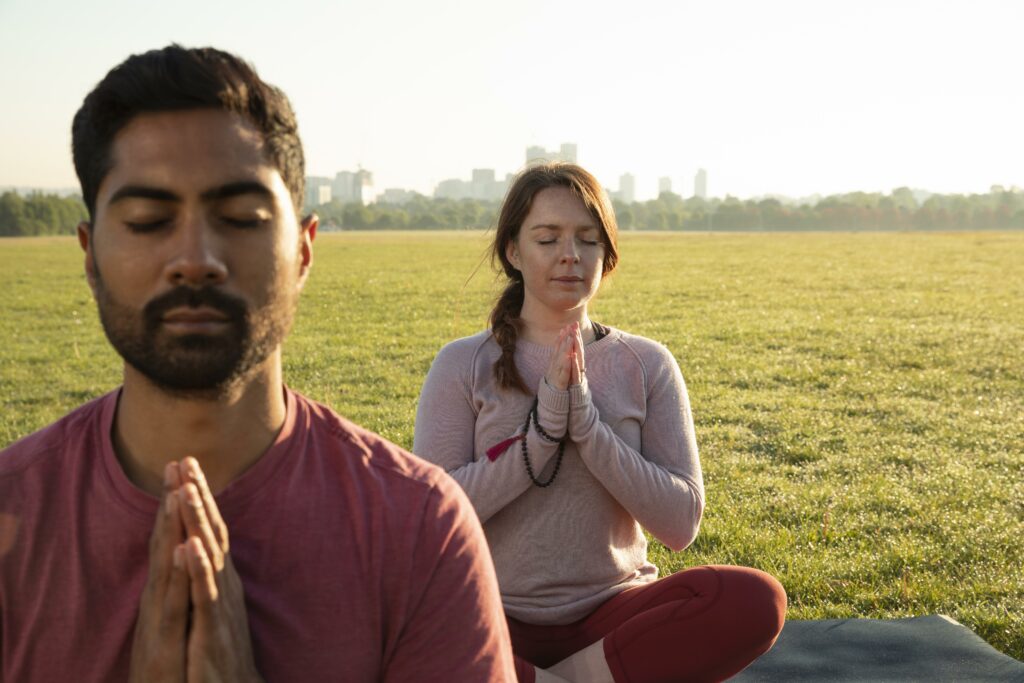
5. Meditation exercise:
The most effective method for boosting happy feelings and general wellbeing is meditation. It is more difficult to notice and concentrate on the pleasant emotion mixed in with the other thoughts when you have a lot on your mind at once. Find awareness in your feelings by slowing down the situation.
Anxiety and tension can be reduced and good sensations can be attracted in a slower, calmer condition. It may seem challenging to learn how to meditate, yet all it takes is a few minutes of calm and an appreciation for breathing. It's also not necessarily necessary to meditate for long amounts of time; occasionally, taking only 10 minutes out of your day to sit alone with yourself can have a significant positive impact on your mental health.
The best part about meditation is that there are a variety of ways available, so you can practice it for the rest of your life. Try to cling to good feelings for a longer period of time when you experience them. Click to know more about meditation.
6. Take your responsibility:
Always take your responsibility. Being responsible for our decisions and mistakes in life is crucial for both personal development and mental wellness. People need to experience the results of their activities in order to figure out what works and what doesn't for them.
Attempting to pinpoint precisely what went wrong and why is sometimes the best course of action when anything goes awry. This exercise need not always be difficult, but you can make it difficult if you like. The golden rule of taking responsibility is to always remember that you get out of life what you put into it. Read on to this article to know more about taking responsibilities.
7. Increase feelings of achievement:
Whenever you achieve anything in your life, always enjoy your achievements. Setting goals and making plans to achieve them are important, but acknowledging your achievements and intentionally celebrating them are just as crucial. You can either do this in secret for yourself in an accomplishments notebook or openly on social media.
The most crucial thing is to invite others to join you in your celebration of yourself and your accomplishments. Doing this will not only make you happy but will also motivate you for future aims.

10 Positive Psychology Exercises
Let's have a look at 10 positive psychology exercises that will help you in great ways.
1.Positive Reminiscence
It's a classy approach to recall enjoyable moments. Life well-being has been found to be significantly influenced by happy memories. Simply said, the capacity to warmly recall former experiences, circumstances, and people can bring joy and comfort when you least expect it.
For a very long time, the propensity for nostalgia in old age was viewed negatively, as a form of unhealthy dysfunction, or at the very least, as bothersome to others. Psychiatrists later advanced the notion that it was not only universal and natural, but also had the potential to be beneficial.
2. The Self-Compassion Pause
You can utilise self-compassion as a potent tool to increase your resilience, self-assurance, and general well-being. While many people have little trouble showing compassion to others, they often find it difficult to do the same for themselves. You may gradually improve this trait and establish self compassion as a more regular habit in your life by setting aside brief periods of time throughout the day to reflect and practise it.
According to research, psychological health is highly correlated with self-compassion. Increased sentiments of happiness, optimism, curiosity, and connection are associated with higher levels of self-compassion, while lower levels are associated with decreased feelings of anxiety, sadness, rumination, and failure fear.
3. Strengths & Values-based Introductions
Methods that are built on an individual's assets—including personal qualities and social and community networks—instead of their weaknesses are known as strengths-based or asset-based approaches. Holistic and diverse, strengths-based approach collaborates with the individual to advance their wellbeing.
The strengths-based approach seeks to safeguard the person's autonomy, resiliency, capacity for decision-making, and welfare. They increase resilience and a growth attitude, create self-esteem, self-determination, and self-efficacy, and give people more chances to succeed by concentrating on what they can achieve and then using those abilities to set goals that will help solve a specific need.
4. Writing About Intensely Positive Experiences
Higher levels of general cognitive focus following writing mediated this effect. Writing about positive experiences improved physical health (measured 4-6 weeks after writing) compared to control. Notably, despite the fact that the positive writing condition was wider than the control, positive affect was not the cause of this variation. Discussion is had regarding the broaden and build model's implications for disclosive writing.
Even if your views are nasty, you should write about them without censorship. You can sometimes work out your thoughts by just writing them down. This is an example of expressive writing, where the emphasis is on the content rather than the mechanics of punctuation and language.

5. Mindful eating
Choosing food consciously involves experiencing and appreciating it with all of your physical and emotional senses. This fosters a greater appreciation for food, which enhances the overall eating experience.
Distractions have caused people to turn their attention away from eating to things like televisions, laptops, and smartphones. A mindless, frequently hurried activity, eating has become. Since it takes some time for your brain to realise that you are full, this could be an issue.
If you eat too quickly, the fullness signal could not appear until you've consumed too much food. This occurs frequently with binge eating disorder (BED).
With the use of meditation known as mindfulness, you may better understand and deal with your feelings and bodily sensations.
6. Take a “time out” every day
A traditional method of managing anger is to take a "time-out" (but it can also be applied to any other heightened emotional state). Though it appears straightforward on the surface, putting it into practice in a crisis can be very difficult.
Removing yourself from a stressful situation gives you time to calm down and gain perspective. This is the basic idea behind a time-out. Instead of using it as a tactic to get the better of someone during a disagreement, it is a constructive way to control anger (or any other powerful emotion) before it spirals out of control.
7. Take a mini-vacation every week
If you regularly take short trips, it might be time for your next short vacation by the time your vacation advantages start to wear out. You can benefit from your vacation's physical and psychological effects for months as opposed to just a few days or weeks each year by taking regular mini-vacations.
Instead of taking a single, lengthy trip per year, save up your vacation days and reward yourself with regular long weekends. Moreover, plan those weekends so they feel like restorative getaways. These positive impacts happened whether the managers went on a trip to a wellness hotel or spent a staycation at home, which is significant for people taking brief vacations with limited time for travel.

8. Three funny things
According to research, humour has a strong bonding effect and can enhance classroom learning. Our bodies respond to laughter physically by releasing dopamine, increasing blood flow, and fortifying the heart. Additionally, finding comedy in a difficult circumstance can be a beneficial coping mechanism.
It's possible that this is the reason why, after only a week of practice, Three Funny Things in particular has been demonstrated to lower despair and increase happiness for months.
Three Funny Things exhorts us to concentrate on the positive aspects of life, especially those amusing, ridiculous, or funny incidents. Instead of dwelling on issues, we focus on exceptionally enjoyable events, frequently ones that involve other people. We have the chance to relive that amusement in the present by taking the time to contemplate in this manner.
Writing about Three Funny Things in a journal may help us see things more long-term. We might get better at laughing more easily and more amenable to finding humour in daily life over time.
9. Finding Silver Linings
"Silver linings" are the glimmering indications of courage and hope in the midst of tragedy. Our findings demonstrate what silver linings people have relied on to endure through the difficulties of the epidemic, even if no silver lining may be able to lessen the impact of the pandemic on people's lives.
Understanding the bright spots that have offered people comfort, hope, and strength during a period of scarcity should guide efforts to help both individual and group recovery from the pandemic's psychological and emotional challenges. As a result, we might be more able to recover from the current crisis and better equipped to deal with any crises in the future.
A silver lining is an indication of hope or a good thing in a bad situation. The word is frequently viewed as a part of the proverb. There is always hope or something positive can be discovered in a difficult circumstance, as the expression goes.
10. Make an Effective Apology
A decent apology must acknowledge the offence, but many apology speeches fall short in this regard. If you can demonstrate that you understand who was at fault, who was affected, and the nature of the offence, your apology is more likely to be accepted.
Saying "I made a mistake" is more effective, for instance, than saying "Mistakes were made," which fails to assign blame. Likewise, admitting that harm was done is preferable to making general statements that downplay the validity of the offended party's complaints (such as "I'm sorry you feel hurt") or fail to address the specific offence (such as "I'm sorry for whatever I said yesterday" as opposed to "I'm sorry for making that insensitive joke").
Sometimes it's beneficial to clarify a transgression, especially to demonstrate that it wasn't deliberate and that it won't happen again. However, explanations that are drawn out, come across as justifications, or point the finger at the victim (such as "You were really getting on my nerves") are more likely to backfire. Saying "There's no excuse for my behaviour" is preferable to making a feeble argument.

Conclusion
The most effective life coaches employ affirmations as a straightforward yet effective way to assist clients in transforming their lives. Your focus determines where energy flows. You can learn a new way of being by repeating the affirmation to yourself several times each day. It also helps you overcome any limiting ideas that are preventing you from leading the most fulfilling life possible.
A few things to think about include trust, confidence, joy, inner peace, balance, acceptance, surrender, empowerment, and giving. If this blog was of your interest, we are sure that our blog on becoming a law of attraction coach will also help you!
Frequently asked questions
1. What Techniques Are Used In Positive Psychology?
1. Gratitude Journal.
2. Gratitude Visit.
3. Acts of Kindness.
4. Developing Meaning.
5. Design a Beautiful Day.
