

Perma Model of Wellbeing: The Definitive Guide
Last updated: March 2026
Perma Model of Wellbeing
The Definitive Guide
This is the Ultimate Guide to the Perma Model of wellbeing.
The Perma Model of wellbeing can be used by anyone of any age in any profession.
It can be extremely beneficial in your personal life too if used well.
So if you want to :
- Learn more about the building blocks of the Perma model and how to use them
- Learn about the plus in Perma and the benefits of it
- Learn about the uses of Perma at the workplace and its institutional applications
- Learn about its implications in public policy
- Learn about the measurement, development, and future of the Perma Model
Then you’ll love this guide.
Let’s get started!
Contents





Chapter 1:
The Fundamentals
In the very first chapter of this Guidebook, I will talk about some of the basic fundamentals of Perma.
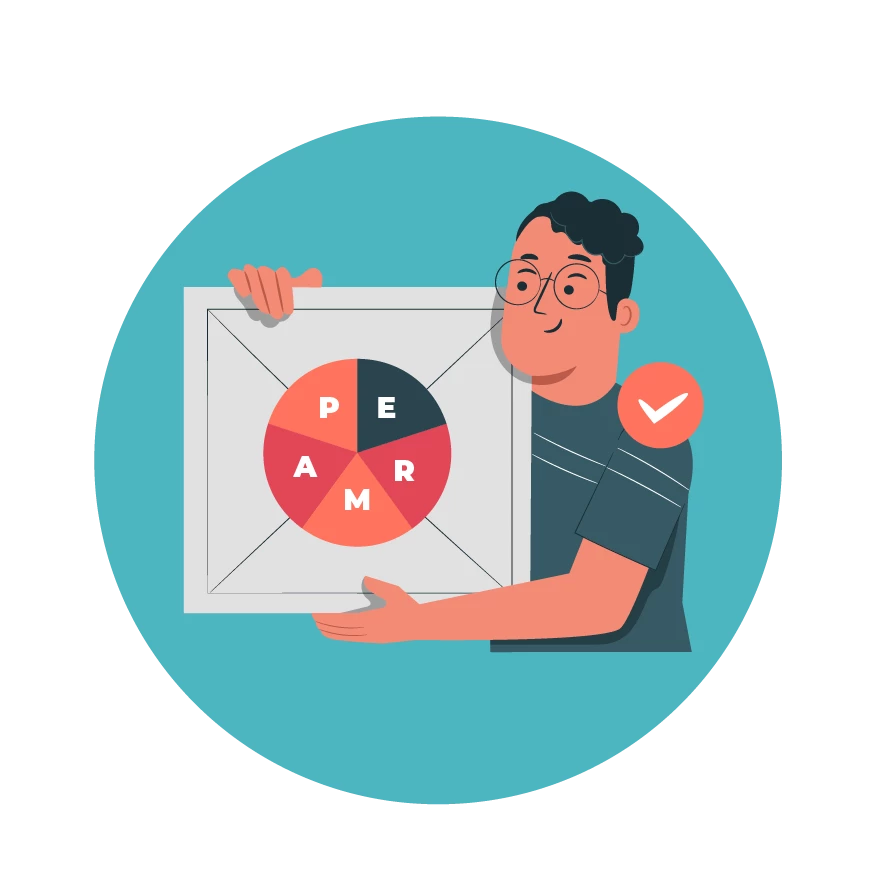
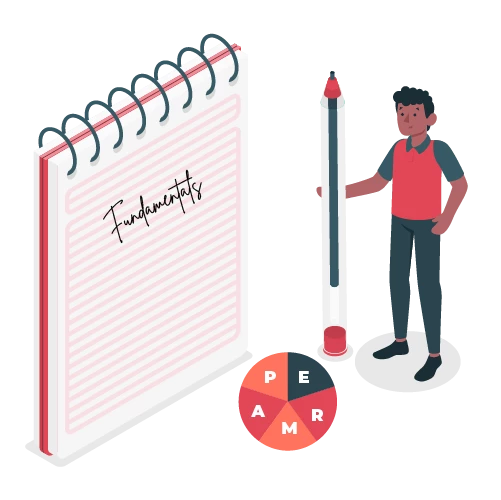
You will learn about Dr. Martin Seligman, the founder of the PERMA Framework, and what the PERMA model is and stands for.
Who is Dr. Martin Seligman?
Martin Elias Peter Seligman was born on the 12th of August 1942. He is an American psychologist, educator, and author of self-help books.
Seligman is a strong promoter within the scientific community of his theories of positive psychology and of well-being. His theory of learned helplessness is popular among scientific and clinical psychologists A Review of General Psychology survey, published in 2002, ranked Seligman as the 31st most cited psychologist of the 20th century.
Seligman is the Zellerbach Family Professor of Psychology in the University of Pennsylvania's Department of Psychology. He was also elected President of the American Psychological Association in 1998. He is the one who devised the PERMA Model that I will proceed to tell you about.
What is the PERMA model?
What is human flourishing and what enables it? Dr. Seligman’s PERMA Theory of Well-being is an attempt to answer these fundamental questions.
There are five building blocks that enable flourishing – Positive Emotion, Engagement, Relationships, Meaning, and Accomplishment – and there are techniques to increase each of them.
Different people will derive well-being from each of these five building blocks to varying degrees. A good life for one person is not necessarily a good life for another. There are many different routes to a flourishing life.
Positive Psychology is descriptive, not prescriptive. In other words, I am not telling people what choices to make or what to value, but research on the factors that enable flourishing can help you make more informed choices to live a more fulfilling life that is aligned with your values and interests.
Without further delay, let’s get into it.
Chapter 2:
Building Blocks of the PERMA Model and How to use it
In Chapter 1 we learned about the founding father of the PERMA , Martin Saligman, and what PERMA basically means.
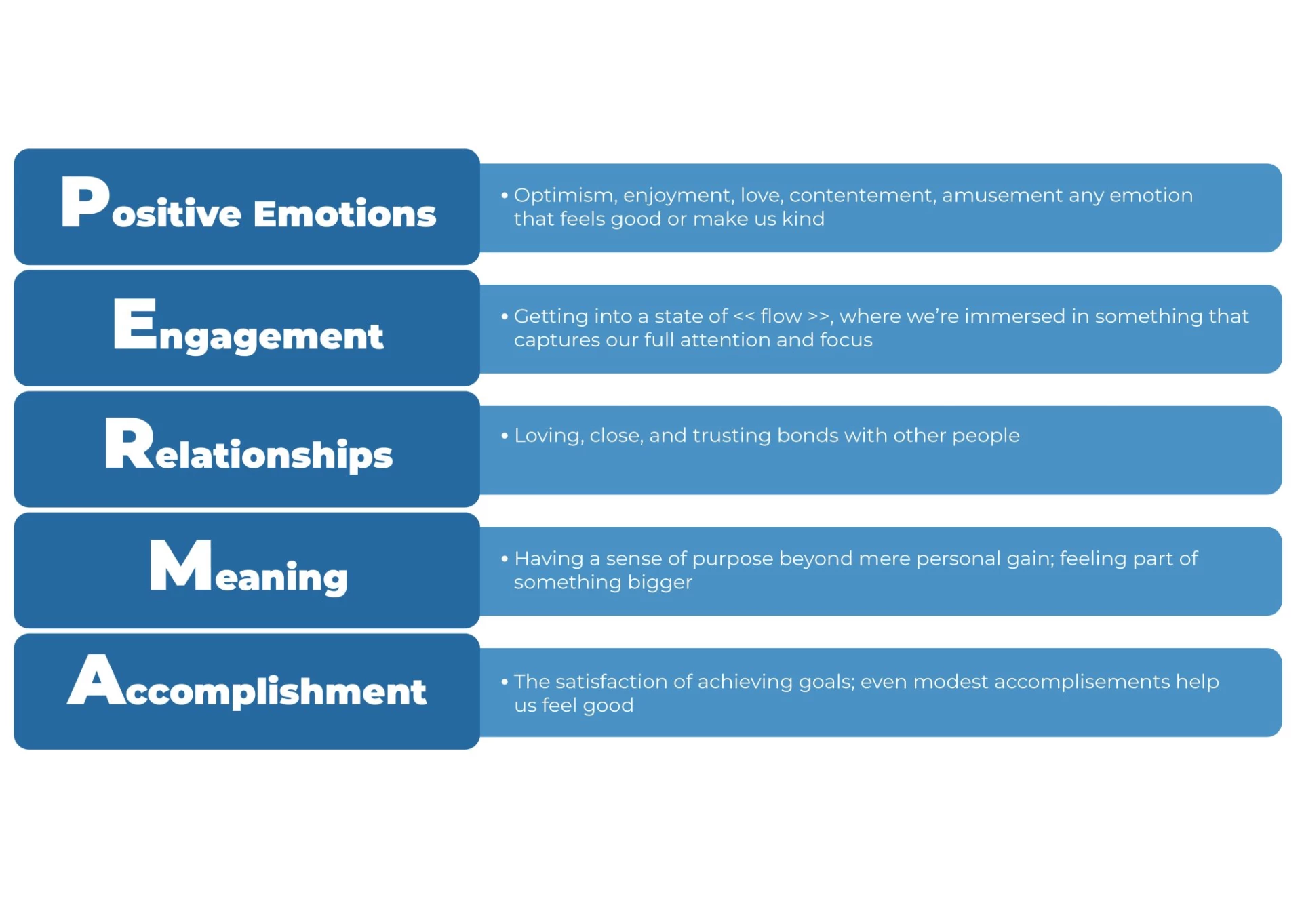
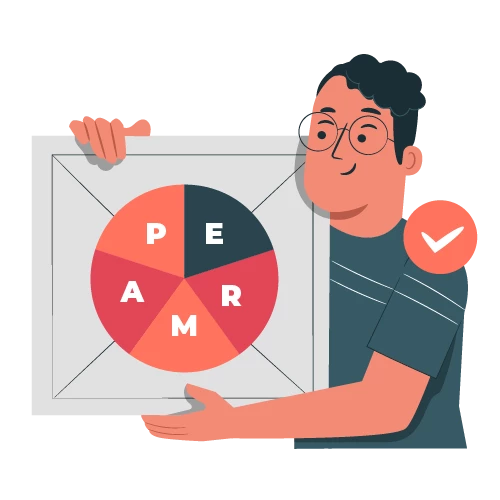
As we just learned, in the PERMA Model P stands for Positive Emotion, E stands for Engagement, R for Relationships, M for Meaning, and A for Accomplishment.
These are the building blocks of the PERMA model. But what do I do with this knowledge? How can I use them, you may ask. Let me explain.

What are the building blocks of the PERMA Model?
The building blocks of the PERMA Model are Positive Emotion, Engagement, Relationships, Meaning, and Accomplishments. These five elements together make the PERMA Model.
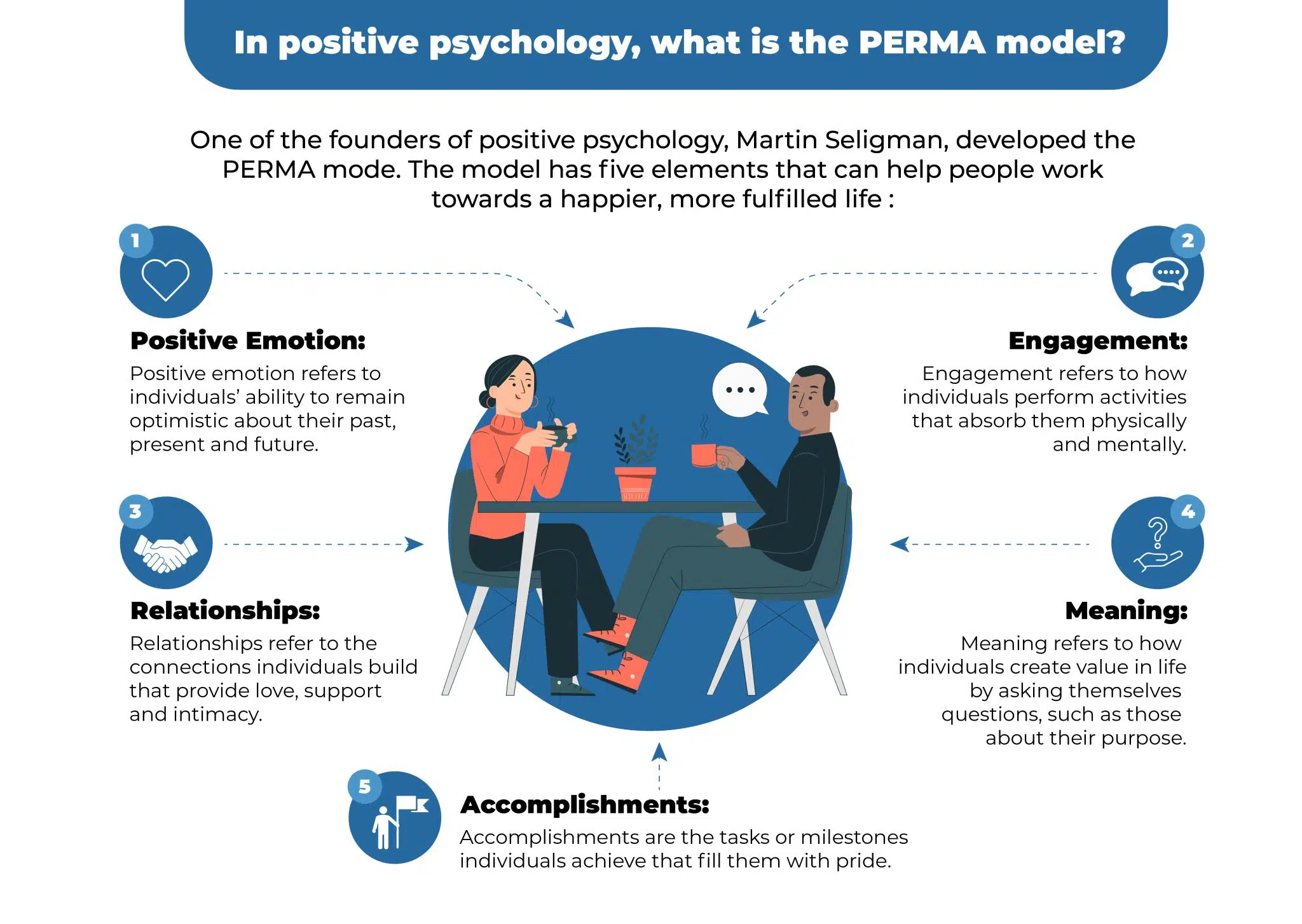
Positive Emotion: This route to well-being is hedonic – increasing positive emotion. Within limits, you and I can increase our positive emotions about the past (e.g., by cultivating gratitude and forgiveness), our positive emotions about the present (e.g., by savoring physical pleasures and mindfulness), and our positive emotions about the future (e.g., by building hope and optimism).
Unlike the other routes to well-being described below, this route is limited by how much you can experience positive emotions. In other words, positive affectivity is partly heritable and our emotions tend to fluctuate within a range.
Many people are, by disposition, low in experiencing positive emotion. But not to worry.
Traditional conceptions of happiness tend to focus on positive emotion, so it can be liberating to know that there are other routes to well-being which I am about to discuss below.
Engagement: Engagement is an experience in which you fully deploy your skills, strengths, and attention for a challenging task.
According to Mihaly Csikszentmihalyi, this produces an experience called “flow” that is so gratifying that people are willing to do it for its own sake, rather than for what they will get out of it. The activity is its own reward. It is focused on the process more than the outcome.
Flow is experienced when your skills are just sufficient for a challenging activity, in the pursuit of a clear goal, with immediate feedback on progress toward the goal. In such an activity, concentration is fully absorbed at the moment, self-awareness disappears, and the perception of time is distorted in retrospect, for example, time stops for a while.
Flow can be experienced in a wide variety of activities, e.g., a good conversation, a work task, playing a musical instrument, reading a book, writing, building furniture, fixing a bike, gardening, sports training, or performance, to name just a few.
Relationships: Relationships are fundamental to your well-being. The experiences that contribute to well-being are often amplified through our relationships, for example, great joy, meaning, laughter, a feeling of belonging, and pride in accomplishment.
Connections to others can give your life purpose and meaning. Support from and connection with others is one of the best antidotes to “the downs” of life and a reliable way to feel up.
Research shows that doing acts of kindness for others produces an increase in well-being.
From an evolutionary perspective, you and I are social beings because the drive to connect with and serve others promotes our survival. Developing strong relationships is central to adaptation and is enabled by our capacity for love, compassion, kindness, empathy, teamwork, cooperation, self-sacrifice, etc.
Meaning: A sense of meaning and purpose can be derived from belonging to and serving something bigger than the self.
There are various societal institutions that enable a sense of meaning, such as religion, family, science, politics, work organizations, justice, the community, and social causes (e.g., being green), among others.
Accomplishment: People pursue achievement, competence, success, and mastery for its own sake, in a variety of domains, including the workplace, sports, games, hobbies, etc.
People pursue accomplishment even when it does not necessarily lead to positive emotion, meaning, or relationships.
These are the building blocks of the PERMA model and what PERMA stands for.
Now let me tell you how to use this model and ask yourself some necessary questions.
How to Use the PERMA Model Effectively?
If you are still confused about how to use the PERMA Model then continue reading. I will break down some effective ways in which you can use the PERMA Model effectively.
Positive Emotions: Although you know that you can't be happy all the time, you need to make sure that you often experience positive emotions such as pleasure, happiness, contentment, peace, joy, and inspiration.
If you feel you're not experiencing enough positive emotions in your life, stop and think about why.
First, look at your career. Do you get to use your talents and strengths in your current role?
Also, take a moment to identify people, events, or things that give you pleasure. For example, imagine you love being outdoors, surrounded by nature, but working in an office means you rarely get to experience this source of happiness. Why not bring plants into your office or cubicle?
The aim here is to find ways to bring positive emotions and enjoyment into your daily routine and to ensure that you don't keep on putting these things off into the future that never quite arrives.
Engagement: Do you feel engaged in your career? Do you pursue hobbies and activities that help you slip into the state of flow we talked about earlier?
Engagement is most closely identified with the act of creation, but you can also experience deep engagement when participating in sports, spending time with friends, or working on projects that you're fascinated with.
You can increase your engagement at work by first minimizing distractions and improving concentration. This will help you slip into a state of flow. Then, as far as you can, focus on projects that provide an interesting challenge for your skills.
Next, look at your interests. Do you make enough time for personal interests such as a favorite hobby or physical activity? Many of us let this important personal time slip away, especially when we're stressed or overloaded with work. Try to devote plenty of time to activities that make you feel happy and engaged.
Positive Relationships: Do you have positive relationships in your life? These can be with anyone: family, friends, neighbors, or colleagues. Do you wish you had more of these relationships?
You probably spend the majority of your waking hours at work, so it's important to build good work relationships.
Next, look at your personal life. Do you enjoy the company of your family and friends, and do you find that they're positive and supportive?
If not, then it's important to take the time to understand why. Are you devoting enough time to strengthening these relationships? And do you need to make more of an effort to reach out to your friends and family?
Make a commitment to spend significant time with a friend or family member on a regular basis. Relationships take engagement and hard work, and they're often strengthened only when you make an effort to connect with other people. On the other hand, you can't do much to change people: if your relationships aren't positive, how far should you seek to preserve them?
Meaning: Do you feel that your life and work has meaning? That is, do you feel that you're connected in some way to a cause bigger than yourself?
Most of us want to believe that we're working and living for a greater purpose. So finding meaning is important to your overall sense of well-being.
It's just as important to look for meaning in your personal life – certain activities, such as spending time with your family, volunteering, or performing acts of kindness can really improve your sense of meaning in life.
If you feel your own life is lacking meaning, do these seemingly little things – even the smallest acts of kindness can go a long way.
Accomplishments / Achievements: Accomplishment and achievement might be the trickiest elements of PERMA, simply because it's very easy to take them too far.
For instance, in many societies, the achievement is highly valued, and, if you’re not busy, it can seem like you’re not living up to expectations and living a full life. However, if you continually push yourself, you can easily "run yourself ragged" in pursuit of the next achievement.
If you suspect you're not devoting enough time or energy to accomplishing your dreams, then start now.
First, identify what you truly want to accomplish in life.
If you feel that you're devoting too much time towards your achievements (and thereby throwing the rest of your life out of balance), then it might be time to pull back and focus on other elements of the PERMA Model.
The PERMA Model comes with a host of benefits. Let’s get into the Plus in PERMA.
Chapter 3:
The Plus in PERMA
The PERMA Model cannot work on its own. You need to work for it to make it work for you.
The only way that you can see results is by working towards your health. That is why optimism levels, physical activity, nutrition, and sleep are essential and should not be taken for granted. These four things are the backbone of your well-being.
Let me elaborate.
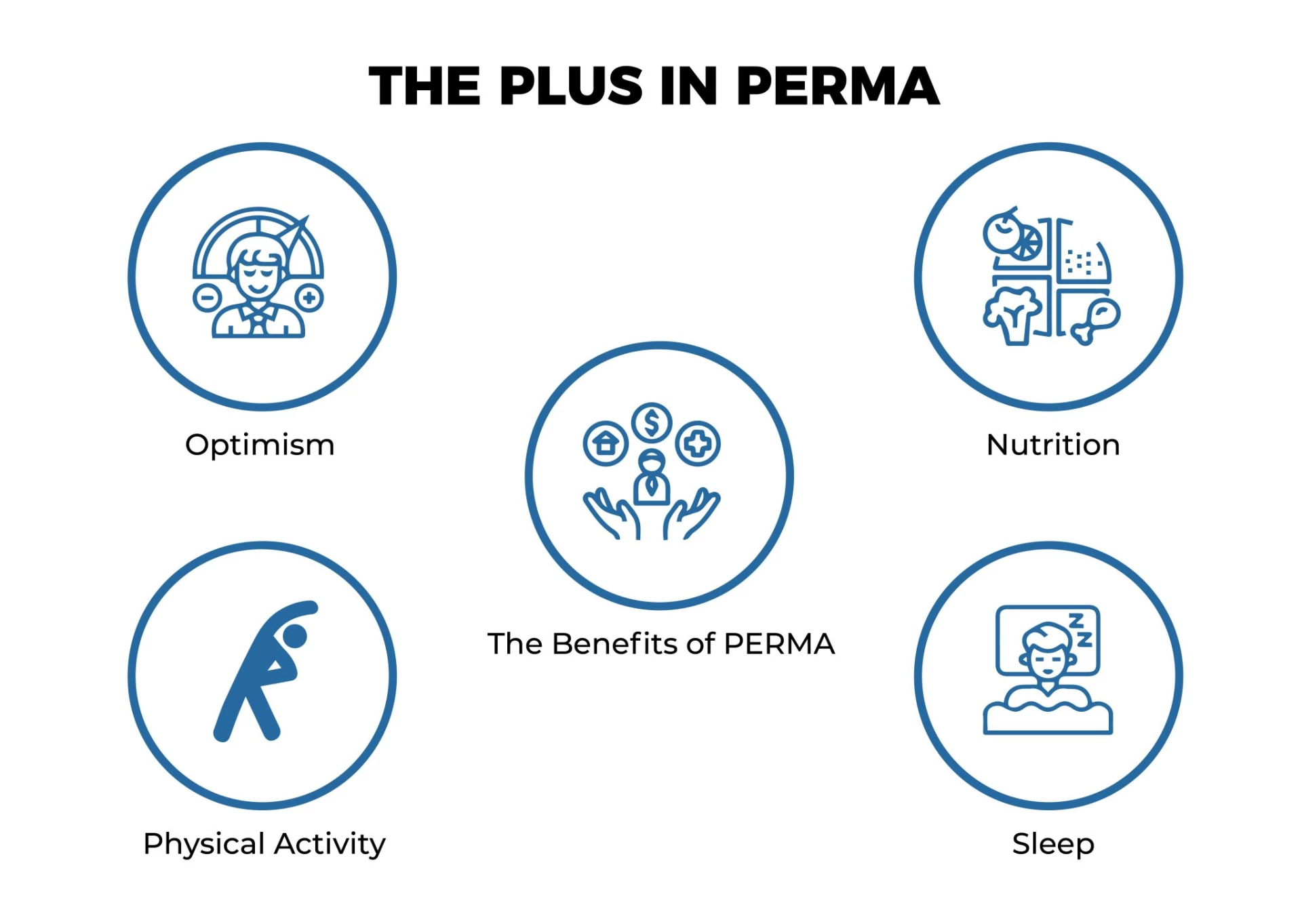
Optimism
Optimism is a positive emotion critical to building resilience and wellbeing. It is a state of mind, a strong belief that one holds.
Optimism is the belief that life will have more good outcomes than bad. People who are optimistic are more likely to be resilient in stressful life events.
Optimistic people tend to live longer, have better postoperative outcomes and lower levels of depression, and adjust better to work life.
Physical activity
Physical activity has been linked to well-being in numerous ways.
Negative emotions are associated with an increased risk of physical disease and poor health habits. If you are dealing with mental illness there are more chances that you are physically inactive.
There are obvious physical benefits to being active, but increasing movement or activity also decreases symptoms of depression, anxiety, and loneliness and improves mental focus and clarity.
Physical activity is directly correlated with optimism.
Nutrition
Poor nutrition leads to physical health problems such as obesity, diabetes, heart disease, and even cancer, but there is significant research demonstrating a relationship between diet and mental health.
Eating a balanced diet rich in vegetables and nutrients (and limiting processed or sugary foods) has been associated with wellbeing.
A poor diet (high levels of saturated fat, refined carbohydrates, and processed foods) is linked to poorer mental health.
So what should we eat?
There are many “superfoods” found in nature, such as berries, cruciferous vegetables, avocados, nuts, and seeds.
A Mediterranean diet that is high in vegetables, fruits, legumes, nuts, beans, cereals, grains, fish, and unsaturated fats has been shown to reduce depression symptoms and provides an array of physical health benefits.
Sleep
Neuroimaging and neurochemistry research suggests that good sleep hygiene fosters mental and emotional resilience, and sleep deprivation leads to negative thinking and emotional vulnerability. Further, sleep problems are more likely to affect people with psychiatric disorders and may increase the risk of developing mental illness.
Particularly, insomnia increases the risk of developing depression.
Getting seven to nine hours of quality sleep during the same hours every night is necessary for everyone.
Lifestyle changes such as avoiding caffeine, nicotine, and alcohol; getting physical activity; decreasing screen time; and using the bedroom only for sleep and sex can improve sleep quality.
Relaxation techniques and cognitive-behavioral techniques to reduce stress and anxiety can also be effective ways to improve sleep and overall well being
Now let’s learn about the benefits.
The Benefits of PERMA
Research demonstrates that well-being is not only valuable because it feels good, but also because it has beneficial real-world consequences. Compared to people with low well-being, individuals with higher levels of well-being:
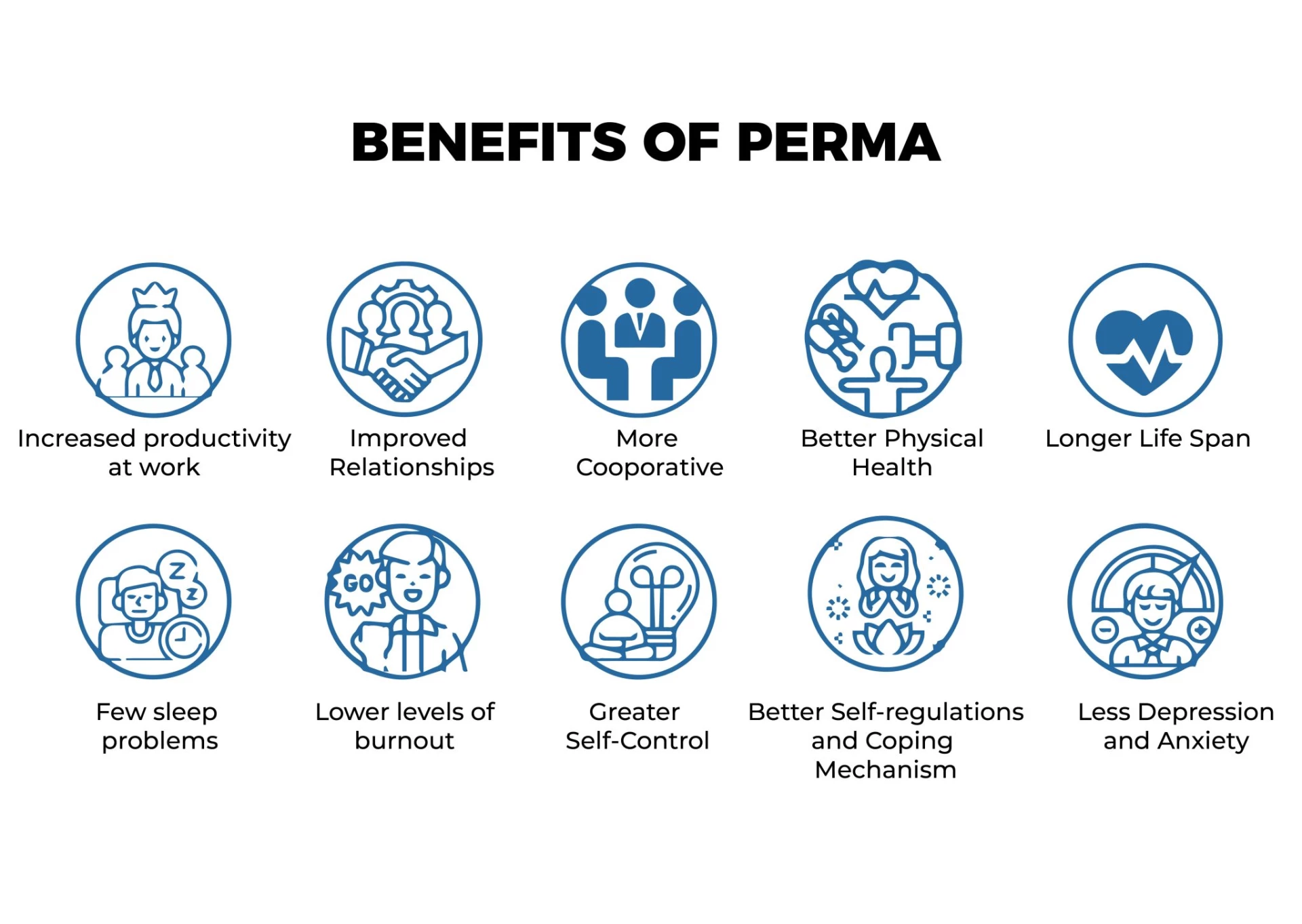
- Perform Better at Work
The PERMA model enables you to increase concentration and focus and get into a certain flow of work yielding higher quality results and outcomes.
- Have More Satisfying Relationships
The PERMA model teaches you how to take care of your relationships and put in the necessary time and effort to maintain them.
- Are More Cooperative
Having healthier relationships increases your ability to cooperate with others and work in a team.
- Have Stronger Immune Systems and Better Physical Health
PERMA model emphasizes the deep connection between the body and the mind. Taking care of your body is essential to mental well-being.
- Have Longer Life Spans
Following the PERMA model and revisiting it from time to time will increase your quality of life and consequently your life span as well.
- Have Reduced Cardiovascular Mortality
Exercise and nutrition, an intrinsic part of PERMA, decrease cardiovascular problems.
- Have Fewer Sleep Problems
Working hard on goals that add meaning to your life will help you sleep better.
- Have Lower Levels of Burnout
Following the PERMA model effectively will add meaning to your actions and thus you won’t feel as tired/ burnt out.
- Have Greater Self-control
The PERMA model helps you focus on what is important to you and cut off distractions. If followed effectively, you will be able to abstain from the desires that don’t serve you.
- Have Better Self-regulation and Coping Mechanisms
Keeping a check on your optimism levels, your relationships, and exercising daily enables you to regulate yourself and gives you the strength to cope with difficult situations in a healthy manner.
- Are More Prosocial
If followed consciously, the PERMA model enables you to make many meaningful relationships and enhances the quality of your social interactions with others.
- Less Depression and Anxiety
Following the PERMA model will lead to more proactive behavior and decrease the chances of depression and anxiety
Those were the benefits of PERMA in all spheres of life. Now, let’s find out about the utility of the PERMA Model specifically at the workplace in Chapter 4.
Chapter 4:
How can the PERMA Model be Used at the Workplace?
In this chapter, I will discuss the PERMA + 4 Model and its use in the workplace.
What it is and why we need it.
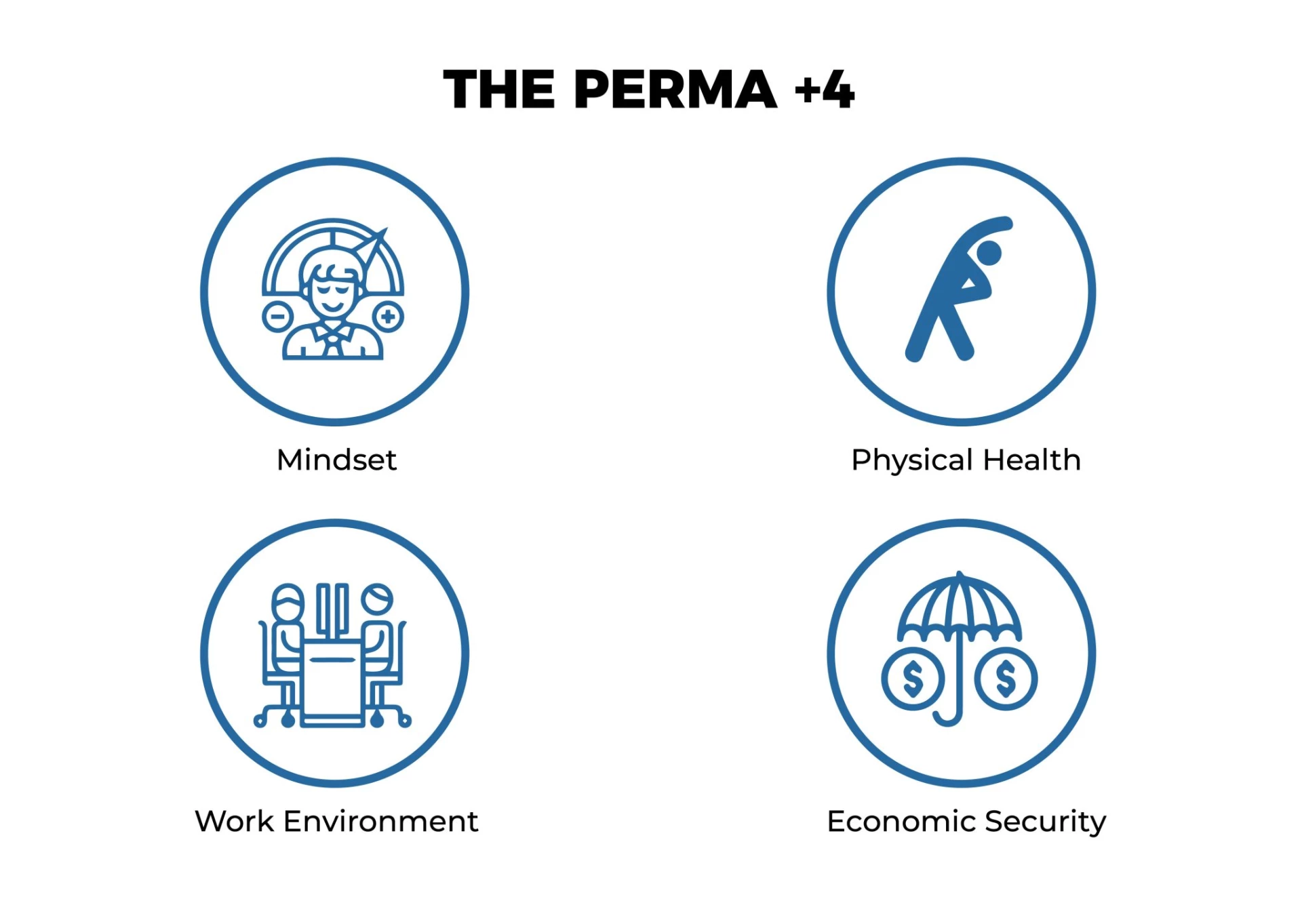
The addition of the 4 elements i.e, physical health, mindset, work environment, and economic security are essential components in effectively reaping the benefits of the PERMA Model at the workplace.

Donaldson and Donaldson, along with many other scientists have studied and analyzed the use of the PERMA model at the workplace closely for years, these were their findings. Let's get into it.
What is PERMA + 4 and why do we need it?
With more than two decades’ worth of empirical research underpinning the relationship between the individual elements of PERMA and other forms of wellbeing, this approach could act as a foundational base from which to build a more holistic framework of work-related wellbeing and sustainable work performance.
As such, based on Seligman’s (2008) fourth criteria, Donaldson (2019) and Donaldson et al. (2020) conducted an extensive systematic literature review, meta-analysis, and a range of qualitative assessments in order to determine if and how the framework could be extended into work-related contexts. Their main aim was to determine which additional elements seemed likely to contribute to work-related wellbeing and sustainable work performance over and above the original five elements (Donaldson et al., 2020).
They found that four additional building blocks could explain additional variance in work-related wellbeing and work performance and could thus be considered for inclusion into the PERMA framework. Donaldson (2019), Donaldson and Donaldson (2021a,b), and Donaldson et al. (2020) found empirical evidence supporting the addition of these four elements:
1. Physical Health. Operationalized as a combination of high levels of biological, functional, and psychological health assets.
2. Mindset. Adopting a growth mindset characterized by an optimistic, future-oriented view of life, where challenges or setbacks are seen as opportunities to grow. This may also be a function of psychological capital, perseverance, or grit.
3. Work Environment. The quality of the physical work environment (which includes spatiotemporal elements, such as access to natural light, fresh air, physical safety, and a positive psychological climate) aligned to the preferences of the individual
4. Economic Security. Perceptions of financial security and stability required to satisfy individual needs.
Now let us look at these four additional points in greater detail.
Physical Health
One of the main criticisms of work-related well-being interventions is that they negate the importance of physical health as part of the developmental process.
This is somewhat surprising because a substantial amount of literature (ranging from medical sciences to anthropology) has shown that physical health is one of the most essential components of wellbeing and mental health.
Seligman (2008) argued that positive physical health is an essential element that buffers against the onset of psychological disorders and is integral to psychological well-being. Positive physical health is conceptualized as a state of optimal physiological functioning, which is more than just the absence of disease or infirmity.
In essence, positive physical health aims to promote individuals’ positive health assets: (1) biological assets, (2) functional assets, and (3) subjective or psychological health assets.
Biological assets refer to the positive ends of one’s physiological or anatomical functioning such as physical fitness, health body-mass index, heart-rate variability, pulse, and blood pressure (Seeman, 1989). Donaldson and Donaldson (2021a,b) also postulate that biological assets may include mindful reflection on one’s own personal health history or health habits.
In contrast, functional assets refer to how well individuals can function in the execution of their physical duties in life or at work (Seligman, 2008). This may include self-reported reflections on physical activity or fitness at work (Donaldson and Donaldson, 2021a,b).
The final asset pertains to “subjective” or psychological health assets, which is fundamentally a function of how one feels. Here the focus is on aspects that enhance perceptions of physical health, such as a sense of dedication, vigor, absorption, or vitality when engaged in physical activity (van Berkel et al., 2013; Seligman, 2008).
Similarly, it pertains to the absence of subjectively perceived health complaints (such as aches and pains), a sense of durability or confidence about one’s body, a feeling of control over health-related matters, optimism about longevity and future health, and high levels of overall life satisfaction (Jackson, 2007; Seligman, 2008; Ng et al., 2021).
Physical health can also be developed at work and has been shown to effectively supplement the effects of more traditional work-related wellbeing programs (Biddle et al., 2021).
The main point though is that within an individual’s range of possible physical health levels, those that learn to function at the high end of their range are more likely to feel and function well.
Mindset
Those who hold the belief that their talents can be developed through hard work and deliberate practice (i.e. holding a growth mindset) usually report higher levels of well-being and performance than those who view their talents to be innate or fixed (i.e. holding a fixed mindset; Dweck and Yeager, 2019).
Holding a growth mindset is characterized by the belief that one’s intellectual abilities and talents are malleable and can be developed over time
.Individuals with a growth mindset tend to choose more challenging tasks that help stretch their current capabilities to facilitate personal growth and development.
These individuals tend to see failures as opportunities to grow and are more likely to dissect mistakes in order to avoid similar situations in the future.
In contrast, those with a fixed mindset attribute failures and successes to external factors and are more likely to shy away from challenges or fail to live up to their potential.
At work, those with a growth mindset tend to invest in their personal development, actively seek feedback on their performance to improve, and show a mastery orientation to goal attainment
Further, those who hold a growth mindset at work should also show positive beliefs that their work will provide them with opportunities to grow, that they can meaningfully contribute to the goals of the organization, and that work will provide meaningful challenges to test and stretch their capabilities.
It is, therefore, not surprising that growth mindset interventions at work have shown to have a significant effect on positive individuals (e.g. mental health; wellbeing; and engagement) and organizational outcomes (e.g. increased performance).
In more context-specific terms, Psychological Capital could be seen as another indicator or element of building a positive mindset at work.
Psychological capital refers to the development-oriented mindset individuals adopt that is characterized by “(1) having the confidence to take on and put in the necessary effort to succeed at challenging tasks (self-efficacy), (2) making a positive attribution about succeeding now and in the future (optimism), (3) persevering toward goals and when necessary, redirecting paths to goals in order to succeed (hope), and (4) when beset by problems and adversity, sustaining and bouncing back and even beyond to attain success (resilience)” (Luthans et al., 2015, p. 2).
More recently, Youssef-Morgan et al. (2021) argued that work-related gratitude should be seen as an integral (additional) component of Psychological Capital. They argued that work-related gratitude is “the intentional choice to engage in positive appraisals and feelings of thankfulness and appreciation toward the characteristics, situations, and people currently present in one’s work context. Specifically, this definition synthesizes the conative (intentional choice), cognitive (positive appraisals), affective (feelings), and social (people) aspects of gratitude.
Further, it takes into consideration that gratitude is a situational and context-specific state, rather than just a general disposition” (Youssef-Morgan et al., 2021, p. 3). These factors are considered personal or psychological resources that synchronously interact to produce a development-based mindset over time through intentionality, goal pursuit, and self-discipline. Hope, self-efficacy, work gratitude, and optimism are proactive in nature, and resilience reactive.
This implies that Psychological Capital not only buffers against negative experiences associated with goal pursuits (i.e., resilience), but also facilitates goal attainment through framing failures/opportunities as positive stepping stones or growth opportunities.
Psychological Capital has shown to be an integral component for facilitating individual and organizational performance and to enhance wellbeing (Donaldson et al., 2020).
Work Environment
The physical work environment of employees can significantly impact both their physical health and wellbeing.
Given that individuals spend more than a third of their lives at work or engaged in work-related activities, Sander et al. (2019) argued that the physical working environment may be one of the biggest contributors to wellbeing and performance at work.
The physical work environment consists of all objects, stimuli, and subjective evaluations of organizational climate/culture that employees encounter through the execution of their work roles at work. The work environment is therefore seen as a complex psychophysical system that is a function of both the objective physical stimuli at work (e.g., building design, air quality, and natural lighting) but also elements subjectively experienced by employees (e.g., perceptions of physical safety or connectedness to others)
Sander et al. (2019) argued that well-being and performance at work are influenced by their cognitive, affective, and relational responses to the whole office environment.
Cognitive reactions refer to the extent to which the physical work environment affords individuals the opportunity to concentrate on their relevant tasks.
Focus is considered the most fundamental element of performance and can directly be influenced by the physical environment. When there is considerable effort required to focus due to environmental distractions (such as noise, heating, or poor ventilation) cognitive resources are depleted thus increasing stress and strain.
Affective reactions incorporate mood and emotions and pertain to non-cognitive responses to the physical design of the work environment (i.e., Sense of Beauty). This, in turn, may have a restorative function on employees’ energies.
When individuals perceive a sense of beauty at work (whether it be due to the design of the office or access to nature), they are more likely to experience positive effects. White (1996) argued that perceptions of beauty at work are essential to foster positivity at work. Further, from the psychological strengths perspective, “appreciation of beauty” has also been shown to increase well-being and esthetically pleasing organizations foster a sense of trust in the company.
Finally, relational reactions refer to the effect of the physical environment on creating or fostering a connection between people (Sander et al., 2019). For example, if individuals are located in different buildings (or floors) in the same organization, yet working in the same team, they are less likely to engage with each other physically.
In essence, the physical work environment directly affects with whom and how often people connect or interact at work, and it may influence the relationships element of PERMA+4 as well. Therefore, relational reactions are a function of the connectedness the work environment fosters. These three factors have been shown to directly and significantly impact overall experiences of wellbeing.
Workplace design interventions can therefore play a significant role in not only enhancing productivity but also facilitating wellbeing.
Economic Security
Recent research using advanced machine learning approaches, which maximize prediction by thoroughly exploring nonlinear effects and higher-order interactions, has found that one’s control over financial matters is one of the strongest predictors of wellbeing.
The ninth building block in the PERMA+4 framework is economic or financial security (also referred to as financial wellbeing in alternative literature).
Economic security refers to the impact one’s level of income, savings, and spending has on wellbeing. Salignac et al. (2020) argued that making sound financial decisions and exerting control over financial matters are pertinent to overall well-being.
If one is not able to meet basic physiological needs (such as purchasing food for dinner) or unable to attend to financial obligations (e.g., paying debts, school fees, or medical bills), it may lead to increases in stress, depression, and anxiety.
Those with extreme debt who cannot manage these obligations are more likely to report suicide attempts than those without debt. In contrast, if there is relative certainty about one’s financial future, individuals are able to more effectively plan and make bigger life decisions (such as having children or purchasing a house). This, in turn, also creates surety and stability.
Although economic security cannot actively be developed, planning, managing, and controlling spending behavior can. Studies have shown that interventions aimed at training basic financial literacy and financial planning directly impact happiness, health, and wellbeing (Lowe et al., 2018).As such, these four elements can confidently be incorporated into the PERMA framework as a means to expand such into organizational contexts. Given that all of Seligman’s (2008) criteria are met, these four factors can be included in the expansion of PERMA: thus giving birth to the PERMA+4.
How can PERMA be Used at the Workplace?
The workplace is where we spend a big part of our day, working with people who are not related to us in ways other than being colleagues. It is true that the level of happiness experienced by each worker, as well as the atmosphere of a workplace, greatly and directly affect an organization’s productiveness.
Uses of PERMA at the Workplace
The PERMA Model is one thing that should be applied in the workplace to foster a positive work environment that will eventually result in a happy and productive workforce. Here are some major uses of applying PERMA Model at the workplace:
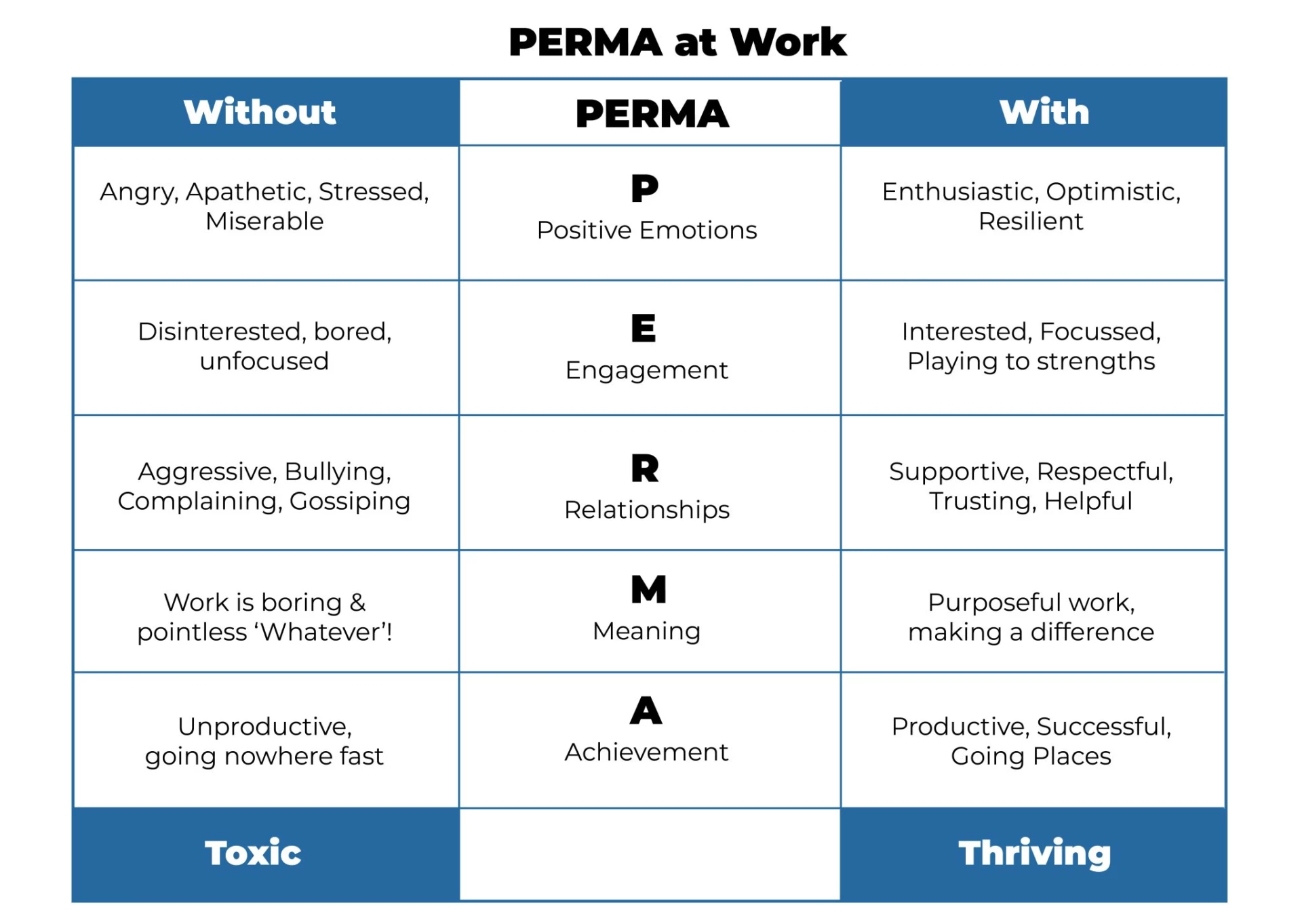
- Positive emotions can be created by simply congratulating a colleague who has achieved something at work. It can also be as simple as dropping a note of thanks with a bar of chocolate to another employee who did a favor by covering a shift.
- The workplace doesn’t need to always solidly feel like a place where things need to get done. If offices now have pumping rooms for breastfeeding employees, why not put an “engagement room” where there is a small piano, book corner, or several sketchbooks and canvases to let workers take a break and do something engaging? This way, workers can recharge and reset their ‘buttons’ to be more efficient.
- Belongingness is an important key to a productive workplace. However, belonging to a team or a small circle isn’t the only way to do it. Conducting team building is one of the HR Department’s best tools for fostering healthy relationships within the office. Relationships can be built at any time of the day by things such as inviting one or two officemates to lunch.
- An organization shouldn’t only be productive, but it should also be meaningful to the society where it functions. In fact, a lot of companies already devote a lot more time and finances to their corporate responsibility.
Let’s take as an example Walt Disney English, which is an English Learning Centre in China that is under the company’s publishing sector. As it deals with kids, its Volunteers Program chooses an orphanage or school for special children as its recipient for fundraising. Employees visit the chosen school and bring Mickey Mouse dolls for every kid, apart from the monetary donation to the school.
- Accomplishments exert a bigger impact if they are acknowledged by the “higher-ups.” Normally, companies hold a gala night each year where citations are given to exemplary employees. But why wait for the once-a-year event when companies can recognize their employees on a regular basis without being too extravagant?
A Kudos wall is simple, yet the impact it creates on the person whose name is up on that wall for a job well done can be immense.
Chapter 5:
Institutional Applications of the PERMA Model and the Implications for Public Policy
The PERMA Model, as you now may have understood, has been used and continues to be used in Public Policy making.
Although I believe it could be implemented better and taken more seriously.
If used more effectively it can lead to a big change in the social mindset and standards of living.
Let us find out how and why.

The science of well-being has important implications for institutional applications
- Schools can educate students for flourishing as well as for workplace success.
- Parents can cultivate their children’s strength, grit, and resilience.
- Workplaces can improve performance as well as their employees’ well-being.
- Therapists can nurture their patients’ strengths to prevent mental illness and enhance flourishing as well as heal damage.
- Communities can encourage public service and civic engagement.
Implications of the PERMA Model for policy decisions by governments and other organizations
Countries have relied largely on economic measures such as Gross Domestic Product (GDP) as an indicator of national progress. There is a growing awareness, however, that economic measures alone do not fully reflect a nation’s well-being.
During the industrial revolution, economic indicators were a good approximation of how well a nation was doing, when the fulfillment of basic human needs for food, clothing, and shelter was the primary goal. The more prosperous a nation becomes, however, these economic indicators are less effective as an approximation of how well a society is doing. Basic needs are largely satisfied in developed nations.
As societies meet these basic needs, differences in well-being are less frequently due to income and are more frequently due to factors such as social relationships, work satisfaction, and meaning.
Research shows that making more money has rapidly diminishing returns on life satisfaction. Below the safety net, increases in money and increases in life satisfaction go up hand in hand. Above the safety net, increases in money produce smaller and smaller increases in happiness (Diener & Seligman, 2004).
Research indicates that people need supportive, positive relationships and social belonging to sustain well-being (Diener & Seligman, 2004). Economic indicators, however, do not measure the quality of social relationships and therefore omit this key contribution to well-being.
The fact that strong social relationships are essential for well-being has many policy implications.
For instance, school curricula can explicitly educate students about the importance of long-lasting social relationships, as well as teach the social skills that nurture supportive and intimate relationships. Organizations should carefully consider relocating employees because doing so can sever relationships and might be detrimental to well-being.
Economic indicators are out of sync with national well-being in developed nations. For example, since the 1950s, GDP in the U.S. has tripled per capita but life satisfaction has been virtually unchanged.
There is a similar pattern in other nations. Over this same period, depression rates have increased 10-fold, and rates of anxiety have also risen (Diener & Seligman, 2004; Twenge, 2000). Paradoxically, higher rates of mental illness can increase GDP due to increased spending on hospitalization, crime prevention, and imprisonment of people with disorders.
Assessing the well-being of individuals with psychological disorders could lead to government and business policies that yield benefits to the individual, the organization, and the nation.
Psychological disorders cause widespread suffering. Many disorders can be effectively treated yet a large proportion of people with disorders go untreated. Failure to treat these individuals can be costly in terms of well-being and lost productivity. More rigorous and systematic national well-being surveys could help shape the provision of mental health resources.
The precursors of national well-being measures are well underway. Since the early 2000s, there have been several nascent international initiatives to measure national well-being, including the OECD’s Better Life Index (Organization for Economic Cooperation and Development) and the United Nation’s World Happiness Report (Adler & Seligman, 2016).
If well-being is the overarching goal of a nation, multi-dimensional measures of well-being should therefore supplement economic indicators to more accurately represent how a nation is doing and to better inform policy.
Public policy follows only from what we measure. If a society makes a great effort to measure economic output, people are likely to focus more attention on economic output, sometimes to the detriment of other values.
If a society assesses well-being, people will focus more of their attention on well-being. We measure what we value, and we value what we measure.
Chapter 6:
The Measurement, Development and Future of PERMA+4
In this chapter, we will learn about how the PERMA +4 Model can be measured.
Can it at all be measured? And if yes then how accurately?
How has the PERMA+4 Model developed over time and does it really have a future in this fast and ever-changing world?
These are all extremely valid questions that you may have, and I’m here to answer them.

The Measurement of PERMA+4
Effective measurement is a central component to the advancement of a discipline and the development of theory.
The PFW Scale is a relatively newly developed psychometric instrument aimed at measuring the building blocks of wellbeing. However, despite the robust approach employed in its development, there are still many questions and concerns that need further exploration.
First, the instrument was developed within a strictly western context and its cross-cultural equivalence is therefore required. Therefore, the PFW Scale should be subjected to more robust validation processes, with more diverse samples, from different cultural groups and nationalities to determine its viability as a measure.
Second, the length of the current instrument increases the possibility for common method bias, acquaintance bias, and measurement error (Peytchev and Peytcheva, 2017).
Lengthy self-report questionnaires are known to cause response fatigue, which negatively impacts the quality of the data.
Further, the length of a questionnaire also impacts the response rate, dropouts, and overall response quality. Therefore, future psychometric evaluations of the P-F Work Scale should be directed toward significantly shortening the scale.
Third, another area to consider in the measurement of PERMA+4 is to assess work-related wellbeing and performance from a physiological and behavioral perspective.
In their position paper, Cipresso and Immekus (2017) argued that psychological researchers should move away from self-report measures and include more objective indicators for their assessments of (positive) psychological states, traits, and behaviors.
Drawing from advancements in measurement methodology, we believe future developments in the assessment of PERMA+4 could complement self-report measures with biosensors. This will allow, for example, for the uninterrupted measurement of the PERMA+4 components during intervention without interruption.
By incorporating superficial electromyography assessments into the measurement, approaches would allow researchers to passively assess wellbeing indicators such as positive emotions and engagement through facial muscle activation.
Other psychophysiological responses associated with wellbeing could also be assessed through wearable technologies. Here, smart watches, for example, could be used to measure cardiovascular activity, respiration, respiratory inductance, plethysmography (through thoracic strips), blood oxygen saturation, and the like could be used as indicators for positive emotions, engagement, and physical health.
Neuroimaging could also be used to assess experiences of accomplishments and the neurophysiological responses associated with building positive relationships..
Psychophysiological responses associated with experiences of PERMA+4 could also be captured through measuring hormones (such as cortisol levels).
From an (objective) behavioral assessment perspective, it is important to investigate if what people self-report on PERMA+4 and how they behave are aligned. The technology could close the gap between what people think they feel or perceive and what they actually perceive.
future researchers should invest in developing activity-related behavioral assessment measures whereby well-being could objectively be assessed through the language people use, their physical expression, voice tones, postures, gestures, body movement, and the like.
These aspects are already used as indicators for mental illness assessments and could easily be adapted to measure mental health.
Sports psychology and health psychology interventions already employ motion sensors, accelerometers, and gyroscopes in modern cell phones as indicators of physical and mental health.
In summation, the measurement of PERMA+4 should take central stage in future research.
Developing PERMA+4
The PERMA+4 model is positioned as a roadmap for factors leading to work-related wellbeing and sustainable work performance.
Although research has shown that the individual factors of the approach are strongly related to wellbeing and work performance, evidence as to the practical usefulness thereof is still lacking.
Multi-component positive psychological interventions are therefore needed (built around each component of the PERMA+4 model) in order to determine if these routes toward wellbeing and work performance are, indeed, relevant in practice.
It is therefore important to investigate how interventions could improve each of the building blocks in PERMA+4 and which are more efficient in enhancing wellbeing and work performance at the employee, leadership, group or teams, and organizational levels. Further, technologically driven intervention strategies should also take center stage in future research.
Given the rapid rise and adoption of artificial intelligence (AI) in psychology, we expect to see a rise in AI-driven positive psychological interventions within organizations ranging from AI-Coaching to AI-driven chatbots aimed at enhancing wellbeing.
Fully automated conversation agents (or “chatbots”) could automate the diagnosis of current challenges and generate appropriate self-help interventions tailored to the needs of the individuals (Greer et al., 2019). These chatbots do not require active input from a therapist, coach, or practitioner, enhancing its perceived accessibility and usefulness.
Therefore, allowing for intervention content to be generated and used when it is needed eliminates the delay between the experience of a problem and a potential solution.
The use of chatbots is still rare within organizational contexts but will become increasingly important over the next two decades.
Further, virtual reality or augmented-related interventions could be used to facilitate the development of positive states, traits, and behaviors through an immersive environment that is tailored to the needs/circumstances/context of the client (Baños et al., 2014, 2021).
Video games could also be used as a safe and cost-effective means to develop well-being and enhance performance. Kelly (2020) argued that video games are naturally designed to enhance the core capabilities known to enhance wellbeing, such as creativity, pleasure, engagement, meaning, social skills, emotional regulation, attention, environmental mastery, accomplishments (through skill progression), and also affords individuals the opportunities to live out their strengths in a safe environment.
I expect to see a new wave of research in the coming years that will include topics like social and organizational network analysis of positive leadership and relational energy in the workplace and more advances in artificial intelligence-driven positive organizational interventions, human-robot collaboration, passive neurological assessments of positive states/traits and behaviors and the like.
This new wave of research will be categorized by rapid innovation, mass adoption of artificial intelligence systems, machine learning, social media analytics, big data analyses, and the like that we will learn immensely from.
These rapid changes will also require more sophisticated models, approaches, and measures that could stand the test of time; yet are flexible to adapt to new innovations and discourses in technology and the discipline.
I, therefore, propose that the PERMA+4 could be used as one of the first models to drive innovation in well-being and sustainable work performance.
While evidence of the effectiveness of the PERMA+4 approach has shown promise as a means to predict wellbeing and work performance, research is still in its infancy. To further introduce such into the nomological network, more research is required into its antecedents/outcomes, how it is measured/approached, and how PERMA+4 can be developed.
PERMA+4: Outcomes and Antecedents
PERMA+4 is positioned as a framework describing the routes towards work-related wellbeing and performance at work.
In essence, it implies that PERMA+4 could be used as a process model or framework that could translate important antecedents into wellbeing and performance. Therefore, it is imperative for future research to systematically contrast and compare different input factors (such as work role fit, psychological safety/availability, and job crafting) to determine the most important antecedents for the PERMA+4 building blocks
By identifying the most important antecedents, researchers and practitioners could build more robust and concrete interventions.
Further, a major point of contention within the well-being literature is the role of signature or “psychological strengths” in the development of well-being (van Zyl et al., 2021). The theory argues that strengths-presence and strengths-knowledge are integral for wellbeing; however, only active strength use has been shown to be an essential wellbeing and performance metric.
Given that strengths are central to the developing metatheory of positive psychology, it is essential to understand and investigate its role in enhancing work-related wellbeing and performance, and what the role of PERMA+4 is to translate strengths-presence, − knowledge, and use into sustainable mental health.
Future research should position PERMA+4 as a process factor, and not an active or targeted antecedent of wellbeing. Therefore, the focus should be on “what factors are needed to activate PERMA+4 as a means to enhance work-related wellbeing and work performance.”
Further, the specific individual, group or team, and organizational related outcomes of PERMA+4 (above and beyond wellbeing or mental health) should be investigated. This would not only provide the literature with more support for its effectiveness but provide a solid business case for its active incorporation into HRD practices in the industry.
Here, the focus should be on linking the PERMA+4 to objective strategic growth indicators or to the financial performance of organizations.
Useful Resources
- The Science of Happiness is a course for you on Understanding the Science of Happiness.
- Be Well Co is an app that allows you to track and plan your wellness using scientific tools.
- Penn Resilience Program is a program including PERMA workshops. These are evidence based training programs that have been demonstrated to build resilience, well being and optimism.
- PERMA is a course on Positive Pcyhology available on Coursera.
- Building Blocks : PERMA : Defining Wellbeing is a course on the Building Blocks of PERMA.
- The VIA Survey is a worksheet that will help you recognize your strengths and work on them.
Conclusion
Congratulations on finishing the definitive guide on The PERMA Model!
Now you have all the tools you require to understand the building blocks of PERMA, how to effectively use it and how it can benefit you at work and in your personal life.
But don’t just stop here; start implementing all that you have learned right away. The time to start making the necessary changes in your life is now!
Remember: consistency is key to the journey of becoming a powerful and more importantly, fair person. Nothing happens in a day.
What did you find most useful about this Definitive Guide?
What steps are you going to take now towards your journey?
Have you found what you were looking for? Is there something that I have missed?
If there’s something you need more clarity on, feel free to ask me in the comments section below and I’ll be sure to answer them!
