
Myers-Briggs Type Indicator — The 16 Personality Types
Last updated: March 2026
Myers-Briggs Type Indicator — The 16 Personality Types
The Definitive Guide
Are your personality traits holding you back?
What if there was a way to know what those traits are, and how they affect you, so that you could make the most of them or work around the worst ones?
What if there was a way to understand more about yourself and others, too?
If you want to:
- Understand who you are, and how you interact with the world around you
- Understand your strengths and weaknesses
- Find answers based on science, rather than guesswork or intuition alone
You’ll find my comprehensive guide on The Myers-Briggs Type Indicator (MBTI) extremely informative and beneficial.
Let’s get started!
Contents





MBTI FAQs
Chapter 1:
The Fundamentals of Myers-Briggs Personality Type Indicator
Knowledge about the Myers-Briggs Personality Type Indicator can help guide decisions about your career, relationships, parenting style, or even finding out what kind of pet might be right for you!
In this chapter, I will explore the fundamentals of MBTI.
I’ll also be delving into a brief history of its development, and explore how it works in practice.

What is Myers-Briggs Personality Type Indicator (MBTI)?
The Myers-Briggs Type Indicator (MBTI) is a self-report questionnaire designed to indicate psychological preferences in how people perceive the world and make decisions.
The MBTI was constructed by Katharine Cook Briggs and her daughter Isabel Briggs Myers.
It’s based on the idea of psychologist Carl Jung that there are four principal psychological functions by which humans experience the world — sensation, intuition, feeling, and thinking.
The Myers-Briggs test sorts these psychological functions into four opposite pairs, or "dichotomies," with a resulting combination of one letter in each category — E or I; S or N; F or T; J or P.
So, for example, you could be an ENFJ, which means your personality type is Extroverted Intuitive Feeling Judging.
I will discuss each type in detail in Chapter 4 of this guide.
History of MBTI
Myers and Briggs were intrigued by Jung's theory of psychological types, which they considered might have practical applications.
They began researching and developing an indicator to help people understand their distinctive qualities during World War II.
Myers and Briggs thought that informing people about themselves might assist them in selecting jobs that were best suited to their personality types, leading to happier, healthier lives.
Myers created the first version of the inventory in 1940, and then two women who had a fervent interest in personality — Isabel Briggs Myers and her mother, Katharine Cook Briggs — continued to develop it.
They tested it on friends and family during this time, fully developing it over the next 20 years.
Chapter 2:
An Overview of Myers-Briggs Personality Test
Its long history of development, coupled with how easy the test is to take, has succeeded in making Myers-Briggs Type Indicator test one of the most popular (or most widely-used) personality tests in the world.
In this chapter, I will provide an overview and explore the purpose of Myers-Briggs Type Indicator test.
I will explain in detail the four dichotomies — Extroverted or Introverted; Sensing or Intuitive; Feeling or Thinking; Judging or Perceiving — that form the basis of 16 different personality types of MBTI test.
Moreover, by the end of this chapter, you will be able to understand not only how the test works, but also what it is used for.
Let’s jump right into it.
An Overview of the Myers-Briggs Personality Test
There are 16 different categories into which people can be sorted with the Myers-Briggs Type Indicator test.
You will answer 4 main dichotomies, and based on your responses, you'll get put into a certain category.
The MBTI personality inventory is an easy-to-use tool that helps respondents explore and understand their personalities, including likes/dislikes in addition to strengths or weaknesses.
The goal here isn't just self-awareness.
Understanding others' preferences can also help people find compatible relationships, and lead them down the path of job satisfaction!
There is no such thing as a "best" personality type. It isn't a diagnostic instrument that looks for flaws or abnormalities.
The MBTI test’s objective is to assist you in learning more about yourself, not to find problems or anomalies.
There are four separate scales in the questionnaire:
Extroverted (E) or Introverted (I)
If you're an extrovert, you are energized by interacting with people and the outside world.
There is no need to be alone to achieve that!
Introverts are reserved with people they don't know well. Spending time alone recharges them.
Intuitive (N) or Sensing (S)
Intuitive people focus on abstract patterns and possibilities; they are imaginative.
Sensing people focus on the concrete and what is happening right now.
Thinking (T) or Feeling (F)
Thinking people make decisions based on logic.
Feeling people make decisions based on their values and emotions.
Judging (J) or Perceiving (P)
People who judge want closure in their lives, so they like it when things are planned.
Perceiving people prefer to keep their options open and postpone decisions until there is more information.
What can the MBTI do for you and your clients?
The questionnaire is used to help individuals understand their own personalities as well as the personalities of others.
The results from the Myers-Briggs personality questionnaire can help people understand how they approach their environment and interact with others, along with the career paths that they are best suited to.
It also helps people identify potential stumbling blocks in various relationships or at work.
Learning more about personality types allows people to customize their behaviors and approach certain situations more appropriately.
The Myers-Briggs test identifies different preferences, such as extroverted/introverted and thinking/feeling, so people can determine how they communicate with others and externalize information.
This helps them understand how they interact with others, and why some people may not understand them the same way they do other people.
The Myers-Briggs Type Indicator is used in various settings, such as business, education, and personal relationships.
It can be helpful to identify someone's personality type so that you can better understand how they communicate and interact with others.
Who can take the MBTI test?
The Myers-Briggs Type Indicator is suitable for all types of people.
It can help students, employees, employers, therapists, and other professionals alike.
There are 16 personality types, so it should be used by anyone who would like to identify their personality type or increase their understanding of how the personality test works.
One of the most popular uses of the Myers-Briggs Type Indicator is business. It can help employees and employers understand each other's preferences.
For example, an extrovert employee may not be a good fit for a job that requires a lot of alone time, such as research. On the other hand, an introverted person may not be a perfect fit for a customer service role because they will not enjoy talking to people.
The Myers-Briggs Type Indicator can also be used in personal relationships.
If you are in a relationship with someone, it can be helpful to know their personality type so that you can understand how they communicate and what makes them happy.
In addition, the Myers-Briggs Type Indicator can be used to help people choose a career.
If you are unsure of what career path to take, you can use the Myers-Briggs Type Indicator to identify your personality type and find a good career fit for you.
Who can administer MBTI?
The Myers-Briggs Type Indicator can be administered by a qualified and experienced professional.
The administrator must complete specific training in order to administer the test correctly and effectively.
Before taking the Myers-Briggs Type Indicator, you should ensure that whoever is administering it has completed the necessary training.
This will help limit biases and prevent incorrect results.
Ideally, psychometricians, counselors, coaches, therapists, and other professionals interested in or training in psychology, human development, or social interaction may be qualified to give the MBTI assessment.
Chapter 3:
Perks & Pitfalls of Myers-Briggs Type Indicator
There are certain perks and pitfalls of using the Myers-Briggs Type Indicator, as with any personality assessment.
In this chapter, I will be delving into the many benefits, as well as the drawbacks, of using the Myers-Briggs Indicator; essentially, everything that you should be aware of before incorporating it into your coaching practice.

Benefits of Myers-Briggs Type Indicator
So — what are the upsides of using MBTI?
I’ll be taking you through its benefits at, both, the workplace as well as at home.
At the workplace, it helps to:
Assemble Teams
Clarify the type of knowledge, skills, and working styles needed for specific tasks.
Diagnose Team Strengths & Weaknesses
Identify people's preferences so you can assemble high-performing teams to achieve your goals.
If you have a team with all thinking or feeling members, they may have difficulties understanding each other.
Reduce Conflict and Increase Efficiency
Team members assessed will be more likely to communicate with each other more effectively, as they understand their preferences and what makes them happy.
Build Teamwork
Employees assessed will be more likely to understand their co-workers' preferences and build strong relationships with them.
Identify Areas that Need Improvement
Employees can identify their weaknesses in relation to stifling conflict or delegating work effectively.
Play to One’s Strengths
Knowing your team's preferences can help you play to their strengths.
For example, an employee who is an extrovert and enjoys working with people may be placed in a customer service role.
Encourage Self-Reflection
Employees can use their assessment results to reflect on improving their team's productivity.
Leadership or Team Development
Knowing your leadership style can help you set goals for yourself, which will enable you to create plans for others.
At home, it can help to:
Increase Understanding
The MBTI can help couples understand each other better by identifying how they communicate and what makes them happy.
Create a Stronger Relationship
Understanding your partner's personality type can help to build a strong and lasting relationship.
Encourage Self-Growth
By understanding their own personality type, people can develop their strengths and work on their weaknesses.
MBTI Drawbacks & Limitations
There are also some limitations of the MBTI, which include:
Reliability/Validity Issues
Several researchers have questioned the reliability of the test.
This means that it is difficult to know whether or not the results are accurate.
It may be that your personality changes over time, negating the accuracy of an assessment taken at one point in time.
Cannot Predict Behavior
The MBTI cannot predict how a person will behave in a certain situation, as there are many factors that contribute to behavior.
Stereotyping
Some people may feel that the MBTI reinforces stereotypes, categorizing people into specific types.
Now that you are aware of how MBTI can benefit your coaching practice, as well as what you should be wary of, let’s move on to its 16 types.
Chapter 4:
The 16 MBTI Types
As I mentioned in Chapter 2, the 16 personality types of Myers-Briggs Type Indicator test are based on different combinations of four opposite pairs.
Each type has different strengths and weaknesses; these can be referred to understand the dominant traits of the many personalities you may encounter in your coaching practice.

In this chapter, I will detail each of the 16 personality types you can get with the results of the MBTI test.
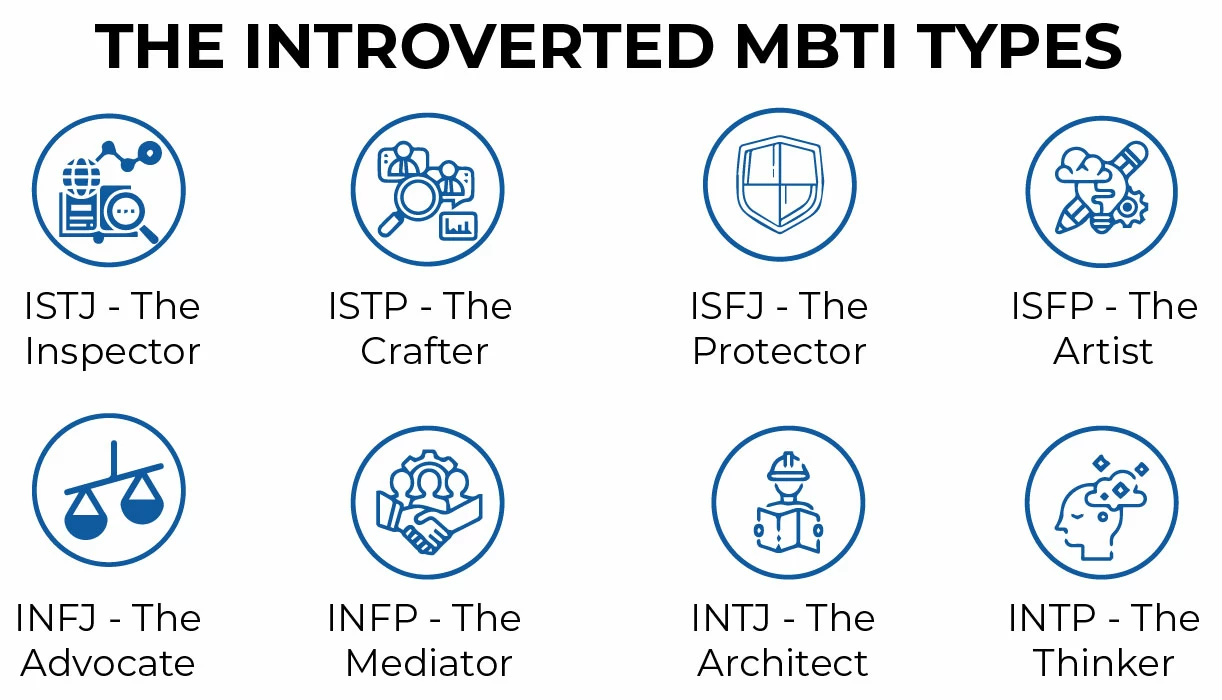
1. ISTJ - The Inspector
ISTJs are good managers and task-masters, driven to establish and maintain order in systems and organizations.
They are meticulous and enjoy routine; they have a system for every activity they perform.
2. ISTP - The Crafter
ISTPs are most interested in using facts.
They always want to know how and why things work. They can be very good with their hands and practical tasks that involve physical skills.
3. ISFJ - The Protector
ISFJs are the nurturers of the world.
They have a strong sense of duty and are very service-oriented. They are usually good at caring for people and creating a harmonious environment.
4. ISFP - The Artist
ISFPs are creative and free-spirited individuals who appreciate beauty and aesthetics.
They often have a strong sense of personal values and can be very loyal friends.
5. INFJ - The Advocate
INFJs are the rarest type and are often called "the counselor."
They have an extremely strong sense of intuition and insight and use this to help others.
6. INFP - The Mediator
INFPs are idealists who champion the underdog.
They have a strong sense of personal values and often have a gift for words. They are excellent at seeing both sides of an issue.
7. INTJ - The Architect
INTJs are less common than other types, making great strategic planners.
They like to push the boundaries of their knowledge and know-how to get things done.
8. INTP - The Thinker
INTPs are the world's philosophers and are constantly in pursuit of knowledge.
They are analytical and logical and often have a dry sense of humor.
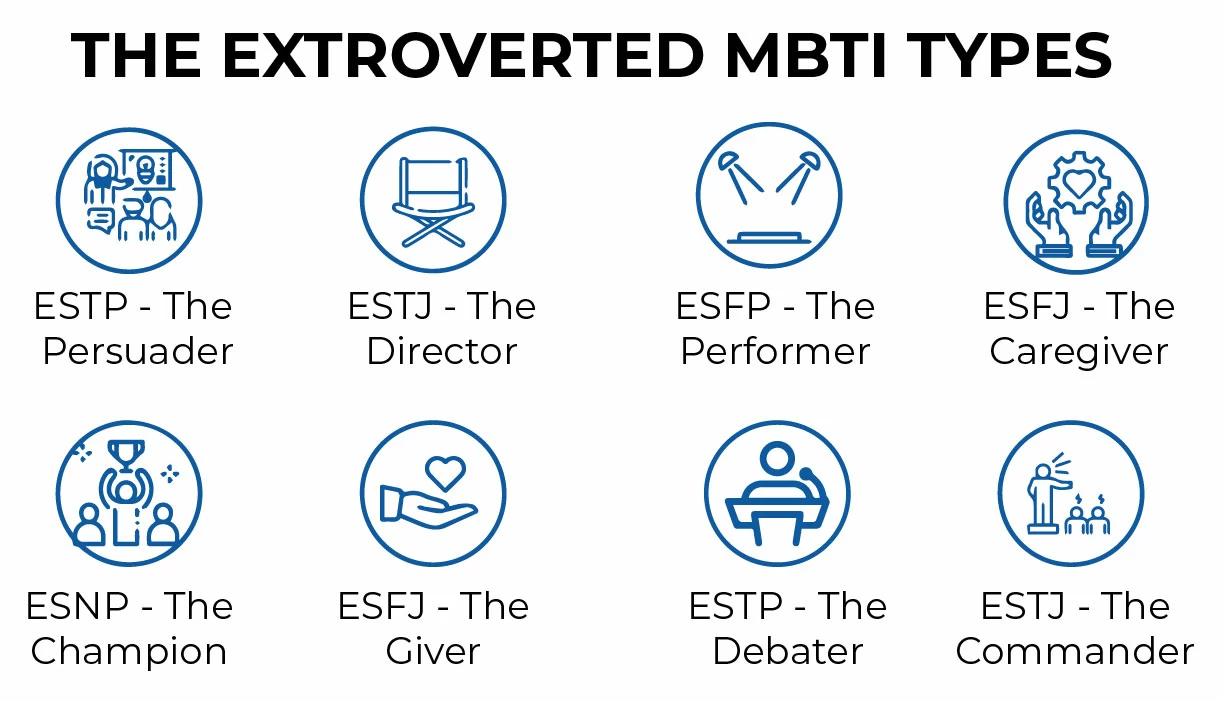
9. ESTP - The Persuader
ESTPs are the "action-takers" of the world.
They are confident and enjoy taking risks. They are great at dealing with people and are often good at sales and marketing.
10. ESTJ - The Director
ESTJs are the world's bosses, running a system with a strong sense of duty and loyalty.
They often have a natural "command presence" that makes them great leaders.
11. ESFP - The Performer
ESFPs are the "life of the party," good at socializing and entertaining.
They love to have fun but can also be moody individuals who don't like being alone.
12. ESFJ - The Caregiver
ESFJs are often the caregivers of their families, and they have a strong sense of duty.
They are good at anticipating needs and doing what is required to maintain a peaceful environment.
13. ENFP - The Champion
ENFPs are the people who evoke inspiration in others.
They are enthusiastic, individualistic, and often have a gift for words. They love to explore new possibilities and might change their mind about things regularly.
14. ENFJ - The Giver
ENFJs are the "mothers" of the world.
They have a strong sense of intuition, and often use it to help others. They are excellent at seeing both sides of an issue, and make great counselors.
15. ENTP - The Debater
ENTPs are the "debaters" of the world.
They are quick-witted and curious, constantly exploring new possibilities. They are always up for a good debate or argument about almost anything.
16. ENTJ - The Commander
ENTJs are the "commanders" of the world.
They have a natural sense of authority and enjoy rising through the ranks and setting and achieving big goals.
Chapter 5:
Frequently Asked Questions About MBTI
Do you have trouble understanding or interpreting your MBTI results?
In this chapter, I will address common questions and queries people have about the Myers Briggs Type Indicator and help you resolve them.

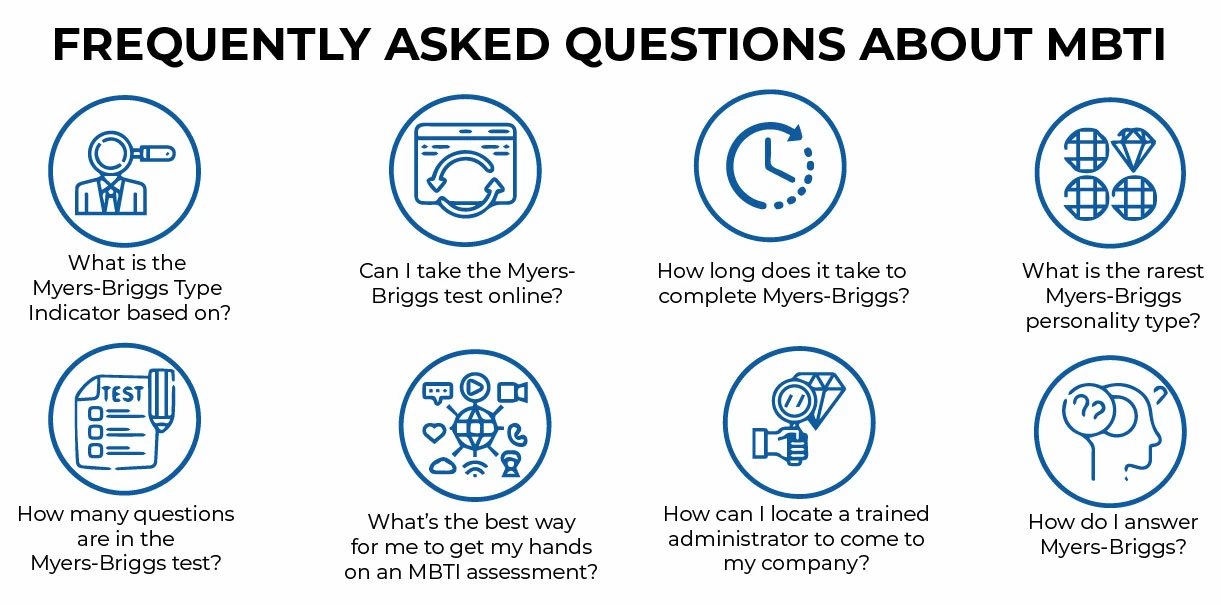
Q. What is the Myers-Briggs Type Indicator based on?
The Myers-Briggs Type Indicator (MBTI) is based on the theory of Swiss psychiatrist Carl Jung.
He postulated that people perceive the world through four primary psychological functions — sensation, intuition, feeling, and thinking — and that, for a majority of individuals, one of these four faculties is dominant.
Q. Can I take the Myers-Briggs test online?
Yes, there are several websites that offer the test for free.
However, it is important to note that not all tests are accurate, so be sure to do your research before taking one. The most legit site is MBTIonline.com.
Q. How long does it take to complete Myers-Briggs?
The MBTI is a personality assessment that takes around 30 minutes to complete.
There is no time limit for completing the test, which means that you may take as long as you need.
A competent expert, who is trained in interpreting the MBTI and various detailed reports, would be able to meet your unique demands.
Q. What is the rarest Myers-Briggs personality type?
INFJ is the rarest type, making up just one percent of the population.
Q. How many questions are in the Myers-Briggs test?
There are currently 93 forced-choice questions in the North American version, and 88 forced-choice questions in the European version of the Myers-Briggs Type Indicator.
There are two distinct options for each question, from which the participant must select one.
Q. What's the best way for me to get my hands on an MBTI assessment?
If you live in the United States, a university or college advising or counseling service may be able to suggest someone who works as a private practitioner in the community and uses the MBTI instrument.
You may also discover MBTI professionals in your area through the Master Practitioner Referral Network's referral lists.
If you live outside of the United States, you may locate a distributor through The Myers-Briggs Company's website.
The Myers-Briggs Company licenses worldwide distributors who provide MBTI training, translations, and support materials.
Contact your local distributor and inquire whether they can help you arrange for the MBTI assessment.
If you're unable to discover a distributor in your area, contact The Myers-Briggs Company at [email protected], and they will be able to help.
Q. How can I locate a trained administrator to come to my company?
You may hire a professional to administer the MBTI, and provide feedback to the group with one-on-one consultations with each member.
A local university or college may be able to suggest a person in private practice in the community that uses the MBTI instrument as advice or counseling service.
Q. How do I answer Myers-Briggs?
It is advisable to respond quickly to the questions without too much thought since, in most situations, you could probably make a case for most of them.
Your first "gut" response is likely to be your preference.
Conclusion
If you want to try to understand yourself and others better by using a specific tool that helps us work out different types of personalities, then the Myers Briggs assessment is for you.
The purpose of this guide is not to change or alter, but rather build upon your existing personality traits and characteristics.
Each personality type is equally important in the grand scheme of things, and we should aim to embrace our differences rather than be critical of them.
If you're still not sure which type you are after reading this guide, there are plenty of online resources where you can take a quiz to find out.
Remember, there is no "right" or "wrong" type, as it's all a matter of personal preference.
I hope you enjoyed the information provided in this Myers Briggs Type Indicator guide.
If you think I have left any questions answered and you need more clarity, let me know your thoughts in the comments.
