

84 Key Life Coaching Statistics for 2026
Last updated: March 2026
84 Key Life Coaching Statistics
This is the complete up-to-date list of the important statistics related to life coaching for 2024 I have curated by going through more than 127 sources.
Every six months, I remove the old, outdated statistics and replace them with new ones. That means these are all relevant and fresh.
On this page you’ll find hand-picked stats about:
- Industry Trends
- Demographics
- Opportunities
- Income
- Training and Certifications
- Challenges
And a whole lot more.
So without further ado, let’s see the stats!

Contents

01.
Market, Growth, and Opportunities





06.
Covid-19 Impact and Challenges

01.
Market, Growth, and Opportunities
Let’s start with the most important statistics about the life coaching market, its size and market value, its growth, and the opportunities in this sector. I got these stats from studies, surveys, reports, and articles. Read on!

- Life coaching is the second-fastest-growing industry in the world with an average yearly growth of 6.7%. (Source)
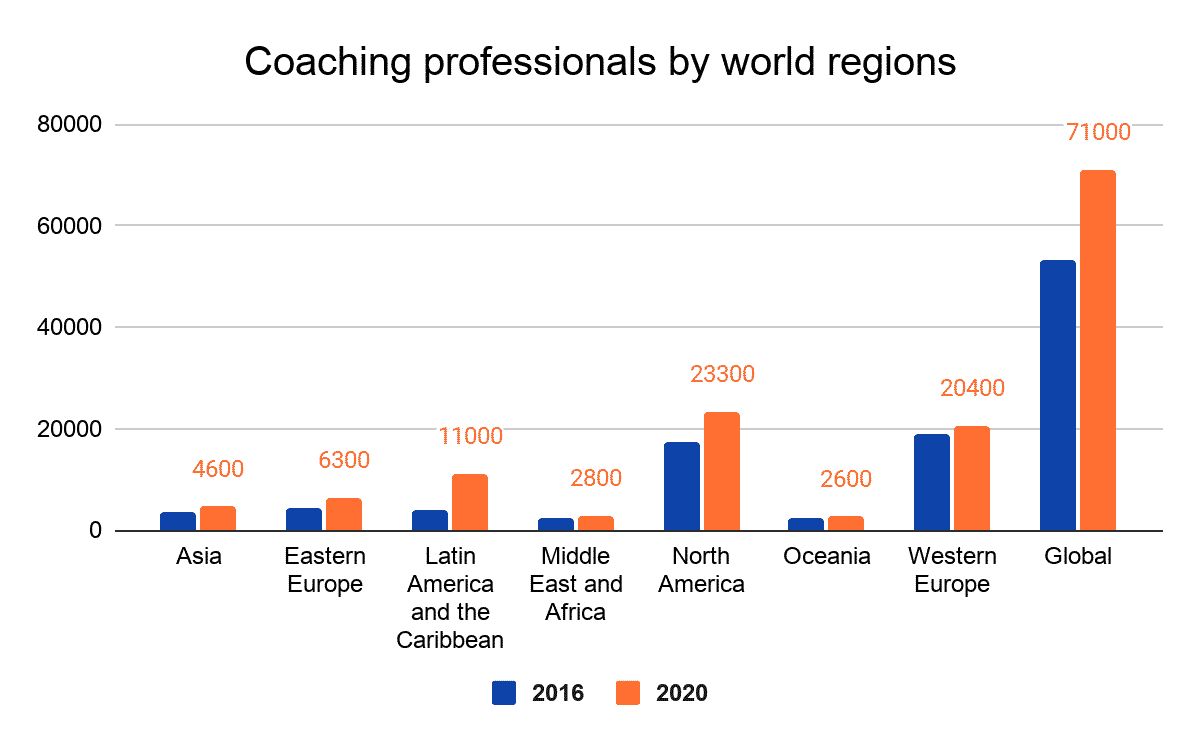
- Globally, the number of life coaches went up by 33% from 2016 to 2020. (Source)
- Latin America and the Caribbean region showed the most growth with a 174% increase while Eastern Europe was in second place at 40%. (Source)
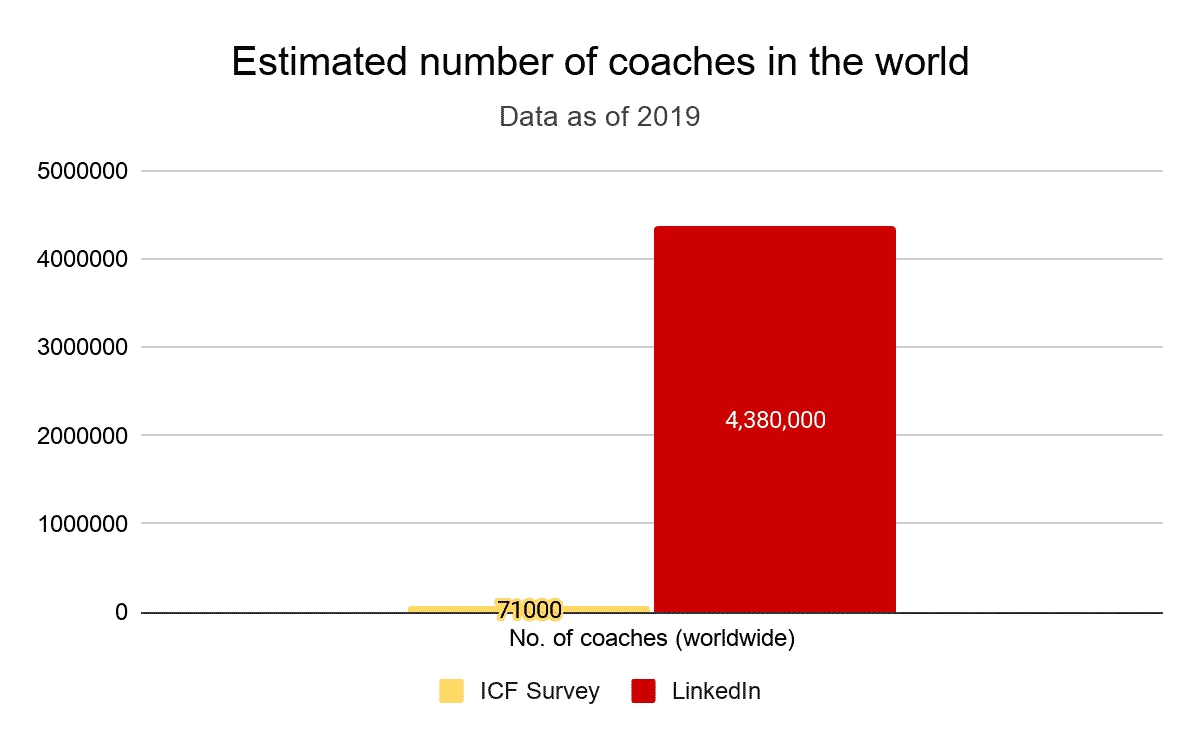
- There are an estimated 4,380,000 coaches globally. (Source)
- There are an estimated 1,790,000 coaches in the US. (Source)
- The demand for life coaches is still trending upwards and the industry is expected to keep growing at about a 5.4% growth rate. (Source)
- The global market size of the coaching industry is over USD 15 billion. (Source)
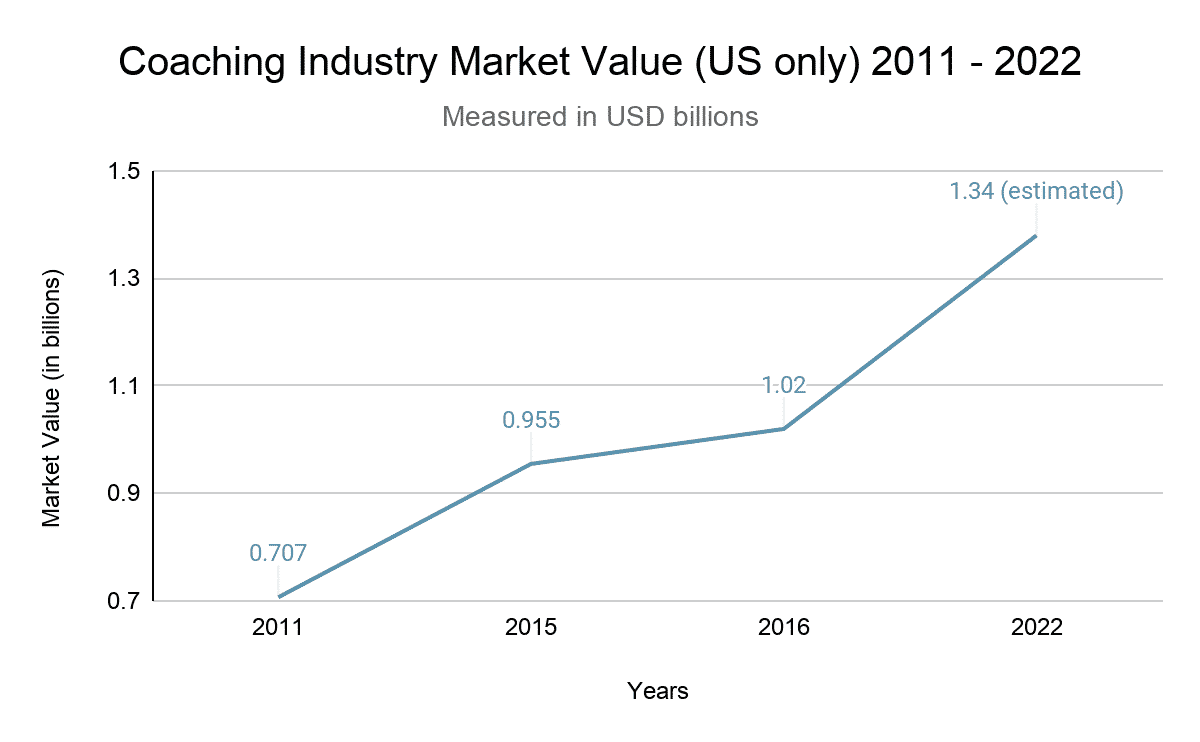
- The estimated market value of the coaching industry in the US rose from $707 million in 2011 to $1.02 billion in 2016. This is an increase of almost 30% over 5 years. (Source)
- The market value of the coaching industry is predicted to reach USD 1.34 billion by the year 2022. (Source)
- 25% to 40% of all Fortune 500 companies include executive coaching as a part of their standard leadership training for their top executives and best performers. (Source)
- 63% of organizations that offered coaching to their employees reported higher revenue and income growth among their competitors. (Source)
- 90% of all the surveyed life coaches said they currently have active clients. (Source)
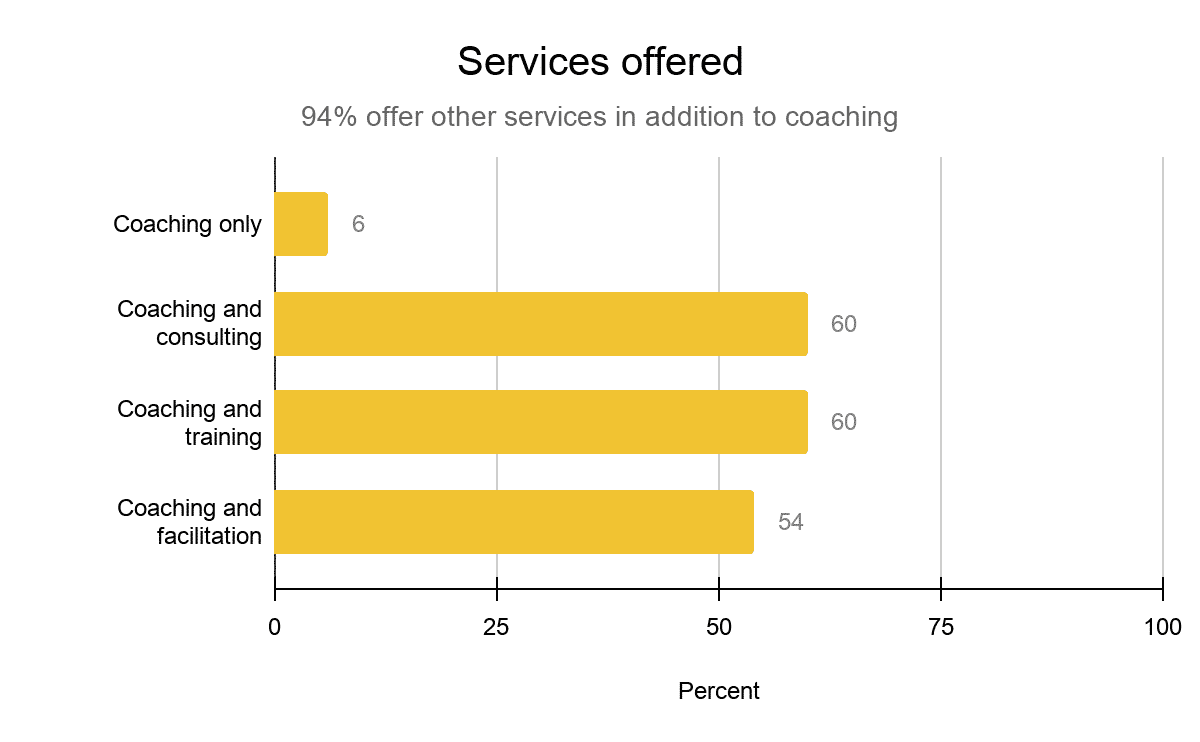
- 94% of coaches said they offered services such as consulting, training, or facilitation services in addition to coaching. (Source)
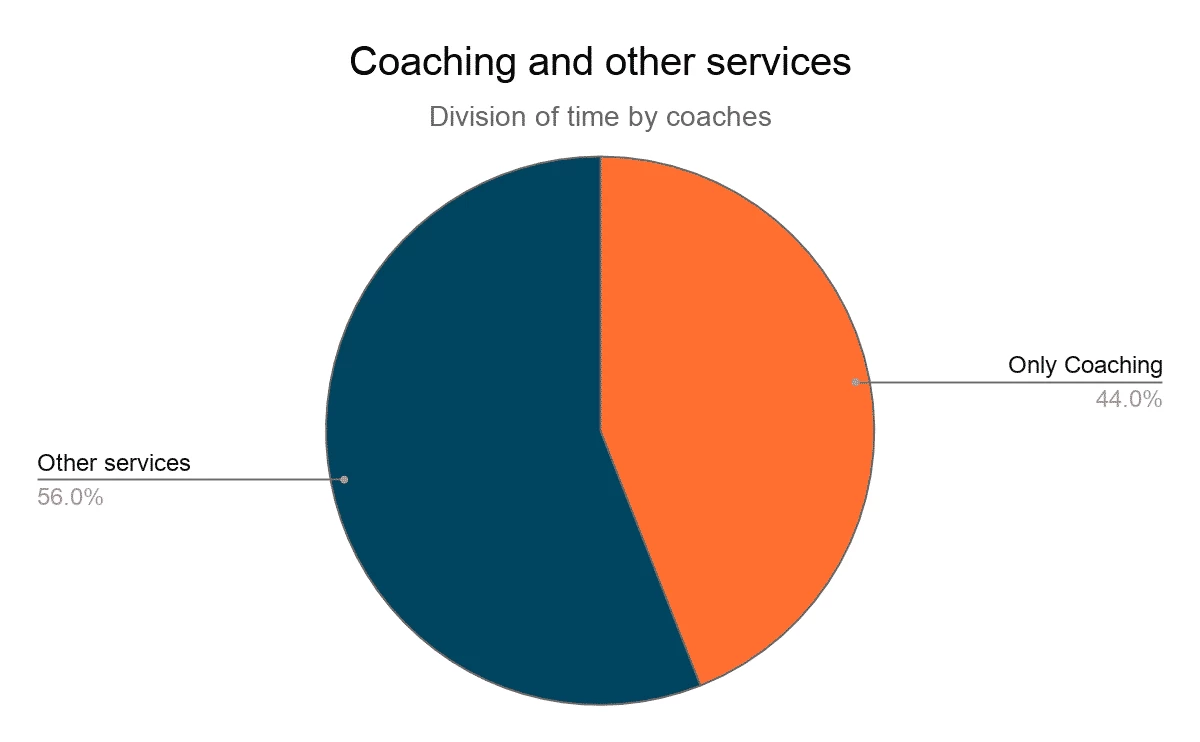
- Coach practitioners who offered additional services, gave 44% of their time to coaching while dividing the rest of their time between their other services. (Source)
- The global health coaching industry was valued at USD 6.14 billion in 2019 and was expected to continue its growth of approximately 6.8% to cross USD 8 billion by the year 2022. (Source)
- North America shows the highest share in the global health coaching industry, with the US market showing an expected growth rate of 2.7% for this year and a rate of 5.4% per year for the next three years till 2025. (Source)
- As of 2020, the market value of the US health coaching sector alone was estimated at USD 7.1 billion and is expected to grow to USD 8.87 billion by 2025. (Source)
- There are approximately 128,000 health coaches in the U.S. market as compared to 109,000 health coaches in 2018. (Source)
- Within the health coaching sector, the market value of the weight-loss sub-sector was approximately USD 738 million in 2018 and is predicted to increase to USD 1.05 billion by 2022. (Source)
- Business coaching is another niche that has been showing an increase in popularity since 2016. The market size of the business coaching industry in the US has shown a growth of approximately 1.2% since 2016 and was valued at USD 11.6 billion (measured by revenue) in 2021. (Source)
- From 2014 to 2019, the growth rate of the business coaching sector in the US was about 5.6%. (Source)
- The prevalence of coaching is up by 38% in the last 8 years from 117 countries in 2012 to 161 countries in 2020. (Source)
02.
Demographics
Divided into three categories - age or generation of the coach practitioners, gender-related stats about life coaches, and the types of clients that are served by the coaches - this section sheds light on the mix of people involved in the life coaching sector.

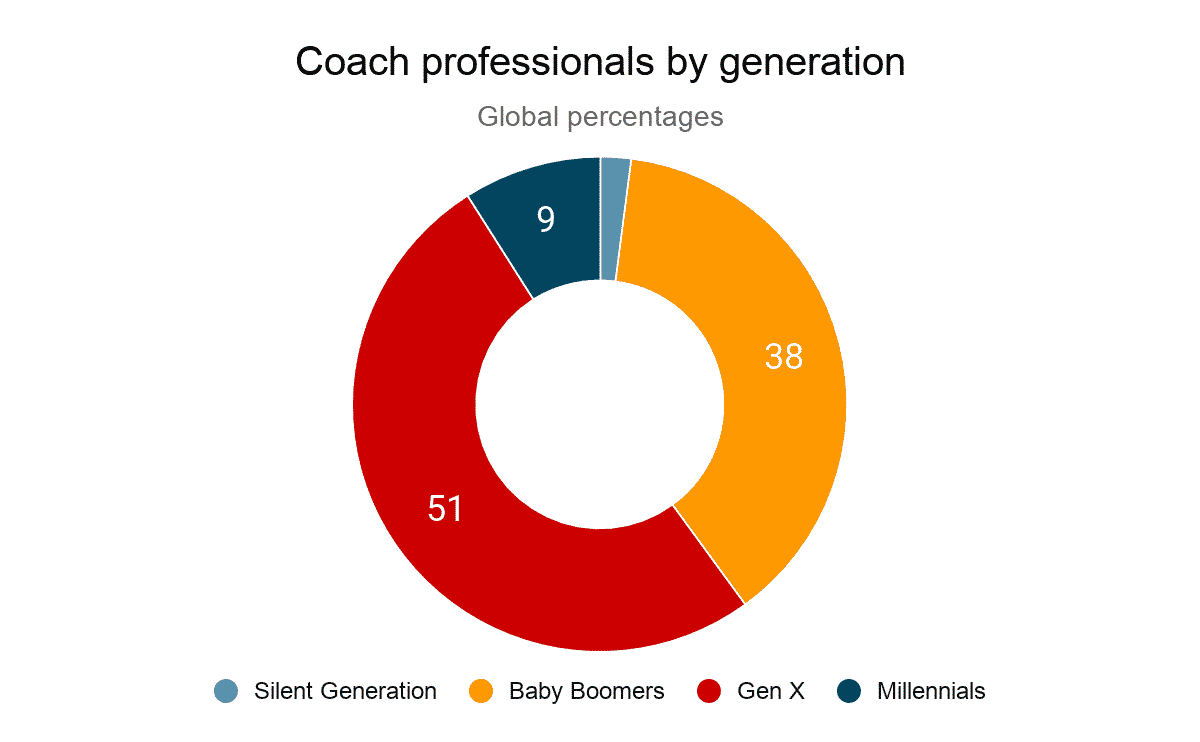
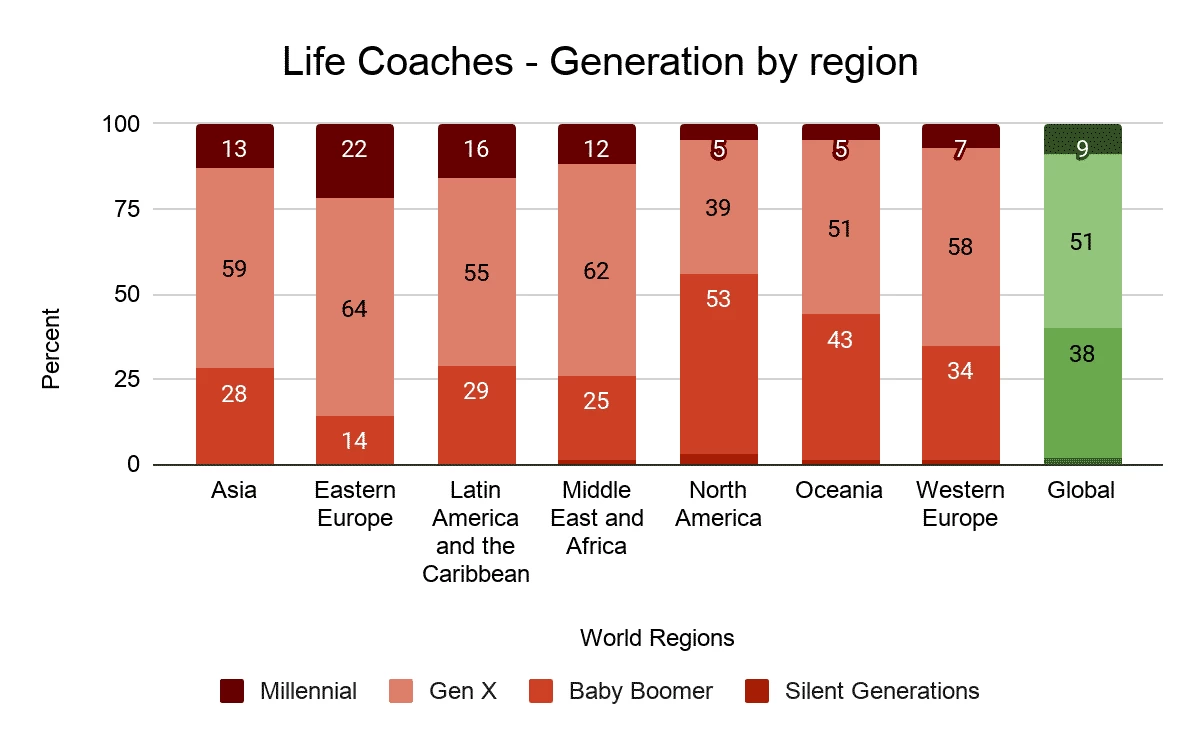
- The majority of life coaches fall under the Gen X bracket globally (51%), with Baby Boomers coming up second at 38%. (Source)
- Millennials account for a little under one in ten coach practitioners globally - the number ranges from 22% in Eastern Europe to just 5% in North America. (Source)
- In North America, Baby Boomers lead the charts with 53% while GenX comes in at 39%. (Source)
- Globally, coaches from the Millennial generation (9%) find it difficult to break into the life coaching industry that is dominated by GenX and the older generation. (Source)
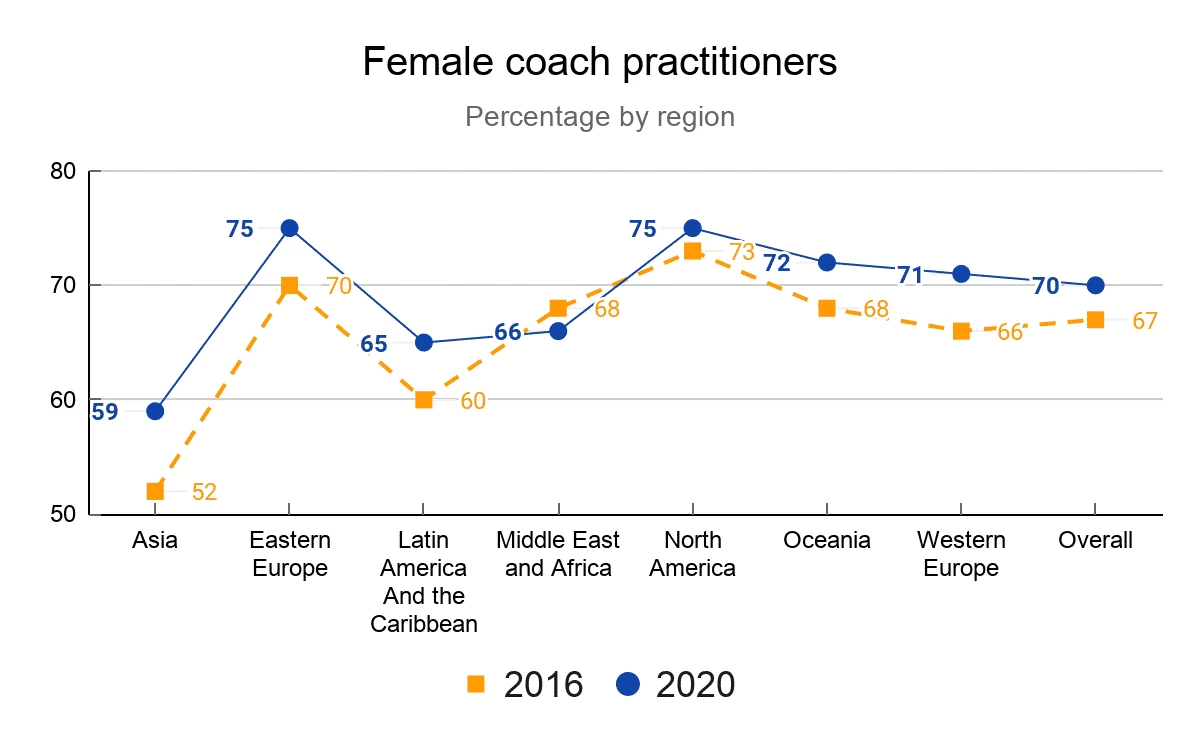
- Women make up 70% of all coaching professionals globally and about 74% of all coaches in North America. (Source)
- Female life coaches showed a steady increase in number and popularity (with a 3% rise from 67% in 2016 to 70% in 2020) across most regions excluding the Middle East and Africa. (Source, Source)
- In Asia, the proportion of female life coaches grew from 52% to 59% in just four years. (Source)
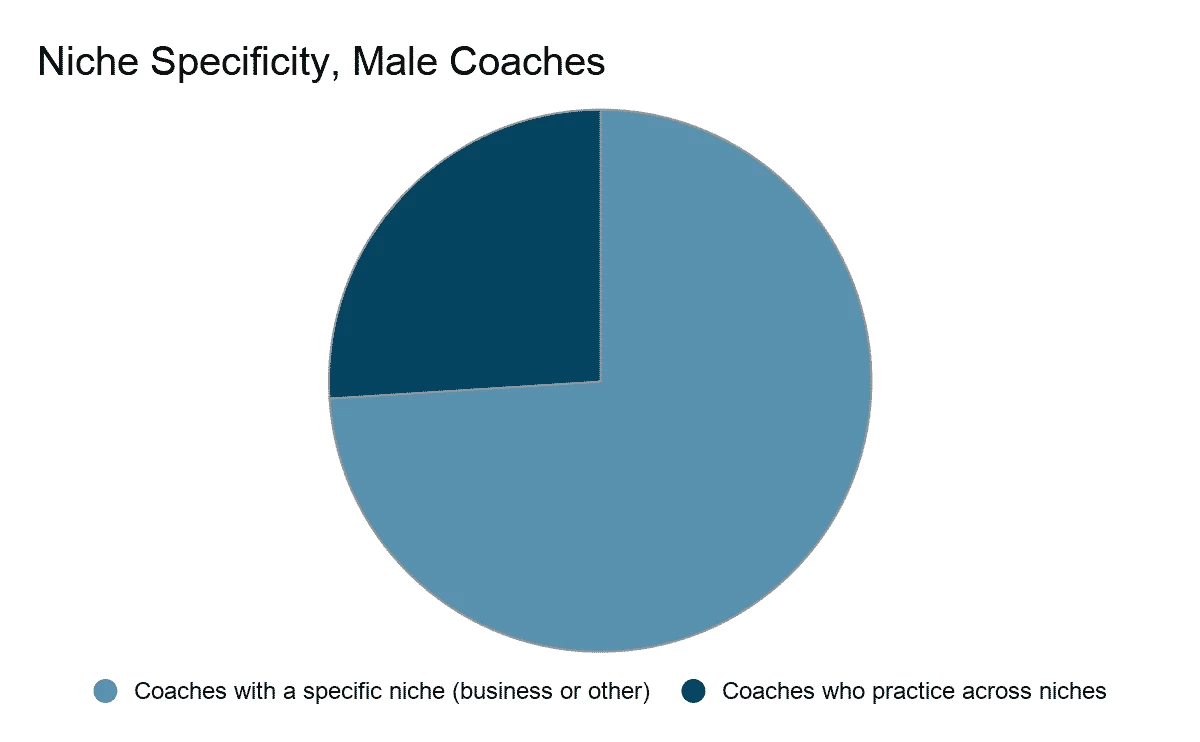
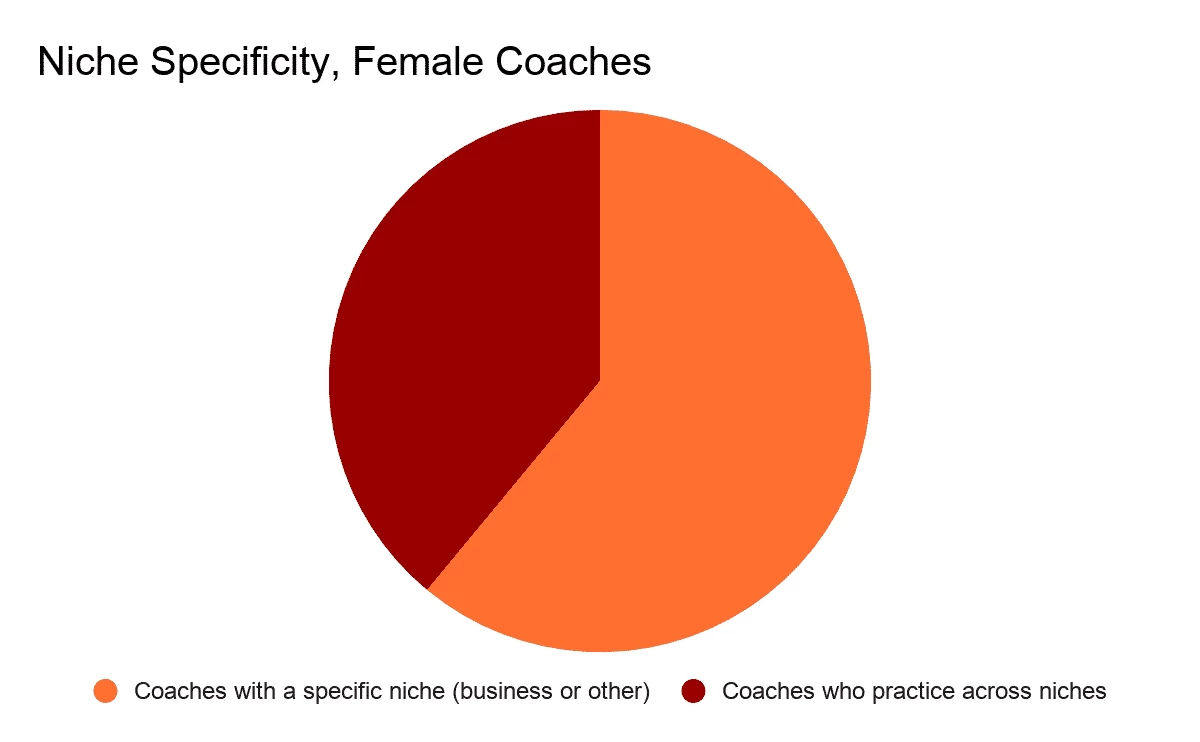
- Male life coaches were more likely (74%) to have a business specialty or a specific niche as compared to female coaches (61%). (Source)
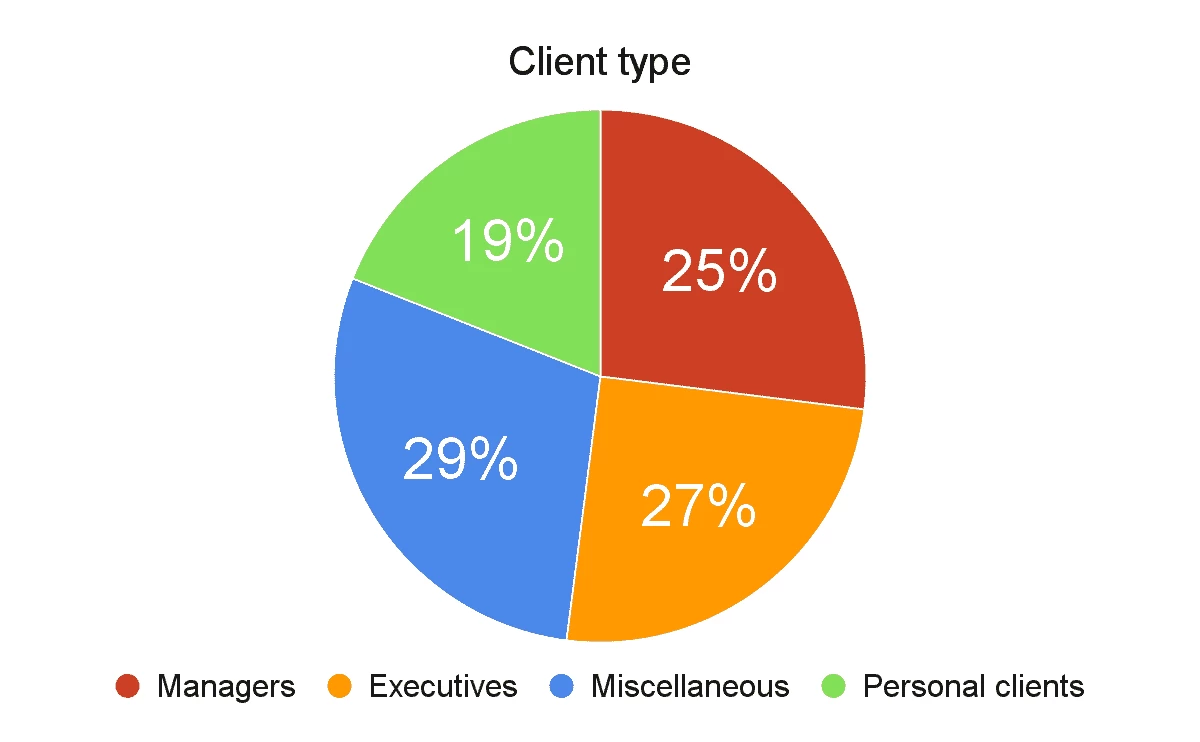
- More than 50% of the practitioners indicated that their clients are mostly managers (27%) or executives (25%). (Source)
- In the last five years, the variety of clients served by coaches have largely remained unchanged with managers decreasing by 4% while executives increased by 4%. (Source)
- While 17% of life or business coaches work both as internal and external coaches, most of them spend more time in their internal coaching practice (54%). (Source)
- In contrast to the practitioners, a Forbes article points to a preference of external coaches over internal ones, with 59% of executives favoring the former. (Source)
- From 2015 to 2019, the average annual income from coaching rose by 4% globally. (Source)
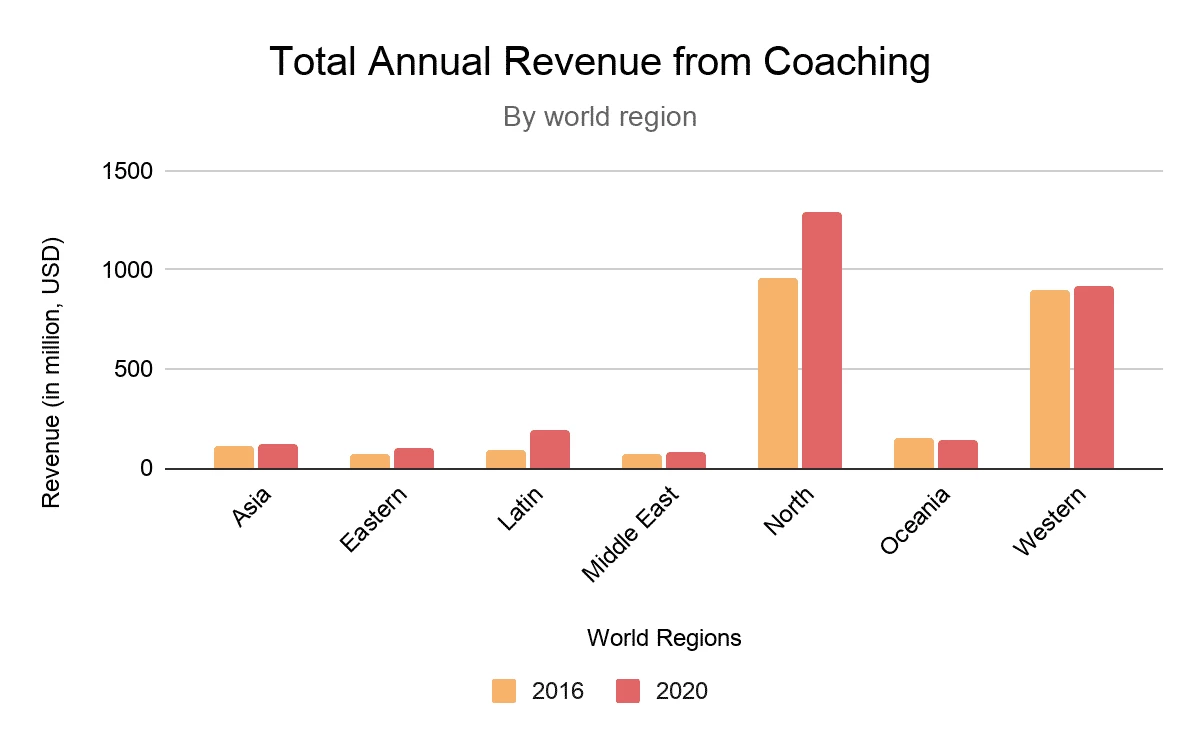
- The estimated global revenue from coaching was USD 2.849 billion in 2019, an increase of 21% on the 2015 estimate. (Source)
- The estimated revenue from coaching for North America rose 36% from the 2015 estimate to reach USD 1.296 billion in 2020. (Source)
- The salaries offered for job openings for life coaches range from $27,000 to $128,500. (Source)
- If compared in US dollars, the average annual revenue shows a decrease of 8%. But, taking into consideration the different currencies of the countries involved, and the fluctuation in the exchange rates over the past four years, the study estimates an increase of 4% in the average annual revenue from coaching on a PPP (Purchasing Power Parity) basis. (Source)
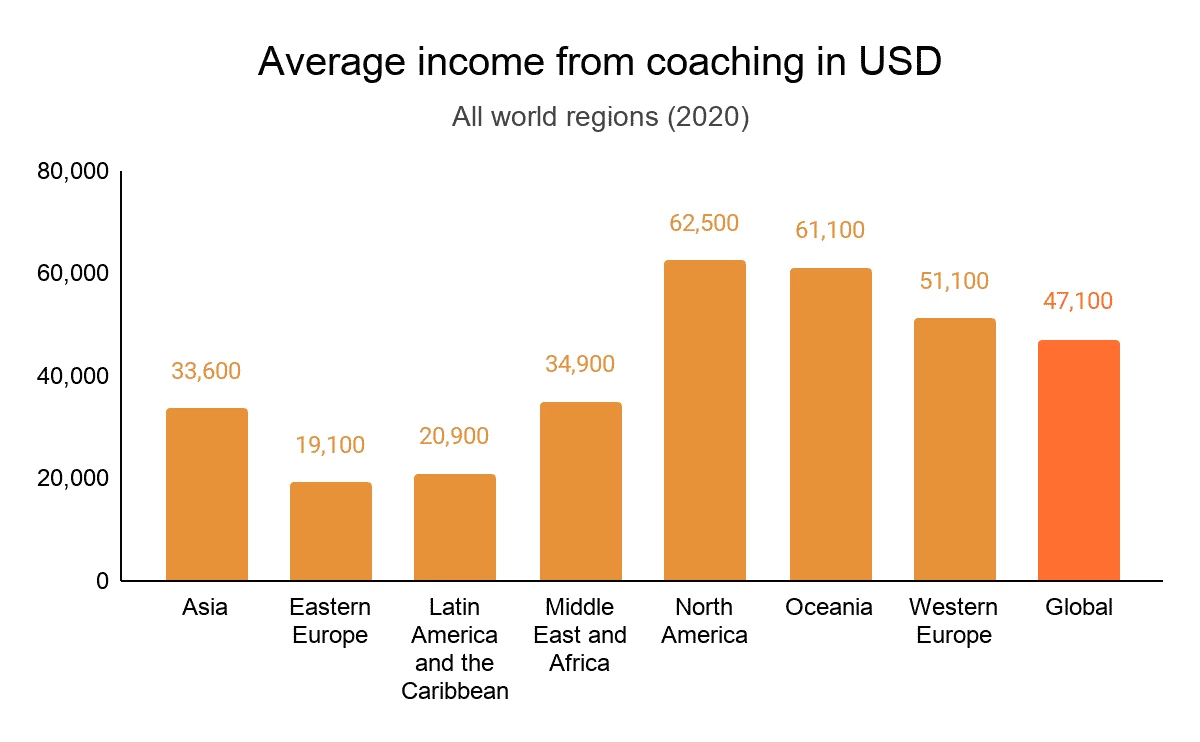
- On average, the income for life coaches across the world can range between $19,100 to $62,500. (Source)
- The highest average revenues were from the high-income regions of North America ($62,500), Western Europe ($61,100), and Oceania ($51,100). (Source)
- An executive coach in the US can charge between $120 to $330 per hour, depending on the years of experience the coach has. In Western Europe, the costs are about $288 or higher. (Source)
- Amongst the Fortune 500 companies of the world, 25-40% employ the services of executive coaches, including companies like Google and Goldman Sachs. (Source)
- About 42% of all business organizations do not use a business coach, although the executives involved in this survey agreed that business coaching was valuable (70%), that business coaching helped them develop better goal-setting (62.4%), that business coaching helped lower their feelings on anxiety (57.1%), etc. (Source)
- For clients, especially for executives and managers, the ROI for investing in coaching was nearly 600%. (Source)
- Nearly 77% of the respondents of a study reported that business coaching had a significant impact on at least one out of nine business measures. (Source)
- 86% of organizations that employ internal or external coaches or both saw an ROI on coaching and 96% said they would be interested in repeating the process. (Source)
- A study of the effect of executive coaching on a Fortune 500 company concluded that it produced a 529% return on investment and significant intangible benefits to the business. (Source)
- A study of Fortune 500 companies reported that coaching resulted in a 61% improvement in job satisfaction scores as well a 48% rise in quality. (Source)
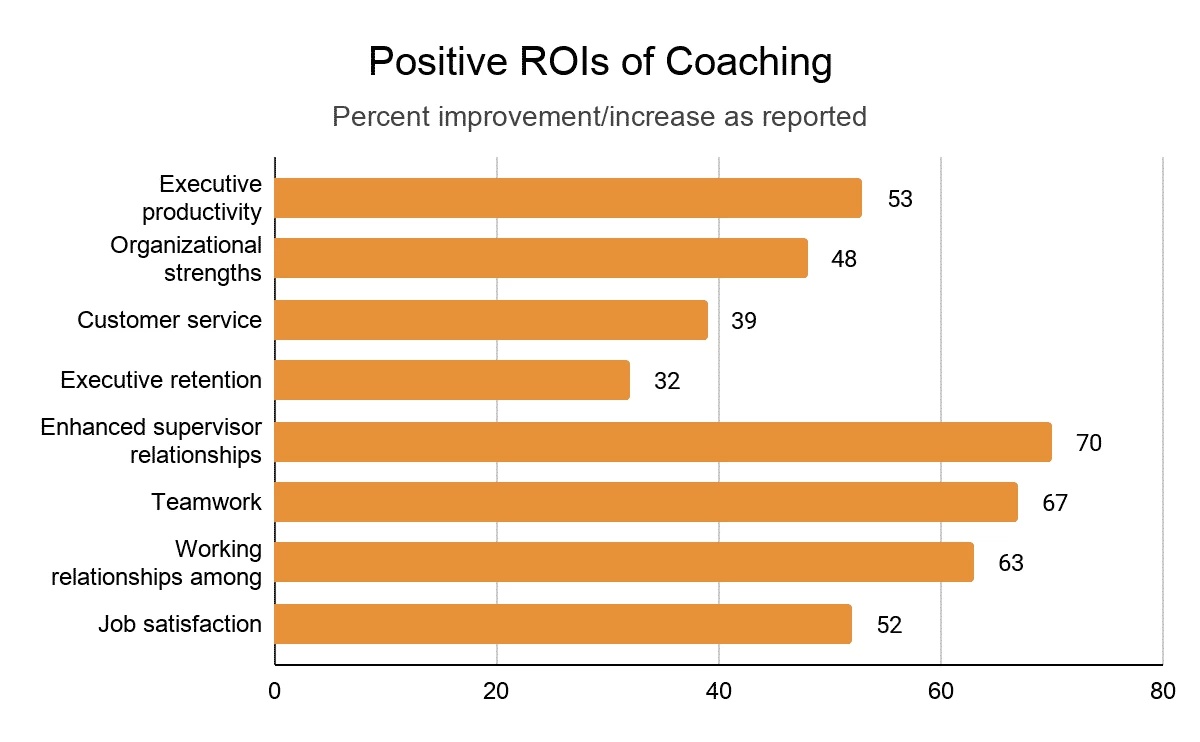
- Executive coaching produced positive ROIs in various areas including improved productivity (53%), teamwork (67%), improved supervisor relationships (70%), etc. (Source)
- The number of certified coach practitioners worldwide is estimated to be around 71,000 (Source)
- Considering there are an estimated 4,380,000 coaches globally and the number of certified coach practitioners is estimated to be around 71,000, we can concur that only about 1.6% of coaching practitioners are certified. (Source, Source)
- 85% of surveyed coaches agreed that professional training and accreditation for life coaches are becoming increasingly important, especially for clients who fall in the managerial and executive categories. (Source)
- 74% of surveyed coaching professionals report having a certification from professional coaching institutions. (Source, Source)
- From a coaching perspective, professionals in the industry can get an ROI of up to 3.44 times their initial investment for certification. (Source)
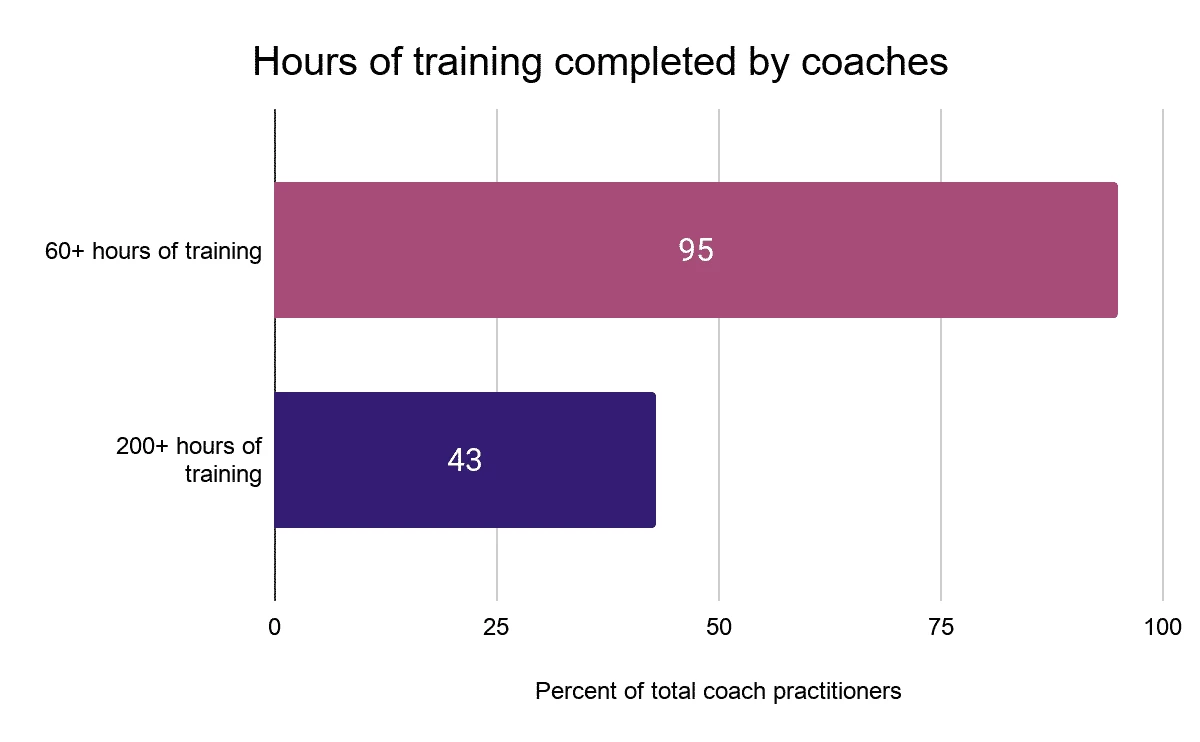
- 95% of surveyed coaching practitioners said they had completed 60 hours or more of training, while 43% said they had completed more than 200 hours of training.(Source, Source)
- Almost 75% of managers/ executives who have undergone training said they planned to enroll for further coach-specific training in the next one year, with 48% of these adding that they wanted to become a life coach (hybrid external and internal practitioner). (Source)
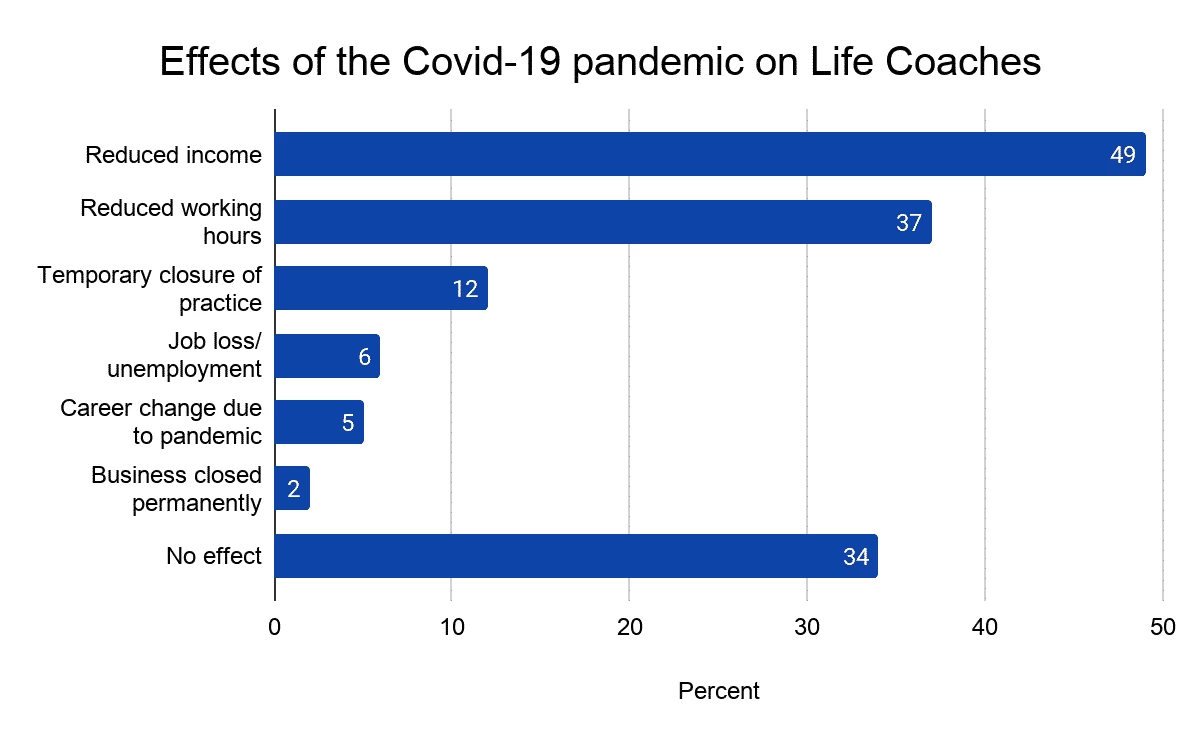
- 49% of coach practitioners reported reduced income during the pandemic. (Source)
- During the pandemic, 51% of life coaches reported a decrease in the number of active clients while 37% reported a decrease in their hours of work. (Source)
- Nearly 65% reported a negative impact on their business due to the pandemic. (Source)
- 25% reporting no impact or a positive impact on their business due to the pandemic. (Source)
- More life coaches with a non-business specialty reported a positive impact than business coaches. While the pandemic’s impact was felt in all niches in the life coaching sector, only 22% of coach practitioners with a non-business specialty reported a significant negative impact as compared to 29% of business coaches. (Source)
- Within the business niche, external coaches reported a higher negative impact (28%) than internal coaching professionals (11%) or hybrid coaches (17%). (Source)
- There has been a noticeable change in the way coach practitioners provided services in response to the pandemic. A sharp decline of 80% was reported in-person coaching, while the use of audio-visual platforms shot up by 74% and the use of telephones by 27%. (Source)
- The increase in the use of virtual audio-visual platforms ranged from 74% (Asia) to 82% (Eastern Europe). (Source)
- Most coach practitioners already have the right technology to deliver socially-distanced coaching with only 17% saying that they don’t. (Source)
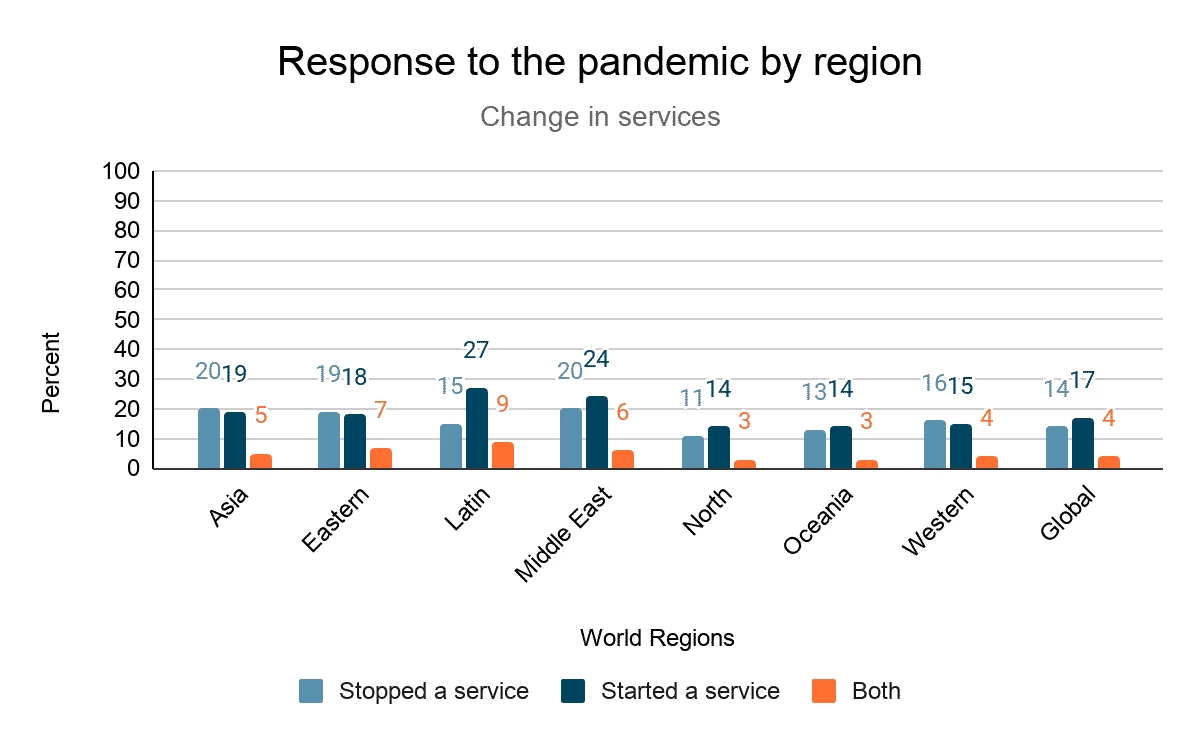
- The array of services offered by the professionals in addition to coaching also underwent a change in response to the pandemic. 75% of services were started while 84% had stopped providing certain services. (Source)
- Nearly half of life coaching practitioners globally (48%) reported a substantial increase in the number of hours spent on training during the pandemic, with Latin America and the Caribbean region leading the numbers at 54%. (Source)
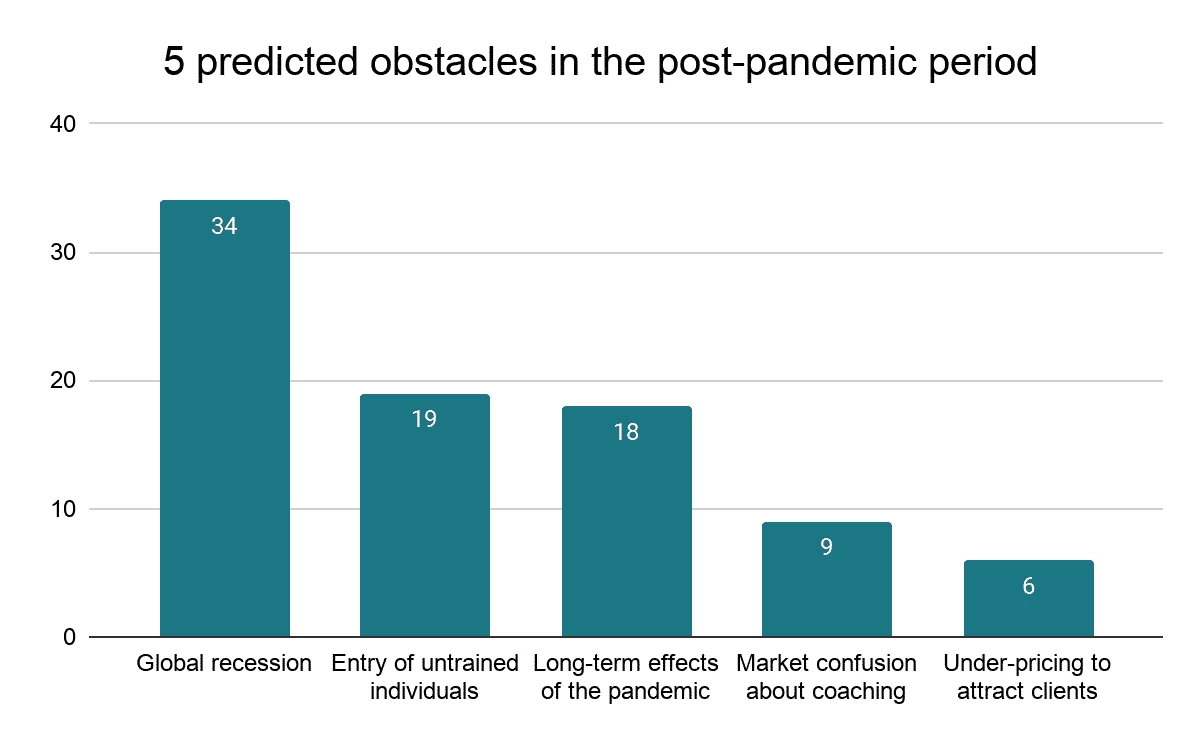
- 34% of coaches reported the possibility of a global recession as being their biggest worry over the next 12 months. (Source)
- Untrained individuals entering the industry (19%), and long-term impacts of the pandemic (18%) were the two other biggest obstacles predicted by coach practitioners. (Source)
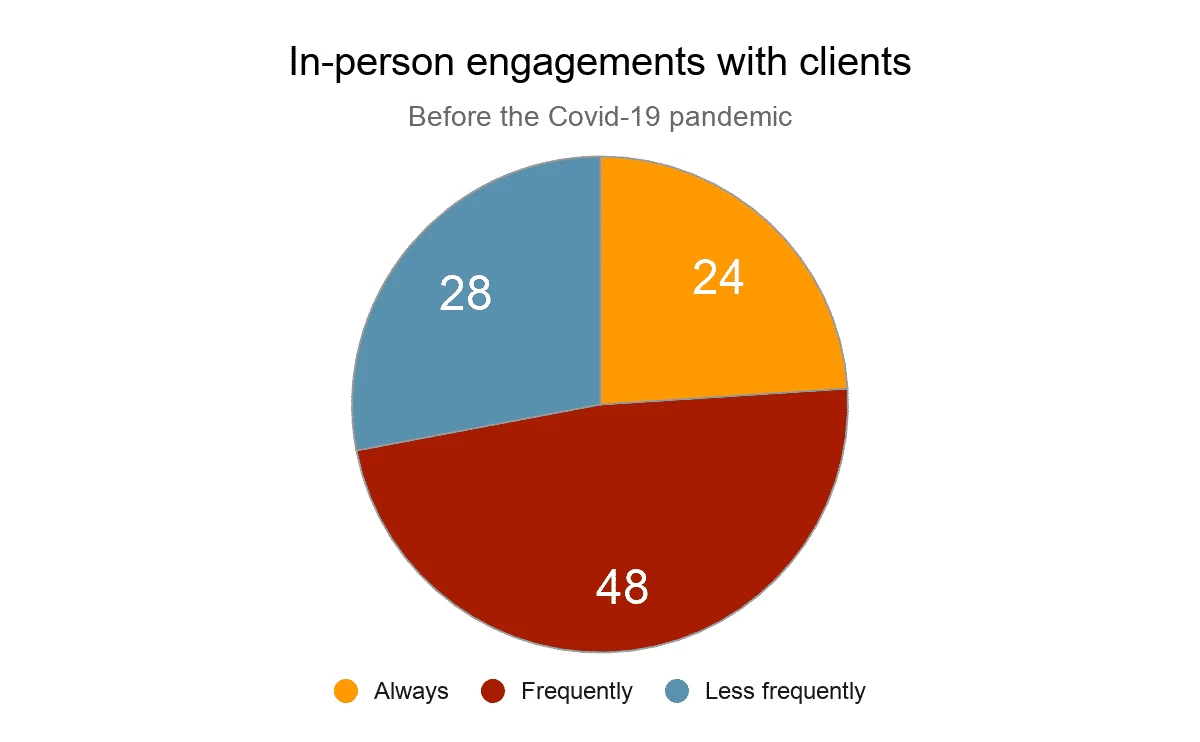
- With regards to the long-term impacts of the pandemic, the biggest change is expected to be a change in the methods employed to engage with clients. In pre-Covid times, 24% of life coaches always engaged with their clients in person while 48% said they did so frequently. Unfortunately, the Covid-19 pandemic has impacted this very stronghold of the life coaching industry as life coaches have had to change their methods of connecting with their clients while still abiding by the health and safety guidelines. (Source)
- 71% agreed that life coaches need to invest more in technology in the future, with 63% of coach professionals sharing the view that the coaching industry will not return to pre-pandemic methods after the pandemic. (Source)
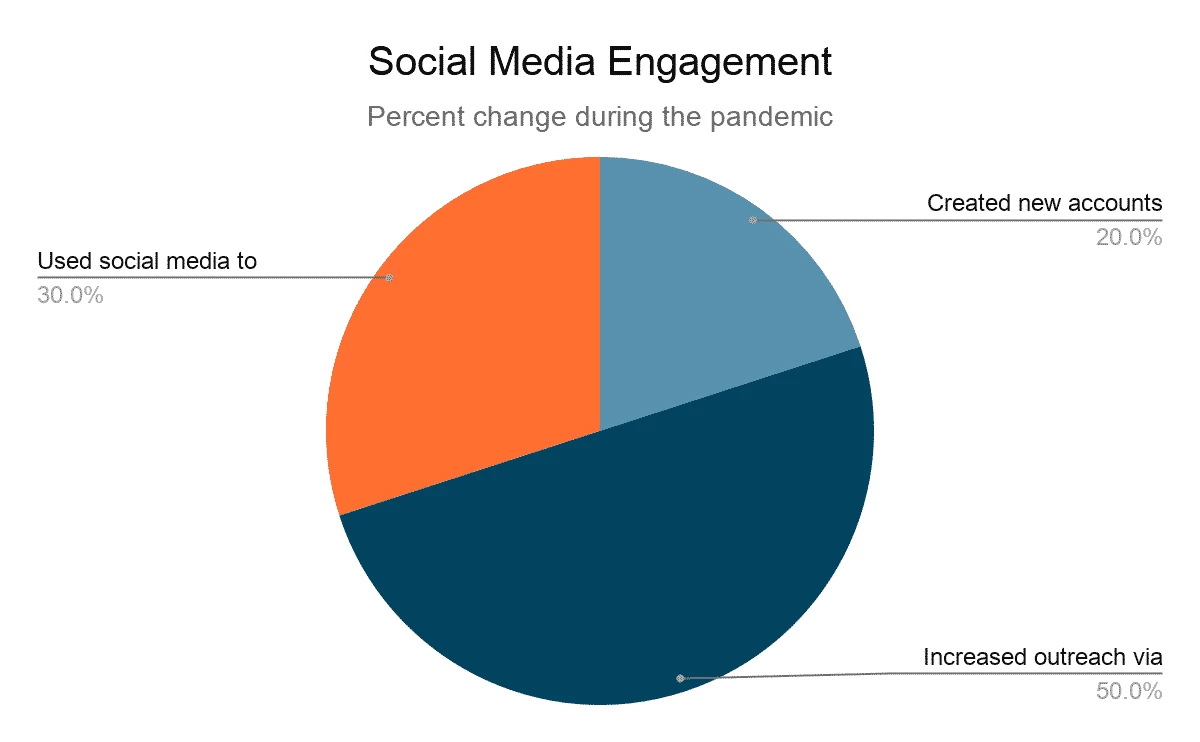
- Social media is turning out to be one of the most valuable tools for coach practitioners, responded 50% of coach practitioners that were interviewed. (Source)
- While 50% of life coaches turned to their existing Instagram and other social media to stay in touch with their client base, 20% created new social media accounts to further increase their reach. (Source)
- A word-of-mouth strategy is still a solid method to land new clients, reported 81% of coaching professionals. (Source)
- According to Acquity’s survey at the end of 2020, 52% of coaching professionals reported an increase in revenue while 22% said their income remained unchanged. (Source)
- The survey also found that 40% of coaching professionals began offering only online services only while 15% turned to a hybrid mix of in-person and online services. In line with these findings, the demand for online coaching services is predicted to increase in the latter half of 2020 and the upcoming years. (Source)
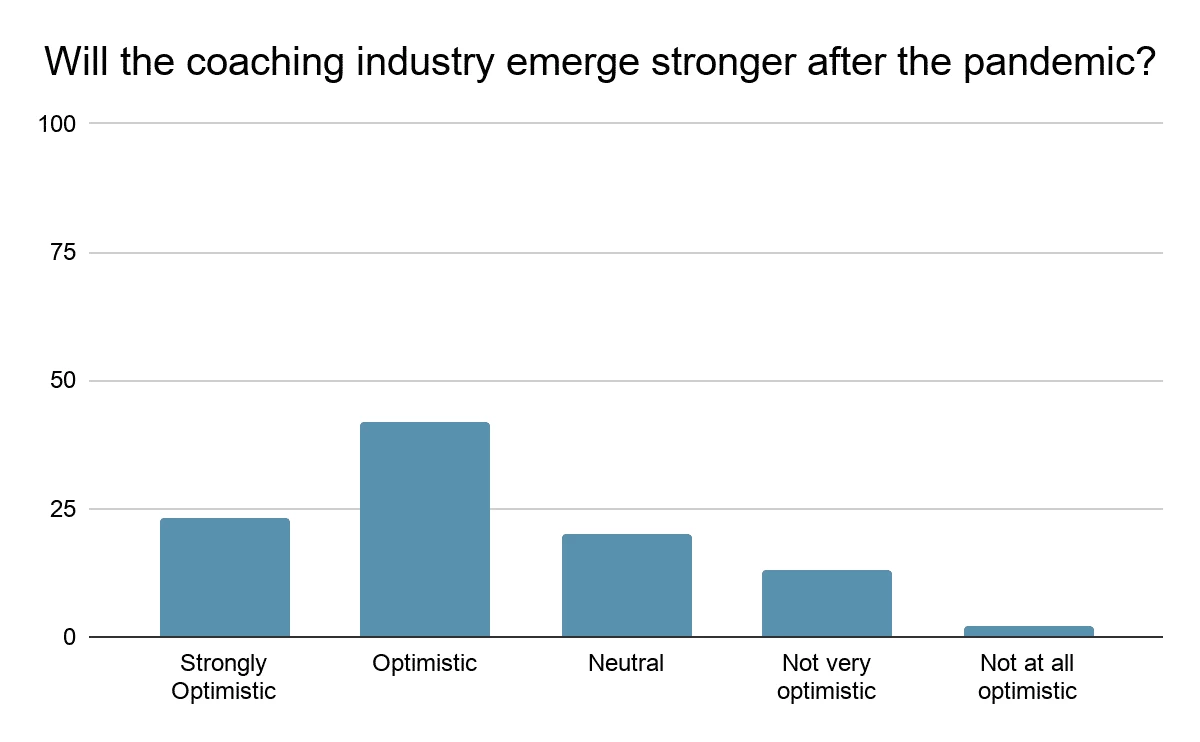
- 65% of coach practitioners were optimistic about the coaching industry emerging stronger from the pandemic. (Source)
- 50% of life coaches who reported a positive impact of the pandemic said they were ‘very confident’ while 12% of those reporting a negative impact on their business also agreed with the sentiment. (Source)
- Nearly 77% of coaching professionals agreed that coaching will continue to have a role over the next few months. The economic and emotional stress caused by the Covid-19 pandemic on a global level is predicted to contribute to the increased need for coaching services. (Source)
- The need for pro bono coaching is also expected to increase, with 69% of life coaches with a non-business specialty agreeing with this statement. (Source)
- Since the beginning of the pandemic, the provision of pro bono coaching offered by a majority of coaches has increased globally, with two out of three in the Middle East and Africa and nearly one in two in Oceania and North America. (Source)
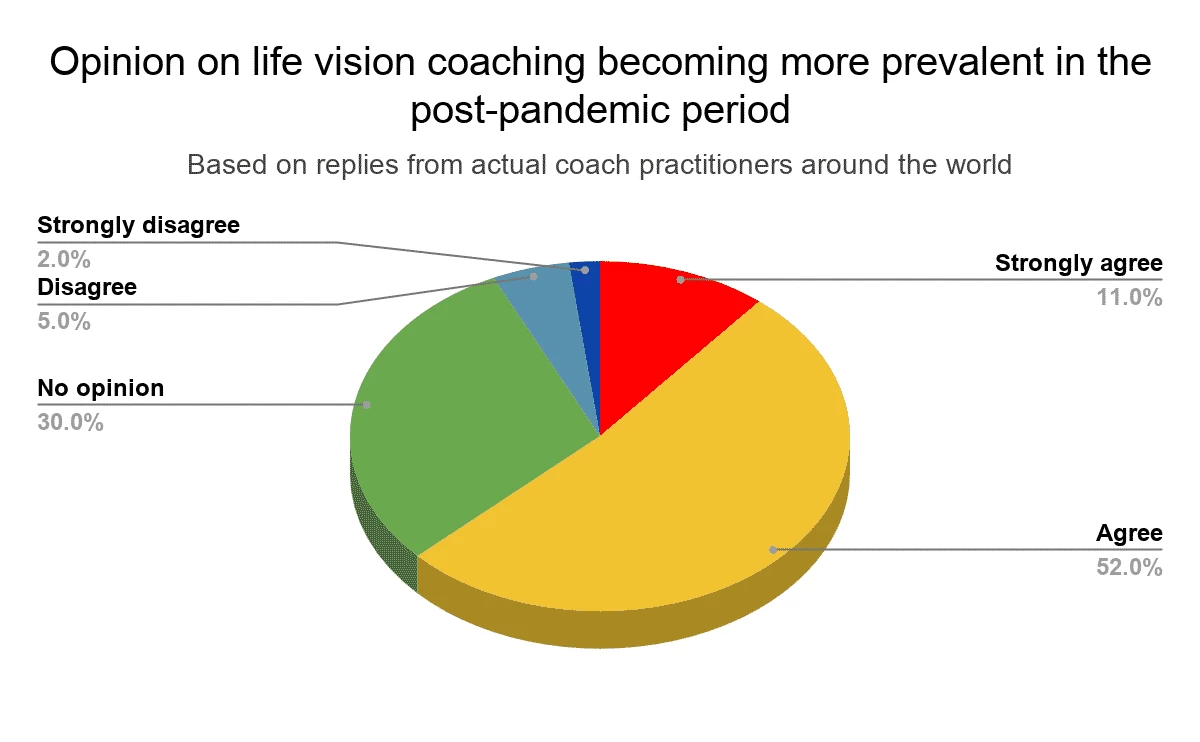
- 63% of coach practitioners agree that life vision and enhancement coaching are predicted to become more prevalent. (Source)
- Due to the Covid-19 pandemic in 2020, the business coaching sector is set to decline by 0.2% in 2021. (Source)
| Birth Years | Generation Name |
| 1997-1999 | Generation Z (Gen Z) |
| 1982-1996 | Millennials |
| 1965-1981 | Generation X (Gen X) |
| 1946-1964 | Baby Boomers |
| 1945 and earlier | Silent Generations |
03.
Income
Let’s dive into some stats that shed light on the income earned by life coaching professionals and the revenue generated from the life coaching industry.

04.
Impact on Clients
Be it life coaching or business coaching, there are some solid stats that show the difference a good coach can make!
Let’s quickly go over some statistics about the impact of life coaching on the actual consumers of the service.

05.
Training and Certification
As with any industry, the right credentials are of the utmost importance when it comes to selecting a coaching professional.
Let’s see what the numbers say about life coaching training and certification.

Get the Definitive Guide on Life Coach Certifications for FREE
This in-depth guide has 13 chapters that will cover everything you need to know - from why certifications, how to choose one, to our top recommendations.
06.
Covid-19 Impact and Challenges
2020 was a difficult year for the world. The effects of the Covid-19 pandemic were felt across the globe, on every sector of the economy. The life coaching industry was affected by the pandemic too. Let’s take a look at some stats related to the impact of the pandemic on the global life coaching industry.

07.
Post-Covid Trends
The Covid-19 pandemic did not just disrupt the life-coaching sector, it also changed the way the industry functioned.
Let’s look at some data about the future outlook and what is expected going forward.

Conclusion
I hope you found this mega list of coaching statistics interesting and insightful.
Now I’d like to hear your thoughts:
Which coaching stat from this list surprised you the most?
Or maybe there’s a stat out there that I overlooked (it happens 🙂 ).
Let me know by leaving a quick comment below.
