
![Life Coaching: The Definitive Guide [2026 Update] - Coach Foundation](https://blog-dyd.s3.eu-west-1.amazonaws.com/ghlimages/life-coaching/Featured-img.png)
Life Coaching: The Definitive Guide [2026 Update]
Last updated: March 2026
Life Coaching
The Definitive Guide
Welcome to the definitive guide on Life Coaching!
Thousands of ideas flash through our brains in a single day.
We are constantly making judgments and choices that influence the type of life we live, who our friends are, where we work, and how happy we are.

What if you could modify any aspect of your life with just a few basic changes? Imagine being able to free yourself from the shackles holding you back for so long.
Life coaching is that process of self-discovery and transformation where you learn to transform your beliefs and attitudes to develop a better way of living for yourself.
So if you want to:
- Learn what Life Coaching is
- Learn how it can help you to become successful
- Learn about its various types to advance in your coaching or mentoring career path
- Get answers to some of the important issues around it
Then, without further ado, let's begin by getting a clear definition of life coaching!
Contents

Chapter 1
The Basics of Life Coaching




Frequently Asked Questions on Life Coaching
Chapter 1
The Basics of Life Coaching
Often, people think that Life Coaching is like therapy, and they try to address very personal issues with a stranger. This couldn't be farther from the truth!
The best thing about life coaching is that it's focused on an individual and their problems, and a coach provides one with external objective insights.
In this chapter, you'll learn the basics of life coaching.

I will cover its definition, history, who a life coach is and their types, and a few of the biggest myths surrounding this profession.
Let’s jump right in!
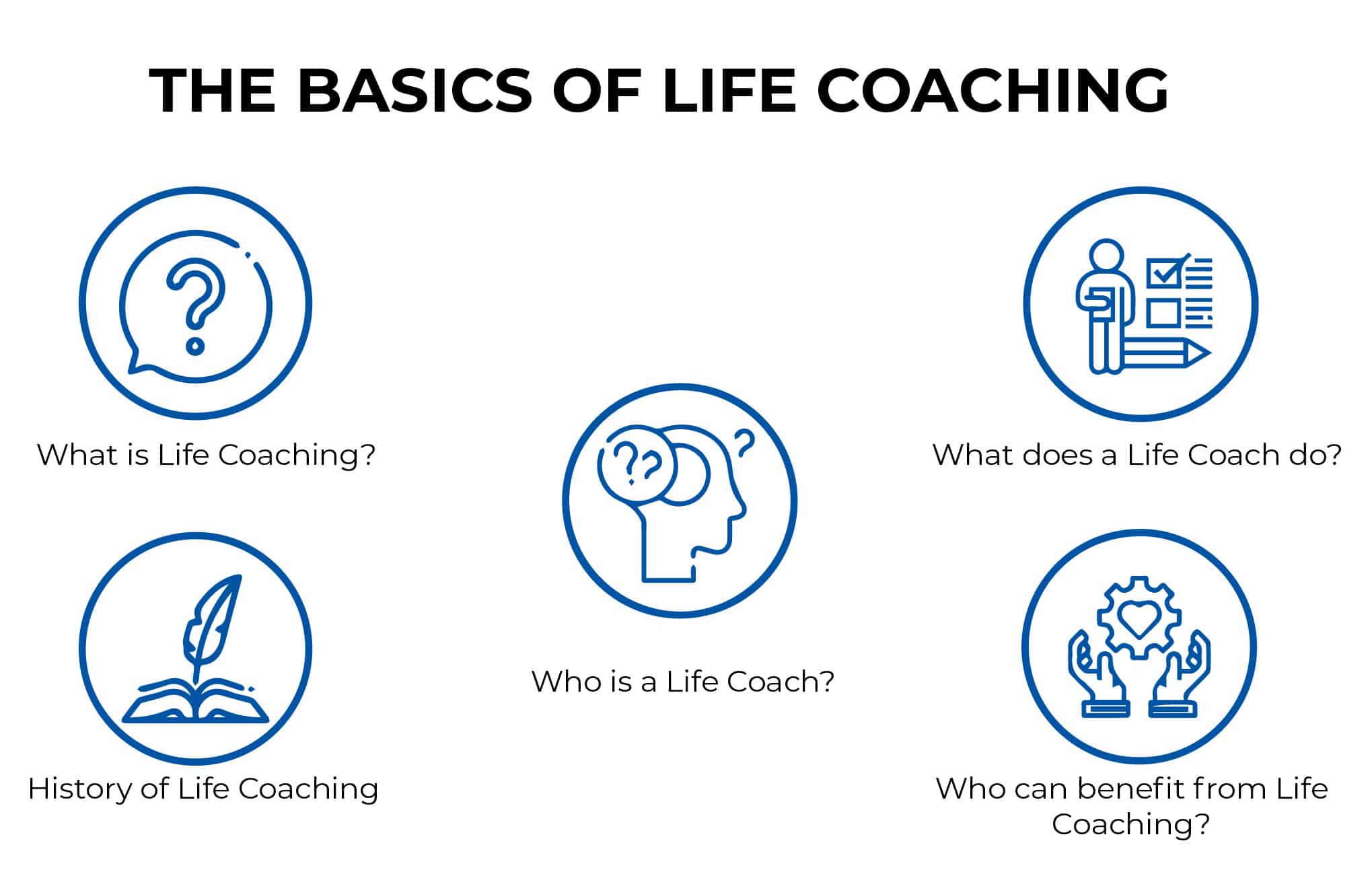
What is Life Coaching?
In its simplest form, Life Coaching is about helping people find solutions to the challenges they face.
People who hire a coach are looking for guidance and support to achieve specific personal or professional goals.
People who coach tend to be highly ethical and fiercely determined to help their clients achieve success.
They possess personality traits that allow them to be sensitive yet firm, confident yet modest, persistent yet patient, and empathetic yet assertive.
History of Life Coaching
Thomas Leonard, in the 1980s, was the first to bring life coaching to prominence.
Leonard discovered that his clients, who appeared to be emotionally stable and not in need of therapy, wanted more from him than just financial advice on investing and protecting their money.
They desired assistance in organizing their lives and developing clear objectives.
In 1995, Leonard founded the International Coaching Federation (ICF), becoming the most well-known worldwide coaching organization.
The number of practicing coaches rose exponentially as the number of coaching clients increased daily.
Many people were critical of his plan to make life counseling a career.
However, the advantages of coaching rapidly became apparent, and it was recognized as a highly essential discipline.
As a result, thousands of individuals began their coaching journeys.
Who is a Life Coach?
Possibly the most important thing to understand about life coaching is that it's not therapy.
Coaches do not focus on trauma or mental health issues.
They instead look at common goals such as becoming happier, healthier, stronger, wiser, more organized – anything that a person wants to change – but expects the clients to complete the required tasks to reach their goals by themselves.
Coping with anxiety or stress in the workplace is becoming more critical than ever, especially with increasing mental health issues among employees.
According to the Building a Coaching Culture for Increased Employee Engagement study —
63 percent of companies that provide coaching to their employees have enjoyed greater revenue and income growth among their competitors.
A professional coach provides support to employees who want to make necessary changes in their lives and improve themselves.
Coaches assist in reinstating confidence by developing plans that are manageable and realistic rather than drastic and unachievable – for example, trying to become a marathon runner overnight.
The life coaching industry is independent and has no borders or limits, which makes it extremely exciting.
You can work with all kinds of people from different backgrounds, helping them achieve their personal goals.
What does a Life Coach do?
As a life coach, also known as a personal coach, your job is to help your clients make the changes they need to live a happier and more fulfilling life.
A life coach will meet with the client regularly, or whenever it is necessary, to provide support and guidance.
The client-coach relationship is usually very close, with coaches acting more like mentors and less like bosses or teachers.
The duties of a coach vary based on the type of coaching that is being done.
However, in general, successful life coaches can be expected to:
- Assist their clients through difficult times
- Provide resources and tools to help overcome challenges
- Help their clients prioritize what's important in their lives
- Assist in setting and achieving goals
- Work through issues that are holding them back from being the best version of themselves possible.
Who can benefit from Life Coaching?
Life coaching is for anyone looking to improve their life.
Whether one needs help with setting and achieving goals, overcoming a challenge or addiction, or wants to have more happiness in their life, a coach can be there to support the client each and every step of the way.
Some common types of people who seek life coaching:
- People looking to overcome a phobia or fear.
- New parents who are looking for advice on how to be the best parent they can be.
- People who need motivation and self-improvement.
- Those looking to create a business plan for their business.
- Individuals struggling with relationships, such as divorcees attempting to move on from an ex-spouse.
- Older or retired individuals who want to stay active and maintain a fulfilling lifestyle.
- Individuals who are in careers that don't fulfill them and wish to make a career change.
- Individuals who wish to improve their relationships, whether that's with friends or family.
Next up — I’m taking you through the various types of life coaches.
Chapter 2
Types of Life Coaches
There are several different types of life coaches, each of whom help clients work upon a certain aspect of their life.
Each type of life coach caters to a specific need the client might have, so as to improve their life in that particular way.
Let’s get right into it.

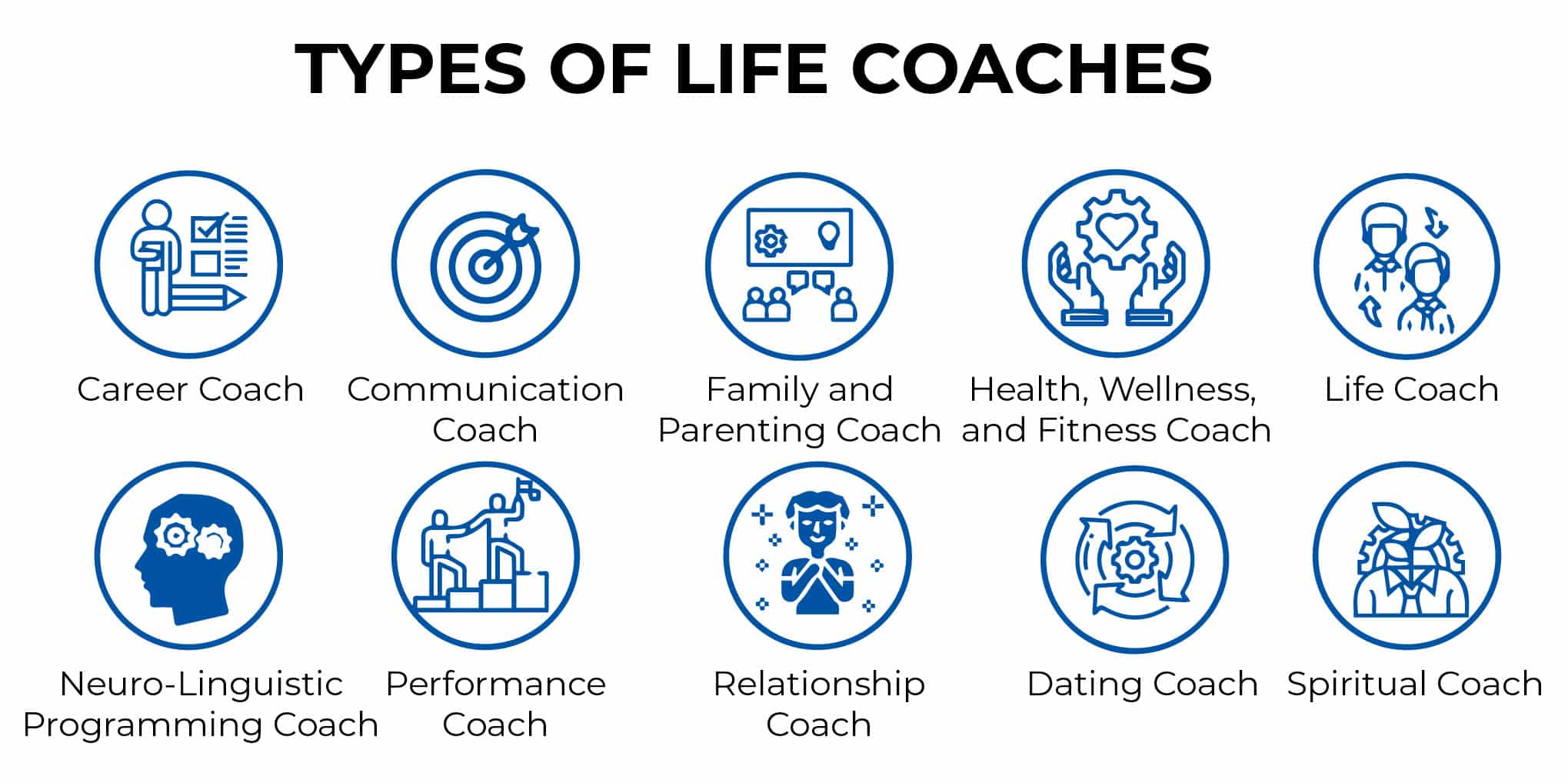
Career Coach
Career coaches assist their clients in finding jobs and setting up their careers.
They help in developing the skills necessary for the workplace, whether it is communication, time management, or team-building.
Career coaches are ideal for people who want to change their careers and move into another, more fulfilling profession.
Communication Coach
Communication coaching is about improving interpersonal relationships by ensuring that our message has been received, understood, and remembered.
Communication coaching helps overcome challenges in personal relationships, in the workplace, or when communicating with clients.
Family and Parenting Coaches
Family and parenting coaches help their clients develop a better relationship with their children.
They also help clients overcome conflict in the household, deal with behavioral problems, or achieve a better work-life balance.
Health, Wellness, and Fitness Coaches
Working with eating habits, fitness regimes, and stress management are priorities for health, wellness, and fitness coaches.
Life Coach
Life coaches help clients figure out the next step in life.
A life coach is there for their client when they need someone to turn to, without imposing their own plan or goals that they expect you to meet.
Neuro-Linguistic Programming Coach
A Neuro-Linguistic Programming (NLP) coach employs various tools to help clients succeed, perform better, and get more done.
Additionally, they study the language and behaviors of successful people to assist the client in emulating those techniques to achieve comparable or higher performance levels.
Many life coaches utilize the many NLP methods to help clients free and reduce any limiting beliefs or actions.
Performance Coach
Often people in the performing arts sector – actors, dancers, musicians – seek a coach to help them hone their craft and pave a path towards becoming successful.
A subset of this group would be coaches who work specifically with professional athletes.
Relationship Coach
Wedding and marriage coaches can help get a couple on the same page about their relationship.
They work to help the couple understand each other more deeply, and develop tools to foster a healthy, happy relationship.
Dating Coach
A dating coach supports in overcoming the fear of dating, or ensuring a relationship stays strong.
Dating coaches are there to assist in understanding body language, vocal tonality, and conversation skills to connect more deeply with someone their client is interested in.
Spiritual Coach
Those who are keen on understanding the deeper aspects of spirituality work with spiritual coaches.
Spiritual coaches guide in uncovering your life purpose, finding yourself, and becoming a better person.
Let’s move on to talking about the perks and pitfalls of life coaching next.
Chapter 3
Perks & Pitfalls of Life Coaching
Like any other profession, becoming a life coach comes with both upsides and drawbacks.
Let me take you through both of these before you jump into coaching as a career, and invest in it.
In this chapter, I will be discussing the perks of life coaching and the pitfalls that come with it, so you can make an informed decision whether this is right for you!

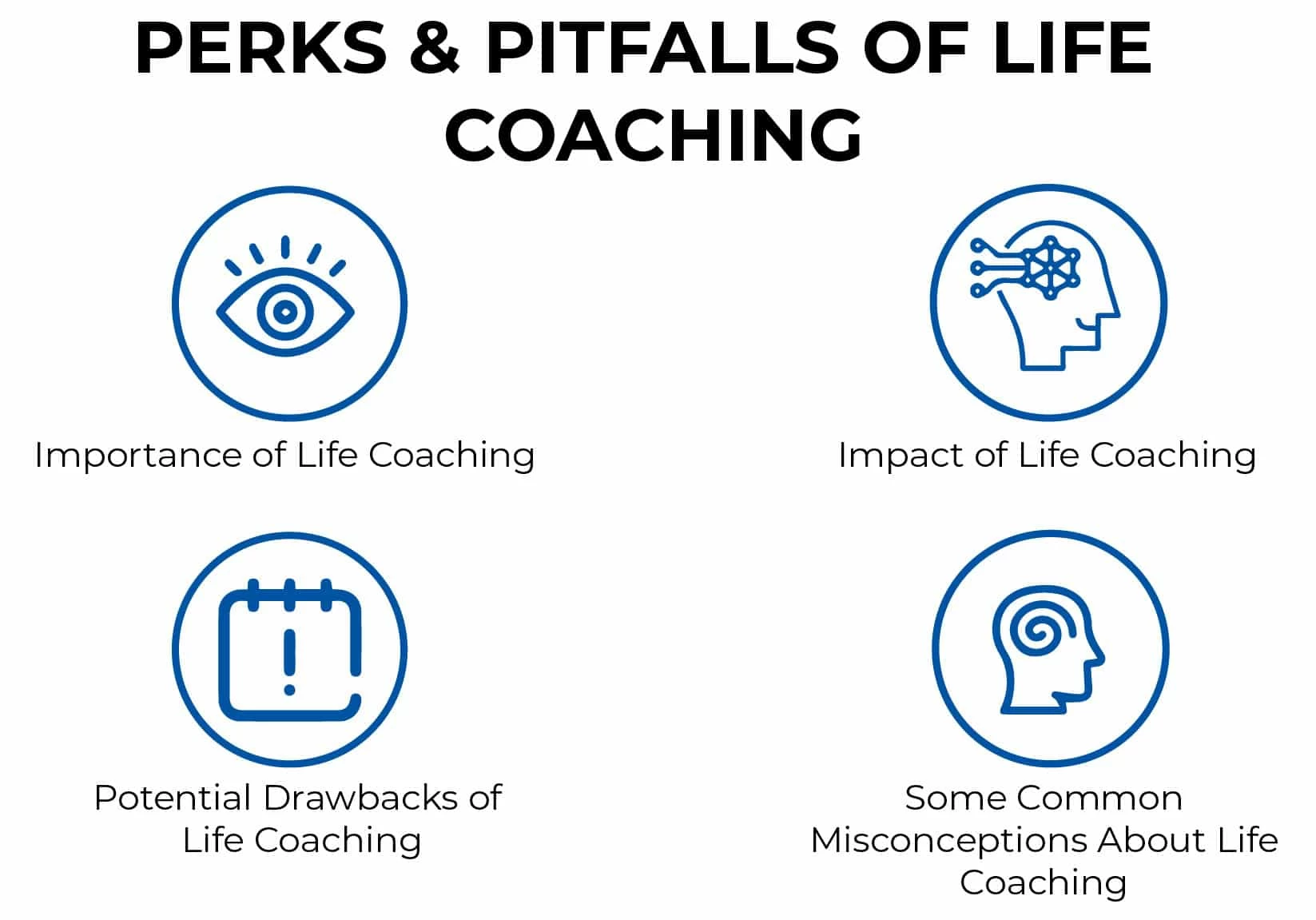
Importance of Life Coaching
A life coach can be a valuable asset for those looking to improve their lives.
You will offer guidance and advice on achieving goals, overcoming challenges, and living a happier and more fulfilling life.
Here are some of the reasons being a life coach is such an important job, and the ways in which you can add value to your clients’ lives.
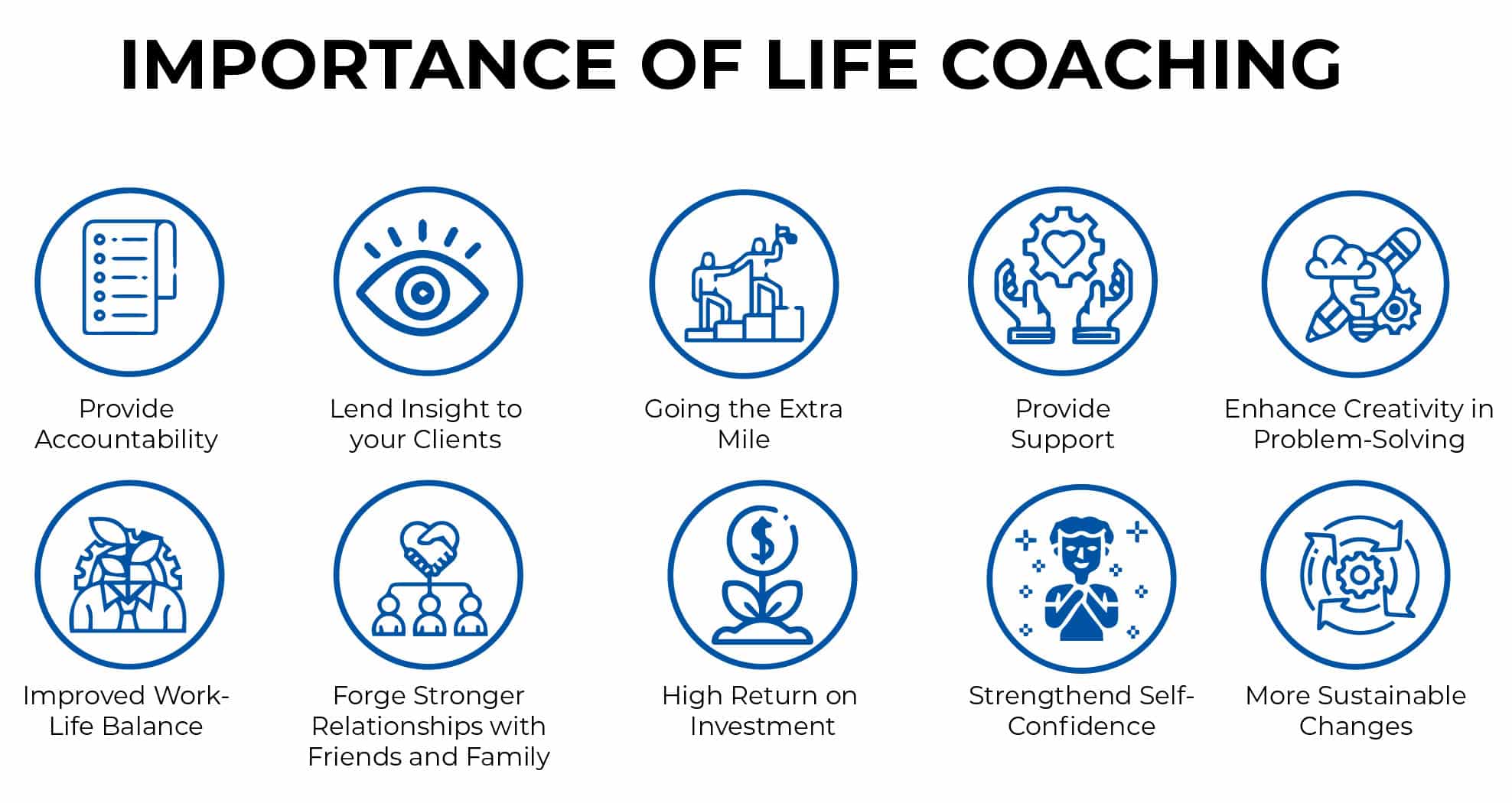
Provide Accountability
It can be challenging for people to find the motivation to improve their life on their own.
A coach provides accountability for overcoming obstacles and achieving goals, which is invaluable during times of hardship.
Lend Insight to your Clients
Having someone who understands what one is going through can help put things in perspective.
As a coach, you will provide a completely different perspective on what one is going through and what steps they can take to improve.
Going the Extra Mile
The job of a coach is much more than simply helping their clients achieve goals — they also give advice, work through issues, and motivate those who are struggling.
Many coaches will even make phone calls, send emails, and check in with their clients without being prompted.
Provide Support
A good coach supports their clients’ journey, encourages them during difficult times, celebrates their victories with them, and never gives up on seeing them improve.
Enhance Creativity in Problem-Solving
A coach can help develop new ways to improve their clients’ life, find solutions that are outside the box, and work through problems in new ways.
Improve Work-Life Balance
Good coaches will work closely with their clients’ to find ways to balance their life and maintain a healthy, fulfilling lifestyle.
Forge Stronger Relationships with Friends and Family
Coaches can give tools and techniques to improve relationships, whether it's at work or with friends and family.
High Return on Investment (ROI)
According to a Fortune 500 firm's study, executive coaching resulted in a 529% return on investment and significant intangible benefits for the organization.
Strengthened Self-confidence
Working with a coach for an extended period allows one to get to know themselves better than they ever have before.
Clients will be able to pinpoint what makes them tick, identify their strengths and weaknesses, and learn new ways to improve themselves.
More Sustainable Changes
Life coaches often help their clients develop long-lasting lifestyle changes that they can maintain on their own.
With a coach's help, they are able to adjust their mindset, so these improvements don't require as much effort.
Impact of Life Coaching
Whether starting an online business, making friends, or getting out of debt, there is no limit to the amount of success possible for those willing to put in the time and effort.
According to a literature review on the impact of life coaching, courage can be enhanced and fear and anxiety alleviated through life coaching.
This may help people with restricted professional or personal development.
Potential Drawbacks of Life Coaching
It is time for me to now address the flipside — here are some of the potential drawbacks of life coaching.
Risk of Burnout
It can be exhausting to be accountable for your clients’ improvement all the time, mainly if you are not used to having this level of responsibility before.
Risk of Dependency
It's important to remember that, as a coach, you are not your clients’ therapist or surrogate; you are there to guide and support your clients until they're able to take control of their own lives.
Possible Lack of Autonomy
As a coach you will want to discuss your clients’ plans and progress in detail, but it could be hard for your client to share everything about their lives.
They might want to keep some aspects of their life private. Knowing this beforehand can prove beneficial for your process with the client.
Some Common Misconceptions About Life Coaching
There are some misconceptions around life coaching that I must address before we move on from this chapter.
I hope this gives you clarity on what being a life coach actually entails.
Misconception #1: "Successful people don't need coaching"
People who are highly successful look for ways to improve their weaknesses, challenge themselves in new ways, and grow even more.
Even Bill Gates has a coach!
Misconception #2: "Coaching is expensive"
A coach is an investment; they can help the client achieve goals that would otherwise take a long time to accomplish on their own.
A good coach provides a lot of value in the advice they give.
However, coaching is not as expensive as some people think. Life coaches often charge per hour or offer packages with set sessions over fixed periods.
Misconceptions #3: "Trainers, mentors, and therapists are the same as life coaches"
The one thing trainers, mentors, and therapists all have in common are that they are all professionals who strive to help their clients achieve better lives.
Trainers focus more on developing skills and improving performance. Mentors, on the other hand, provide their guidance in a one-on-one setting while therapists are more likely to help individuals with mental health treatment.
Life coaches provide you with the key to learn how to think about yourself and then take action accordingly.
When on the path of starting off your career as a life coach, there can be times when you feel the need for guidance and that extra motivation to keep going.
Many people turn to hiring a coach for this and also to learn more in-depth about the craft of life coaching.
In the next two chapters I will cover some basics about hiring a life coach that you need to be aware of.
I will also address some frequently asked questions about life coaching in general.
Chapter 4
Proven Tips to Get the Most Out of Life Coaching
The good news is that now you can identify life coaching’s characteristics, impact, and drawbacks before signing on with a coach.
Now you will have the opportunity to deal with them head-on instead of being blindsided by them later on.
Therefore, in this chapter and the next, I'll discuss some practical tips you can use to find the perfect life coach.

Finding the Perfect Coach
As we know, life coaching can significantly benefit your professional and personal success.
However, it's not for everyone, since life coaching requires hard work and can be emotionally draining.
That's why it's crucial — as a client — to find an experienced, knowledgeable coach who understands what you want to achieve and what your needs are as a person.
By doing careful research before you sign on with anyone, you'll put yourself in the best position possible and greatly enhance your chances of success.
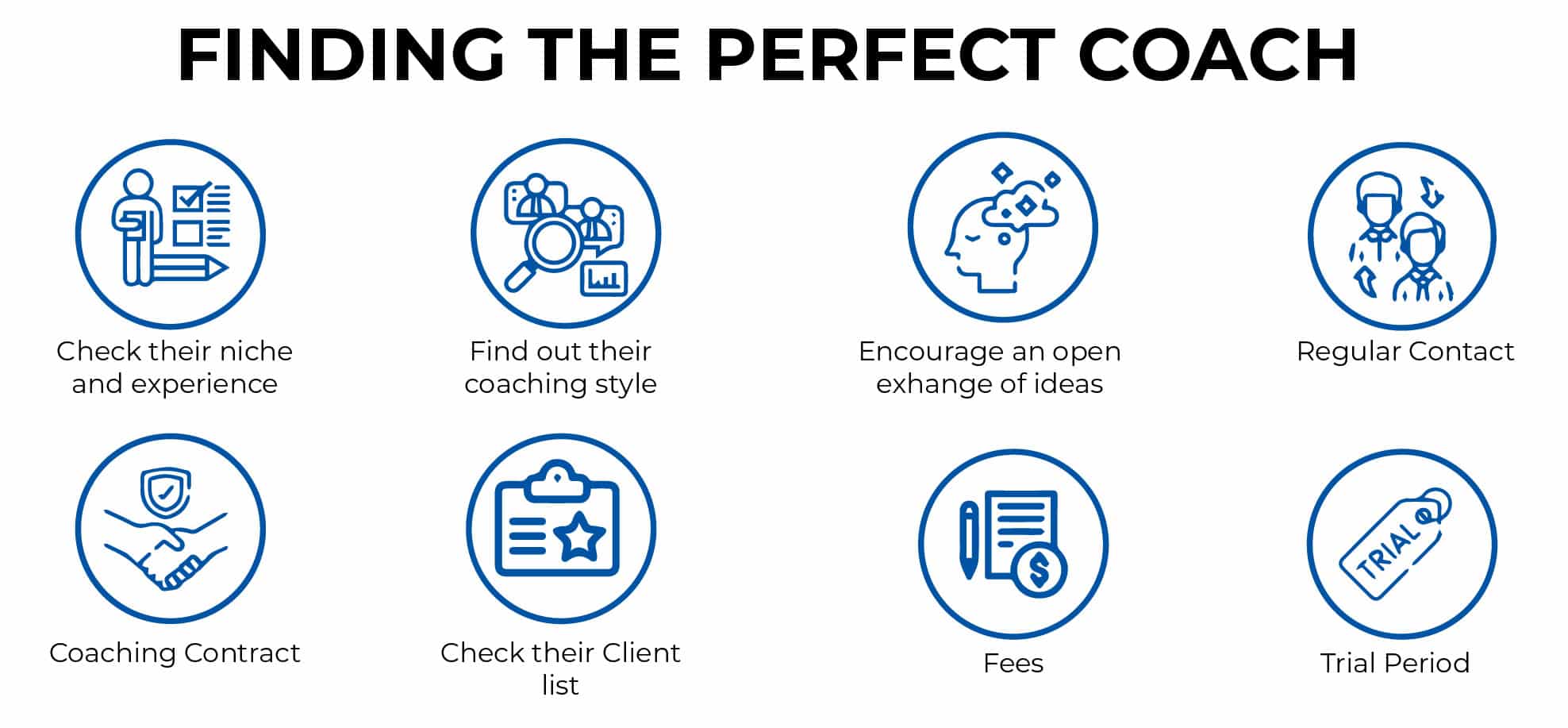
Before signing with a coach, consider getting answers to these key questions:
- Are they experienced in the area you need coaching?
For example, if you're working on building your self-esteem, then it makes sense to find someone who has experience helping people overcome their self-doubt.
Therefore, make sure you find out whether they have the necessary knowledge and skills to help you.
You can do this by looking at their website, or contacting them for more information.
- What is their coaching style?
A good coach will work with you to develop your goals, so your personality must mesh well with theirs.
The best way to determine this is to ask them about their approach and how it works.
- Do they encourage an open exchange of ideas?
You should feel comfortable being honest with your coach, so make sure you choose someone who encourages a two-way dialogue instead of someone who speaks for you.
- Will I have regular contact with my coach?
A good coach will want to check in with you as often as possible.
You don't want someone who disappears for weeks or months at a time without contacting you first, so keep that in mind when choosing a life coach.
- Is there a coaching contract?
Make sure your expectations are crystal clear from the get-go, so as to avoid any confusion later on.
- Do they have a strong client list?
If you can, take a look at some of their prior life coaching clients' contact information.
Better yet, if you can speak with some of them, then you can gain some clarity on how successful the coach has been.
- What are their fees?
Monthly fees can vary significantly from coach to coach.
Check to see if they offer special discounts for first-time clients or low-cost introductory offers.
- Is there a trial period?
Many coaches offer a free trial period of life coaching sessions, which will give you a chance to get to know them and help determine if coaching is right for you.
Evaluate the coach based on these criteria, and it'll go a long way toward ensuring that your experience is successful from the get-go.
Chapter 5
Frequently Asked Questions on Life Coaching
As I mentioned earlier, life coaching can be effective if it's done correctly.
With that in mind, in this chapter, here are some of the frequently asked questions about life coaching, along with my answers.
To begin with, let’s look at some must-have skills you should acquire to conduct Group Coaching.

What happens during a life coaching session?
Typically, during a session, the coach will ask you some questions about your goals and what's stopping you from reaching them.
Then they'll work with you to come up with solutions on how to get around these obstacles.
What is the difference between coaching and counseling?
During counseling, the focus is on your feelings and emotions, whereas, during coaching, you're more likely to be challenged.
A coach will give you some hard-hitting questions such as "How long do you want to stay stuck?" or "What's it going to take for you to move forward?"
Do coaches need to have qualifications?
A coach's qualifications don't matter nearly as much as their experience.
Of course, it helps if they have a particular set of skills, such as finance or business, but what really matters is having the right kind of personality for coaching - someone who listens and asks the right questions, instead of just giving you advice.
What is the average cost of a life coach?
Pricing varies widely depending on your location and the coach you choose, but it will typically range from $150 per hour.
How long does it take to become a life coach?
Although life coach certification is not necessary to become one, it does increase your chances of getting hired. In general, the more experience you have as a life coach, the easier it will be to find work.
What kind of hours do coaches work?
This depends on what kind of clients they're working with and their availability. Some coaches work part-time, some full-time, and others are available on an as-needed basis.
Is a life coach worth it?
Yes and no. This depends on you and what your goals are. If you already have a good idea of reaching them, then hiring a coach may not be necessary.
However, if you're unsure about the direction you want to take in life or need some extra encouragement, then it may just be worth it for you.
What skills do you need to be a life coach?
To be a good life coach, you need to connect with your clients and make them feel comfortable sharing their personal stories.
You also need excellent interpersonal skills to help guide them through this process.
Conclusion
Congratulations on completing this guide!
I hope you enjoyed reading my ultimate guide to Life Coaching and found it useful.
Becoming a life coach, or hiring a life coach, can be a great way to improve your personal and professional potential.
Just remember — coaching is about the journey and not the destination, so make sure you're ready for some tough love along the way!
Before we part, I would like to hear your opinion.
What do you think about this guide?
Anything that you would like to add?
Share your thoughts in the comments below!
