
The Complete Guide to Instructional Coaching
In the education and teaching industry, the latest buzzword is 'instructional coaching'.
Many companies are investing in their executive teams through executive coaching. These coaches help top employees and management teams in unlocking their potential.
Similarly, schools and colleges are now realising the importance of coaching teachers. Instructive coaching will enable these teachers to be world-class leaders in educative services.
Last updated: March 2026
What is instructional coaching?
Instructional coaching helps teachers, principals and such other learning providers grow. It can help them become leaders in the teaching industry. Instructional coaching involves making teachers better at teaching and delivering education.
Instructional coaching is not based on the opinions and judgments of the coach. It relies on methods and practices that are proven to work in schools.
Schools do organize training programs for teachers. But they are usually fixed intervals and happen once or twice a year. These training sessions are often standard. They include many teachers in a single workshop.
In contrast, coaching teachers is very personalized and an ongoing process. Within a single school, teacher’s coaches often focuses on small groups of teachers. This focus helps in designing better outcomes for student’s learning process.
Read: Instructional Coaching by Lucy Steiner, Julie Kowal

Who is an instructional coach?
An instructional coach helps teachers improve their current teaching methods and practices. Teacher's coaches are agents of change in educational institutions. They work towards the professional development of schools.
They observe the entire learning system in a particular school and identify gaps. They identify what the students and learners need. Then they customize the activities to bridge these gaps. They provide resources that will help teachers develop and improve their classroom practices.
A teaching coach is not someone who has all the right answers. A good instructional coach first understands your problem. Then they help to come up with solutions that suits your needs.
A good teacher's coach is well-versed with teaching practices and methods. It is not necessary to be a teacher to be a teaching coach. But having some teaching experience helps in getting you started.
As a teacher’s coach, your focus is on teaching methods. But, along with teaching practices, a good teacher's coach also focuses on the student’s needs. They then match these goals with the aims of the educational institute.
Thus instructional coaches act as a quality control checkpoint for educational institutes.
Four things that must happen for you to succeed as an instructional coach
Elena Aguilar is a Transformational Leadership Coach. She talks about the four things teaching coaches need to do well at their job.
School Culture
Instructional coaches work with teachers. But their job will be easier if the school has a growth mindset. Consider schools that are already used to working towards growth and development. They will work with instructional coaches better.
A growth mindset recognizes that there is always room for improvement. Your job is to help the school improve and not highlight mistakes. For that to happen, the school must be ready and willing to improve!

Room for teamwork
Instructional coaching can’t happen in isolation. Coaches work with teachers in their natural environment, which is in the classroom. Instructional coaches must have the chance to take part and work along with teachers.
Schools must have a well planned strategy for their growth and improvement. This helps in making room for joint effort.
Principal’s view of coaching
You can't work as a teacher’s coach if the principal of the school is not on board with your plans and ideas. There must be a close relationship and partnership with the principal of the school.
It takes a lot of trust to know that the coach will not take over ‘their’ school. That the coach will in fact work along with principals to ensure complete success. Once a principal believes in you, they will help you in building trust with other teachers.
Your own development as a coach
For you to coach teachers, you must be a life-long learner yourself! You can ask about the opportunities you can have to learn on the job. This will ensure you stay up-to-date and improve on your practice as a coach.
When the teachers see you work on yourself, they believe in your aim to make learning better. You thus gain their trust and goodwill.
Victor Welzant, an expert on education and training talks about something very important. He says that working on improving your own practice can be very rewarding. It can remind you about why you love being an educator in the first place.
Ways you can fail at being an instructional coach
- You have little understanding about how teaching works
- You do not provide knowledge about research-based methods of teaching in classrooms
- You provide materials to teachers and staff members which are not what the students need.
- You don’t attend classroom sessions to understand and examine teaching methods.
- During classroom sessions, you compromise the teacher and take over the session.
- You do not design personal, professional, and educational goals of teachers and students.
- You don’t use evaluation sheets to examine the plans for achieving goals
- You do not follow up with teachers and principals about their plans for improvement.
- You do not organize your records and documents.
- You believe that you need not spend time and effort in improving your own practice
Read: 10 Coaching Strategies for Instructional Coaches
Qualities every instructional coach should have
- They inspire trust in others
- They never stop learning
- They lead by example
- They believe in servant leadership
- They encourage others to learn and grow
- They encourage leadership and a growth mindset at all levels
- They have a strong vision for the school and its teaching environment
- They involve everyone in the process
- They address the elephant in the room
- They encourage others to take risks
- They take part in challenging tasks
- They learn from their mistakes
- They help teachers deal with their worries and fears
- They are in for the long journey
Read: Edutopia’s excellent resource on instructional coaching
Dealing with teacher resistance
Teacher resistance is a normal part of an instructional coach's job. They often see coaching as a process in which your faults will be found and fixed. So, the entire process gets a negative flavour. The aim should be to see that coaching does not fix the flaws but celebrates the opportunity for growth.
You want the schools and teachers to accept you in your role as an teaching coach. For that, they must feel comfortable with you.
One way of bringing in a comfort level is to assure and put them at ease. You have not come there to list their shortcomings. Make them realise that your goal is their professional development.
Teachers may have years, even decades worth of experience in teaching. Of course then, it is not easy for them to have some ‘outsider’ come and tell them how to improve.
Jim Knight is an instructional coaching expert. He says, “Because our identity is so tightly connected with what we do, we struggle with the idea that there's room for improvement.”
He suggests a brilliant way to build trust and gain acceptance from teachers. Ask them about their goals and problems. What keeps them up at night?
It can be students who are otherwise obedient but aren’t that excited about learning. It can even be the pressure to cover the syllabus on time.
These issues are not a result of a personal wrong but because there are gaps in the educational system. The good news is, we can fix these gaps, along with the support of the teacher.
Teachers might fight against instructional coaches as they sense their roles getting questioned. It is very easy to think like that because instructional coaching is still not out there. These misconceptions are can arise.
To succeed, coaches must build a relationship with teachers and principals. They should also involve other important people who are a part of the learning universe.
Teachers are great! They have vast knowledge and wisdom. We all have memories from our student days and our teachers have been remarkable in their own way. You remember some for being good listeners, some for being creative teachers. Some for being amazing souls!
Teachers help us learn and we often overlook the fact that teachers need learning too. Often, there is a bad match between the skills and abilities of a teacher and the needs of the students.
That’s where you step in as an instructional coach. You build up that trust that helps put teachers at ease. Your role is not to criticise them, but to help their existing knowledge and abilities go a step further.
Teachers improve their teaching practices and students receive high-class learning environment. Parents are happy to know that their children are benefiting in a school they placed their trust in.
Principals receive higher goodwill from the community. Instructional coaches set this cycle in motion through their practices. It is a win-win for everyone!
Why should schools hire you as a teacher's coach?
Any school which has a growth mindset will understand that teachers need coaches. Instructional coaching will help schools see meaningful changes in their system.
Most importantly, schools should hire instructional coaches so that teachers can grow. The growth and development of teachers will result in growth of the school. Teachers will be able to improve their teaching practices. They can learn new methods of teaching and improve their current practices.
Teachers help others learn and they need to learn as well!. A teacher's coach will help improve their skills and abilities. This will help them improve as an education provider.
Next, schools can improve how their students learn. An instructional coach will help the school understand the needs of the students. They will identify the gaps and help make plans for improvement. When they identify gaps, they will work with teachers to improve lesson plans. This will improve the overall learning experience for students.
Every classroom has its challenges. Teachers have a lot of responsibilities already. They might not have the time to do an evaluation of the school. An instructional coach fills in the gap here. They can take a look at the entire school system and make notes. Their abilities as a teacher's coach helps them identify the challenges.
These challenges can be about students with low attention span. It can be about students with behavior issues. Or it can be about increasing student's participation. Discipline of students is often a challenge for teachers. An instructional coach helps teachers overcome classroom challenges.
Because of the nature of the job, instructional coaches work closely with teachers. They observe and provide feedback. Schools should believe in instructional coaching so that their teachers can be a leader.
Overall, an instructional coach is a benefit for everyone. Students receive education that addresses their needs. Teachers receive growth and development. It is important to have happy teachers and students. Schools receive recognition for higher learning outcomes.
Read: The Many Roles of an Instructional Coach by Heather Wolpert-Gawron
Can you align teaching and teacher’s goals as an instructional coach?
Every teacher’s primary goal is to make students learn. There are many factors that contribute to student’s learning. A teacher’s skills and abilities are top in the list.
An instructional coach’s role is to ensure teachers reach their fullest potential.
What if there is acceptance that teachers are unable to currently meet their goal?
The teacher’s coaches will coordinate with all the important people in the school. Their aim is to identify the barriers. They have discussion towards removing each roadblock.
What if a teacher says that they are not sure if they are reaching their goals?
The teacher’s coach steps in and helps with goal-setting. They identify the gaps and work towards a solution that will help teachers reach their new goals.
Instructive coaches can also help a teacher who is sure that they are achieving their goals. They would help teachers by refining their teaching practice.
Now, these goals can be teacher-focused or student-focused. This coaching can focus on teaching practice or on the larger learning environment. It can be a one-off exercise as well. But, the best results are possible when coaching for teachers is an ongoing process.
Read: 3 “Super Factors” of Effective Instructional Coaching
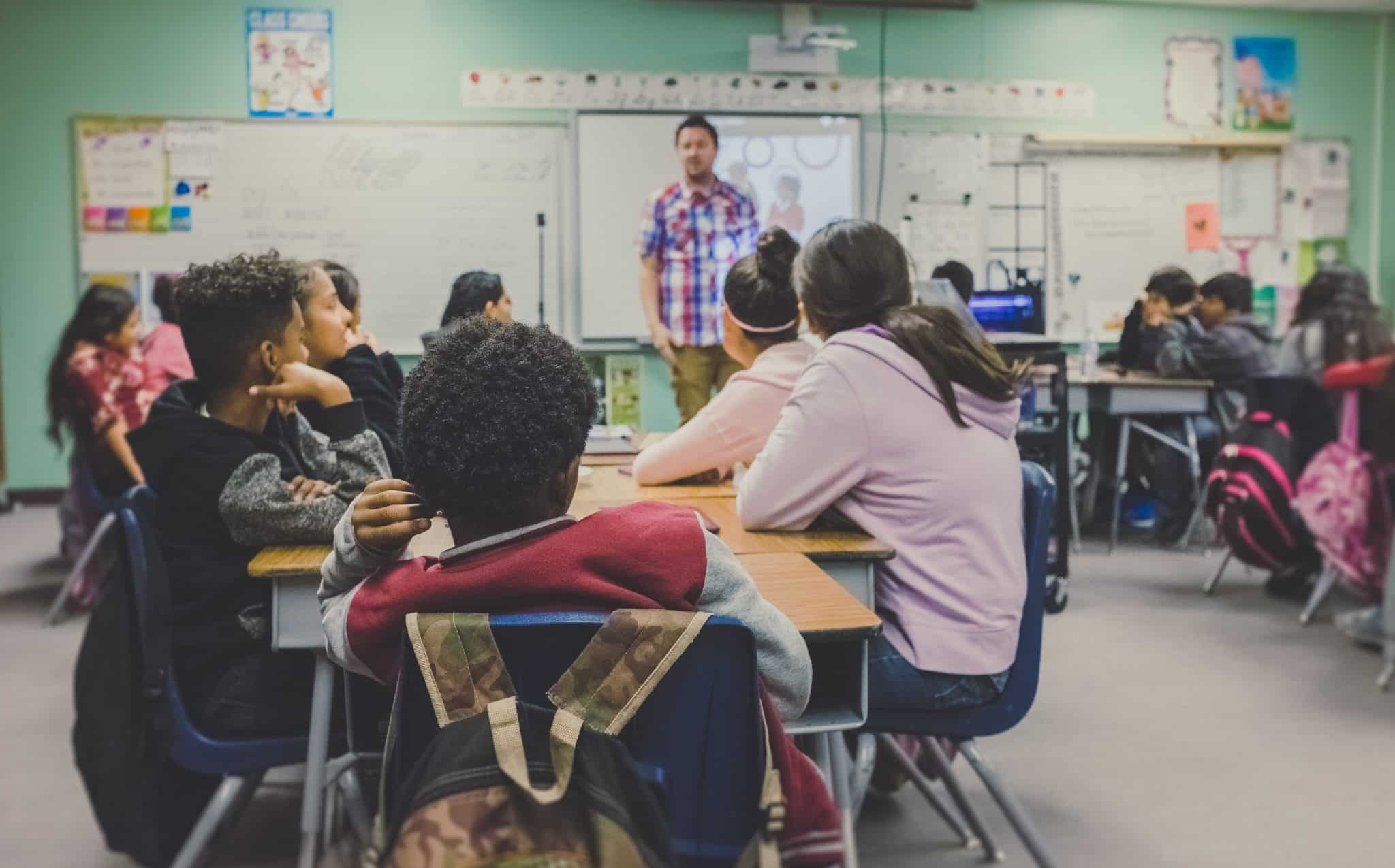
Observing a classroom as an instructional coach
What are some things you can look for when observing a classroom session?
As an instructional coach, observing classrooms is important for you. Some things you observe include teaching space and reading materials. You can observe how student are interacting and learning.
Classrooms:
Start with the physical arrangement of the classroom. Is the classroom well lit and open? Does it create and environment of learning for the students? You can observe if there are any structures that are blocking a student's view. Or if the screen and the teacher are clear and visible. Every student should have the chance to join in and learn.
Student's involvement:
Next, you can observe how students are joining in the conversation in the class. Is every student getting a chance to speak and ask questions? In every classroom there are some students who will always be active. Some students respond only when the teacher asks questions. You can observe if the teacher is able to involve students that are less active. How is the teacher doing that? Is there a way for everyone to join without asking too many questions?
You can note down if there are rules for participating in the class. For example, student's must not to speak out of turn. Or that they need to raise their hands before they get to speak.
Teaching style:
A successful class starts with a good teaching plan. This plan will list the main tasks and activities in serial order. A good teaching plan is like a road map for the class. Now and then, we should check if the students are following the lesson. A good teaching plan will include small notes about possible difficult areas. Make a note about the kind of questions the teacher is asking.
A teaching session can be divided into small activity groups. An instructional coach can also observe how much time is used when shifting activities. Can students can shift from one activity to the other easily? Do they get distracted? Is there discipline in the class during that time? Note down student’s behaviors and attitudes.
One important point during observing classrooms is to note the speed of teaching. Is the teacher going too fast? Is the teacher slow? Check if the speed is slow at first and increases speed later. Or if the speed keeps changing between the class. This has an impact on student's learning ability.
Study materials:
Study materials helps keeping students involved in the classroom. You can note if there are student handouts available. If yes, then how many. Observe the kind of materials and the information in it. Read the materials yourself and check if it is relevant to the class. The language of the study material should be easy to read and clear.
Overall, observe the classroom and note down how happy students are. What are the main strengths of the teacher? Can we improve the teaching practice?
Remember to make clear and organized notes during your observations. You can also add in a time of the day for each observation, if required.
Use these observations in the next feedback session. The main purpose of these feedback sessions is not to criticize the teachers. Observations will identify gaps and feedback will provide solutions. These solutions will result in goals which should be easy to measure.
Giving Feedback After Observations
Matt Foster is a learner and educator based in Houston. He did a survey that covered over 1000 classroom observations and feedbacks.
Generally, the teachers can get four types of feedback;
Factual feedback
A natural and fact-based description of the events in the classroom
Affirmative feedback
Recounting the practices that had a positive effect in the classroom
Reflective feedback
A process of asking questions that helps teachers reflections
Corrective feedback
About practices that teachers can change for better impact.
Giving Effective Feedback as an Instructional Coach
Once you finish observing the classroom your next step is to provide feedback. The notes that you have written down will help during this feedback session.
What are the qualities of effective feedback?
The most important aspect of any feedback is to focus on the issue. Feedback should not be about the teacher. Feedback should be about the gaps in the teaching method. If we focus on the person, it becomes a negative practice. This will not help the school improve. Feedback should be positive and with a growth mindset.
A good feedback uses observations that includes data. When we use data, we will be able to observe gaps in the teaching practice. This data used during feedback will help us define our new teaching practice. Now, we can do another round of observation for this new teaching method.
The data from this observation will identify gaps that are still present. Then we will have more data that we can use during the next feedback.
We can also compare data from two different observations. Talking about the differences in two data set is an effective form of feedback. This will help us understand if we must continue with a new teaching method. If not, then we can try out another teaching method. It is important to keep teachers involved when trying out new practices. This way we are working together for a good solution to fix the gaps.
We need to design solutions that it are easy to count and measure. This shows a growth mindset and makes our solutions a sustainable practice.
It is better if this feedback is done in a timely fashion. Feedback about a session that happened months back will not be of much use. Effective feedback is specific, relevant and time-bound.
Another best practice is to keep conducting check points in between feedback. This helps us understand if we are on track. If not, then changes can be made without wasting much time.
To summarize, an effective feedback is regular and works in a cycle of gap-solution-evaluation
Read: The 3 Skills Every Coach Must Have
Different learning Styles for effective teaching sessions
Instructional coaches can help teachers design the lesson plans. They would address the needs of different types of learners.
There are four styles of learning;
Visual - when you learn by seeing
Auditory - when you learn by listening
Reading - when you learn by reading and writing
Kinesthetic - when you learn by doing
Every student falls into one of these four types of learning styles. Some students have a combination of two or more learning styles. But usually, one style is more prominent than others.
Schools do have standard forms of teaching. But such teaching may not address the needs of different types of learners. Coaches work with teachers to improve lesson plans to address different learning needs.
Some examples of teaching tools and methods for each learning styles are;
Visual - learning by seeing
Charts, maps and graphs
Picture aids or pictorial depictions such as visual timeline for a history lessons
Powerpoint presentations
Movies and documentaries
Other colors and art based learning tools
Auditory - learning by listening
Verbal instructions
Read-aloud
Discussions and debates
Structured lectures and speeches
Text-to-speech technology
Audio books, radio shows and podcasts
Reading - learning by reading and writing
Note-taking, along with highlighters
Detailed lecture notes and transcripts
Lists, mind maps and tree charts
How-to guides
E-books and pdf documents
Kinesthetic - learning by doing
Hands-on experiments
Sense-based methods such as touch and feel
Field trips
Demonstrations
Other drama and theatre based learning tools
Read: Instructional Coaching: A Partnership Approach to Improving Instruction by Jim Knight
Tools and models for instructional coaches
There are many tools available for coaching teachers. But a tool as simple as video recording a teaching session on video can help a lot. Teachers can watch how they are teaching a class from a third-person’s point of view. This way, it would be easy to figure out areas of improvement.
Now, there are many things that can contribute towards an improved teaching session. It can be a different teaching strategy. It can be different kinds of teaching materials used in the classroom. It can also be simpler changes in the classroom arrangement or time management. If needed, it can even be a change in learning materials or syllabus.
An instructional coach helps identify what needs to improve and how. Often, data plays a big role in bridging the gap and reaching milestones. Design end results that can be measured.
In my blogs, I have talked about different types of coaching models. These types of coaching models can help coaches deliver quality coaching sessions. Such models are easy to adapt to different situations and coaching needs. That's the best part about them!
Read: Types of Coaching Styles and Models Every Coach Should Know About
For instructional coaching, models such as GROWTH and FUEL work very well.
GROWTH Model for Instructional Coaching
G = Goals
R = Reality
O = Options
W = Will
T = Tactics
H = Habits
The GROWTH method of coaching includes understanding the goals that the teachers have. After looking at the current reality, teachers decide on options and what they can do about it. Next, coaches guide on the plan of action. This will enable teachers to work towards their goals and habits. This will help in maintaining their improved practice.
FUEL Model for Instructional Coaching
F = Frame the conversation
U = Understand the current state
E = Explore the desired state
L = Layout a success plan
The FUEL method of coaching is another popular approach. We start by having a conversation about our needs. We define our hopes. Then we understand our current situation. Next, we explore what would be our desired state. Instructional coaches then lay out a plan that will help teachers achieve success!
To sum up, instructional coaching is all about making our schools better.
Instructional coaching is not about what’s wrong, but what’s next. - Eric C. Sandberg
Frequently Asked Questions (FAQs)
What is instructional coaching?
Who is an instructional coach?
The term "instructional coach" was first used by Dr. Robert E. Slavin to describe the role of the instructional coach in his model for improving instructions.
