
Motivation Group Therapy Activities
Last updated: March 2026
Motivation Group Therapy Activities
A common question popping in our minds is what is the need of group therapy? Why is it important and needed?The use of group therapy is growing in popularity. Now that telemedicine is so popular, therapists can even conduct group therapy sessions online. It's crucial to educate yourself about group therapy before deciding to start providing it in your clinic.
There is a reason why many positive psychology exercises are regarded as classics. Although practices like loving-kindness meditation and gratitude journaling have repeatedly been proved to have positive effects, the aim of this article is to offer a variety of fresh and creative ways to integrate positive psychology into your work with clients.
What is Group Therapy?
In group counseling, a type of psychotherapy, four to ten patients work with one or two group therapists. The majority of groups hold regular one- to two-hour meetings at the same time. The group members talk about their concerns during that period and provide support and advice to one another.
The practice of group therapy is underpinned by a wide range of theoretical perspectives. Some psychodynamics place a strong emphasis on self-psychology, object connections, or drive theory. Interpersonal theory and cognitive-behavioral techniques are preferred by some therapists.
This type of therapy is available in private,public and other domains.
Types of Therapy Groups
These are a few types of group therapy.
1.Cognitive behavioral therapy:
It focuses on identifying and correcting flawed or misguided thought patterns, emotional reactions, and behavioral patterns. It may assist you in managing your issues by altering the way you think and act. Although it can be helpful for various mental and physical health issues, it is most frequently used to treat anxiety and depression. If you want to know more about CBT, why don’t you try reading some books on CBT?
2. Interpersonal and social interactions:
They include how much assistance you receive from others and how these relationships affect your mental health, are the subject of interpersonal groups.
Role-playing is one strategy that therapists may use to assist clients in changing how they relate to the outside world. To assist the person seeking change, an interpersonal therapist will frequently concentrate on the most urgent relational issues.
3. Psychoeducational groups:
These are frequently based on the concepts of cognitive behavior therapy, and are designed to educate clients about their problems and coping mechanisms (CBT). For those with mental illness, psychoeducation has emerged in recent decades as a helpful and effective form of psychotherapy. Both in a clinical context and in a community one, it has been found to be beneficial.
17 Group Therapy Activities
Group therapies help in better communication and act as a stress reliever. Here is a list of group therapy activities.
1. Icebreakers and Trust-Building
Setting up regular team-building exercises for your workforce is one of the simplest methods to improve camaraderie among them. Let's use an illustration to clarify:
Your team members begin Blind Square, a workplace team-building activity, by forming a circle and gripping a rope. Tell them to lower the rope and give them blindfolds. Tell them to move a few steps away from where they were standing after that.
In order to lay the rope out in a perfect square, have them go back to the rope at the end. This team-building exercise encourages your group to rely on one another and accomplish goals as a unit.
2. Human Knot
One of the most well-liked team-building exercises is The Human Knot. Team members must form a circle, grab a variety of teammates' hands, and untangle themselves without releasing their grip. No matter how many times you complete the assignment, it remains difficult.
This activity include the following steps:
- Draw a circle with all of you.
- All raise their right hands.
- Everyone in the circle takes hold of someone else's hand.
- Without releasing a single hand, the gang must unravel the knot.
3. Fear in a Hat
A team-building activity called Fear in a Hat encourages harmony and cohesiveness within the group. People anonymously write down their concerns on pieces of paper, which are then collected in a hat and read aloud. Each individual makes an effort to explain how they see the other's worry.
Fight, Flight, Freeze, and Fawn are the reactions that are commonly referred to as the 4Fs and have evolved as a survival technique to help us respond swiftly to life-threatening situations. Here is how it is done.
Distribute one page per individual after rearranging them. Each reader should make an effort to clarify what she believes the author of the fear meant as you take turns reading one dread aloud. No comments of any kind should be made on what the reader said. After listening, move on to the following reader.
After each fear has been read and explained, have a group discussion about some of the anxieties that the prevalent phobias were. This team-building activity is an excellent springboard for a discussion of team agreement, or objectives that the team aspires to.
4. Eye Contact
When speaking to someone, an individual with eye contact anxiety may avoid making eye contact. If they do manage to initiate eye contact, they could experience feelings of scrutiny or judgment. Eye contact therapy helps them to overcome their fear.
People who haven't had much practice conversing or who like to avoid the spotlight, looking someone in the eye while speaking can feel awkward.
It helps in the following ways:
- Your face will be more likely to be remembered by others.
- When you say something, people are more likely to remember it even after the conversation has ended.
- People are more likely to take your words seriously.
- You'll be seen by others as more self-assured and intelligent.
- The ability to read and mirror other non-verbal cues will improve.

5. Trust Fall
A trust fall is an action in which a person purposely falls and relies on group members to catch them. It has occasionally been seen as a well-liked team-building activity at business training sessions. The trust collapse comes in a variety of forms.
Ropes courses and trust falls don't do much, if anything, to improve team effectiveness or build trust between teammates. They serve, at best, as a momentary diversion from the everyday grind. At worst, they pose a threat to real advancement that results in substantive change.
6. Goal Visualization
You can utilize the straightforward approach of goal visualization to develop a vivid mental picture of a future event. You can practice for the event in advance with effective visualization, which will help you get ready for it. You can also develop the self-confidence you need to perform successfully by picturing achievement.
Your subconscious is made aware of the eventual result by your conscious mind through the act of visualization. It continually prompts you to remember. Additionally, it honed your brain to react as though the conclusion had already occurred. If you want to learn more about how to use visualization for success, do read this blog.

7. Silent Gratitude Mapping
Making a visual mood board of all the things you have to be thankful for is required. You then hang this board someplace in your work area as a daily gratitude reminder. This helps everyone to learn gratitude. It is a positive expression that helps us to grow as a person.
Urges individuals to note and appreciate life's blessings, which some studies suggest may improve immune system performance and raise emotions of wellbeing. Despite these obstacles, psychologists have started gathering data on the advantages of pleasant emotions, such as thankfulness. Focus on the blessings brings eternal joy.
8. Draw your feelings
With a unique twist, this is an entertaining pastime. It can be made for enjoyment rather than merely drawing feelings by allowing adults or kids to fill in the phrase "I feel like a____." Completing the gaps
I feel joyful, for instance, like a duck floating in a pond. After that, request a drawing of the participants' sentences. Have the other participants guess what is being drawn and the associated emotions. Encourage everyone in the group to draw as intricately and with as many colours as they can.

9. Remote island
Students are encouraged to be inventive and creative by participating in this enjoyable group counseling activity. A piece of paper and some pens are all you need.
Invite kids to draw a big circle on the paper. Then using these, establish the following as the game's setting:
Consider winning a trip to an exotic island for three months. Only three items and one additional travel companion are permitted on this trip. Draw the items you'll bring and the people they'll bring inside the circle. You'll definitely be surprised by their responses!
10. Wall of emotions
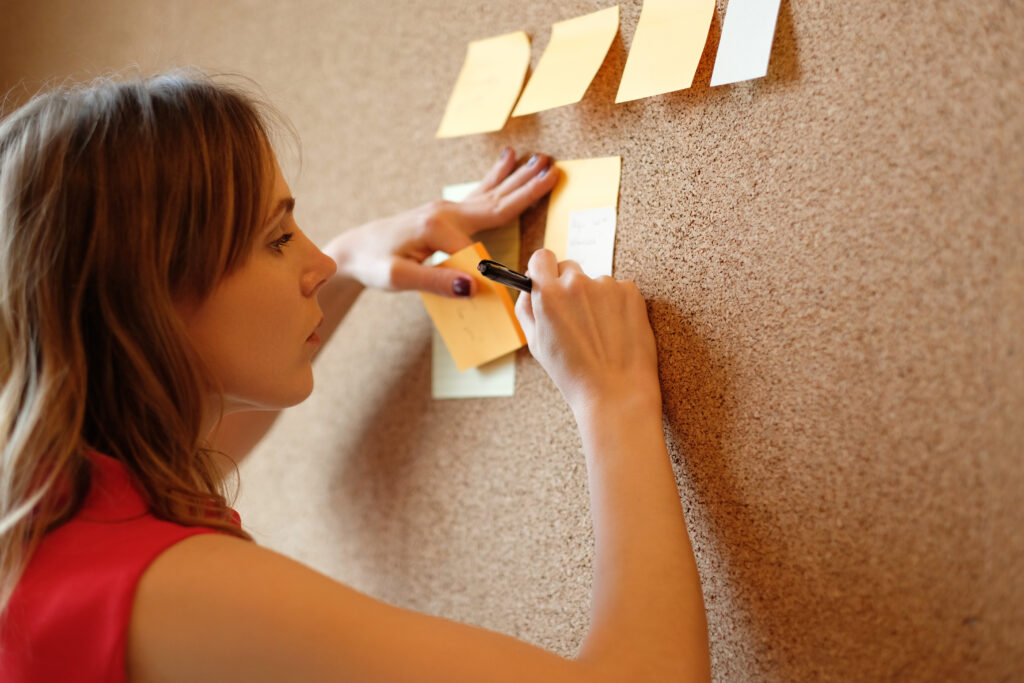
This is a simple and quick group therapy exercise. All you need to do is tape a sizable sheet of paper to the walls all around the room. Each paper will have a unique example or phrase. Create several sentences that participants can complete.
For instance:
There is one thing that makes me grin.
2. I would like to change one thing about myself
3. One aspect of my family that I would change
4. A quality I cherish about myself
11. Passing around the ball
If you've never played pass-the-ball, it's a very straightforward game for the classroom. Students pass the ball around the classroom as music plays. The student holding the ball must act when the music stops, perhaps by responding to a teacher's question.
Playing with a ball improves balance, linguistic and social skills, grasping and problem-solving abilities, hand-eye coordination, gross and fine motor skills, and spatial awareness. Experts advise starting to play ball as soon as feasible.
12. Musical feelings
This game is comparable to musical chairs, with the exception that it has a hilarious twist.
Use a post-it note in each chair and write or draw different emotions.
For instance, feeling bored, perplexed, joyful, furious, nostalgic, etc. Play some music in the background while you arrange the chairs in a circle.
13. Guess who?
Playing Guess Who is a good method to practice yes/no questions and character descriptions. First, a student in the class chooses one of the participants without letting the others know who they have chosen. The other students try to figure out who the student chose by asking yes/no questions on the person's appearance.
The students benefited from playing guessing games. They can expand their vocabulary, talk more clearly, and alter their accent and pronunciation. The game is great for fostering both receptive and expressive language skills as well as logical reasoning.
Using the binary method, where each question you ask eliminates at least 50% of the players on the board, is the easiest way to guarantee a win in "Guess Who?" As a result, you should have 12 characters left after your initial query. You need six for the following query.
14. Graffiti Wall
Students can express their views and opinions in the classroom by using a graffiti wall as a tool. Typically, there is a wall-mounted piece of paper where students can write their responses to a question. Every student's voice may be heard in the classroom because of the graffiti wall there.
Graffiti is a cooperative learning approach that encourages the growth of a variety of learning abilities (brainstorming, logical reasoning, data recall, and being considerate of others' viewpoints). Additionally, it encourages creative and reserved pupils to participate and voice their opinions.

15. Rare Birds
Simple core exercises like the rare bird can help with stability, promote a neutral spine, and reduce low back pain. Your core, hips, and back muscles can be targeted by this exercise stance, which makes use of your entire body. Additionally, it helps to improve posture and range of motion.
Converge the shoulder blades. While keeping your shoulders and hips parallel to the floor, raise your right arm and left leg. To look down at the ground, extend the back of your neck and tuck your chin into your chest. After a little period of holding this position, lower yourself back to your starting position.
16. Feelings Hot Potato Game
This exercise is a fun and safe approach for kids and families to talk about upsetting events that have happened and process the emotions brought on by these occurrences. The activity serves as a springboard for conversation regarding issues that would otherwise be challenging to broach. Participants can complete it quickly and simply, which makes them feel confident and at ease.
Participants' physical capabilities can be accommodated by altering the activity (e.g., by sitting in chairs, seated in a wheelchair, circling a table, etc.). The game's tempo might also vary to account for different physical capacities. Due to everyone getting an equal turn, the exercise is beneficial for encouraging the sharing of feelings. Neither winning nor losing can be used to detract from the goal or enjoyment of the activity.
17. Stand Up, Sit Down Activity
Your back and hip muscles will grow more flexible if you perform sit-ups every day. Reduced stress and improved circulation are also benefits of flexible hips and back. By executing sit-ups correctly, you also develop a strong core and maintain the alignment of your hips, spine, and shoulders.
Follow your doctor's instructions for the exercise precisely, making the necessary adjustments. As you perform this exercise, it is normal to experience some slight stretching, pulling, tightness, or discomfort; however, if you experience any abrupt pain or if it worsens, you should stop immediately. Wait until your doctor has instructed you to start this activity.
The stress is released by this workout. Additionally, while your mind becomes engaged, it helps to have a getaway from the busy everyday concerns.
Conclusion
Group therapy activities can be an effective way to foster motivation in individuals. Through the use of group activities, individuals can gain a sense of validation, support, and community, all of which are essential for maintaining enthusiasm and developing a sense of purpose.
These activities can be adapted to fit almost any setting, and can be tailored to meet the needs of the individual. With the right approach, motivation group therapy activities can be a powerful tool for helping individuals reach their goals and improve their overall wellbeing.
Frequently asked questions
What are the benefits of Group Therapy?
1. Create and preserve sound boundaries.
2. Encourage dialogue and cooperation.
3. By having a greater understanding of family dynamics, encourage problem-solving.
4. Develop compassion and understanding.
5. Helps to improve communication.
Assisting in strengthening the client's capacity to create and maintain relationships.
6. Assisting in improving the client's efficiency and coping skills.
7. Fostering client potential while supporting the decision-making process.
