All accounting entries are recorded against a book entitled a finance book. There are numerous finance books available. Think of two books, one for investors and the other for tax administration. If you have to disclose amortization and other metrics in a variety of ways due to regulatory restrictions, this is helpful. People that are interested in finance pick up new skills and knowledge on how to manage their finances, earn more money, find and fill new markets, and invest.
These abilities can help you become a billionaire in the world we reside in, and the greatest part is you can do it on your own.
In the Introduction to Financial Coaching Books, you'll learn what financial coaching books are and how they may help you succeed by using a role-playing activity.
Last updated: March 2026
In Brief :Top 10 Must Read Books On Financial Coaching
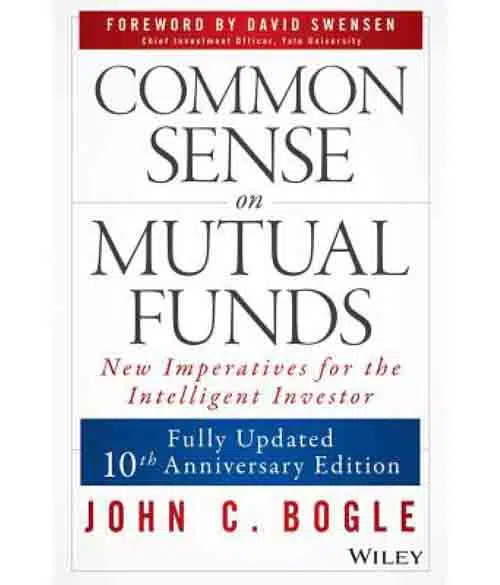
Common Sense On Mutual Funds By John C. Boyle - Published in 1999 by Wiley Publishers, it's a sacred book in the mutual fund industry, offering insights on fund investing and creating a lasting portfolio; Amazon.
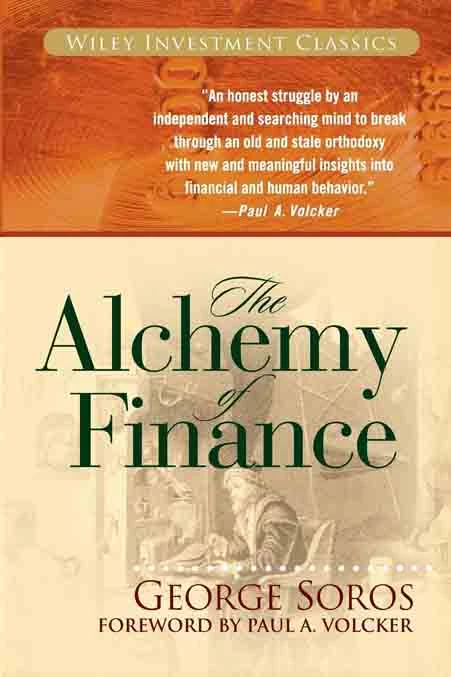
The Alchemy Of Finance By George Soros - Originally published in 1987, Soros outlines his financial tactics, mental models, and the idea of reflexivity in the financial markets; Amazon.
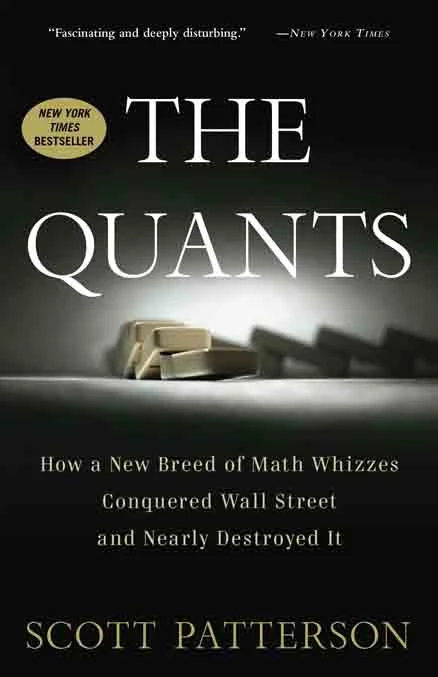
The Quants By Scott Patterson - Released on February 2, 2010, it provides an overview of quantitative analysis and hedge funds, comparing trading approaches to gambling methods; Amazon.
How Financial Coaching Books Help a Coach
Financial education is vital, and books on financial coaching can help a coach develop it. Books on financial coaching are useful not only for improving oneself and one's financial situation but also for enlightening others.
As a result, both employers and employees should read these books because having others report to you carries a lot of responsibility and can make you more useful to your team. Information that people receive from their leaders typically has a greater impact than information that they receive from their competitors and coworkers.
A coach can also learn the following things from the study of financial coaching books:
An understanding of where your entire budget is going.
Knowing the numbers behind your debt situation.
Identifying the places where your income is disappearing.
Overcoming your apprehension about managing money.
Addressing false beliefs about managing finances.
Knowing what influences your credit score.
settling on a shared financial planning strategy for married couples.
Creating a plan for how to pay off debt, purchase a first home, and achieve financial independence.
Learn how to make independent financial plans.
Establish a positive connection with money.
To have self-assurance, knowledge of personal finance, and responsibility.
10 Books for Every Financial Coach
The advantages of financial coaching for a business vary depending on the type of organization, the challenges the company is facing, or the level of expansion it wants. There are several books in this discipline that coaches can find useful. But here, we'll only go over the top 10 books on financial coaching.
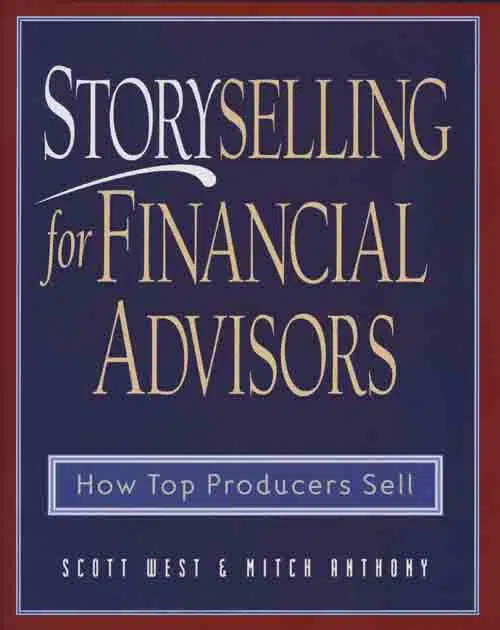
1. Storytelling for Financial Advisors by Scott West and Mitch Anthony
Publication of this book happened in January 2000-01-12 byKaplan Publishing. This book will show you how to use storytelling to effectively market financial products. The authors first describe how they came to make these obvious correlations before converting their research into simple, workable solutions that any financial practitioner can apply.
They offer real stories, many of which come from Warren Buffet, one of history's greatest storytellers. Financial professionals can better understand the visceral response of various client types by using these real-life examples. The book also provides unique sections on speaking to women, the 50-plus market, and the elite.
It is always found difficult to relate to financial services when employing stories, despite the fact that they are among our most effective marketing tactics. This book is filled with tons of useful advice and metaphors that can help you simplify difficult subjects for your clients. It's undoubtedly among the top books available for financial advisors.
Some beneficial points from the book are:
The most effective financial advisors, according to the author's study of the finest in the business, sell in a straightforward, compelling manner, communicate exceptionally well, and remain laser-focused on their target market.
Some brokerage firms and financial advisors use statistics and complex jargon in an effort to confuse their clients and prospects. Evidently, they believe that by using big phrases and loads of figures, they will appear intelligent.
The best producers keep things straightforward. They don't talk down to individuals and meet clients where they are. They employ straightforward analogies, comparisons, similes, and metaphors while telling short stories.
They add interest and clarity to the business. People listen, enquire, and share with their friends. It includes storytelling, which, when done correctly, elevates the business.
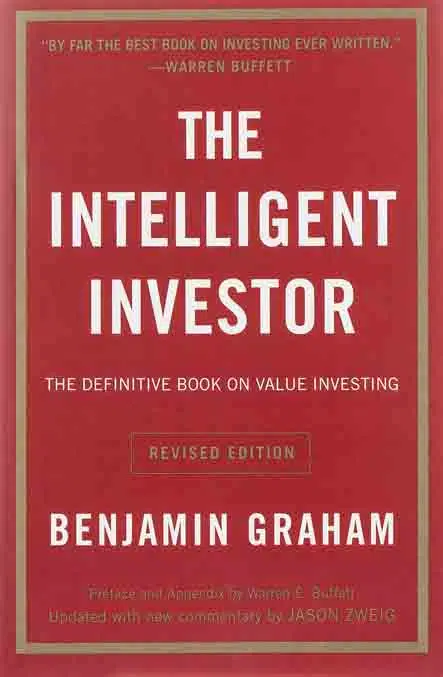
2. The Intelligent Investor by Benjamin Graham
It was initially published in 1949 byHarper & Brothers but has subsequently been updated with a few contemporary viewpoints, including remarks and citations by financial journalist Jason Zweig. The soundness of value investing, loss mitigation, and avoiding making irrational decisions when handling the financial markets are all still true to Graham's advice.
Being continuously updated and altered since its first 1949 release, The Intelligent Investor is a fantastic book for beginners. It is seen as essential for novice investors who are learning the fundamentals of how the demand operates. Long-term investors are the target audience for the book.
The Intelligent Investor is frequently cited as the key resource for value investing. Graham advises investors on the following points:
To examine a company's financial records and activities while ignoring the market commotion. This commotion and the daily market moods are the results of the desires of depositors' greed and fear.
Price-value discrepancies, which happen when a market's price is less than its actual value, should be the attention of investors. Investors ought to buy when these possibilities are discovered.
Investors should sell their investments as soon as the market rate and intrinsic value coincide.
To avoid day trading's pitfalls.
To take advantage of market fluctuations and volatility, to avoid purchasing stocks simply because they are in style.
Keep an eye out for any instances in which businesses may be manipulating their accounting practices to inflate their EPS value.
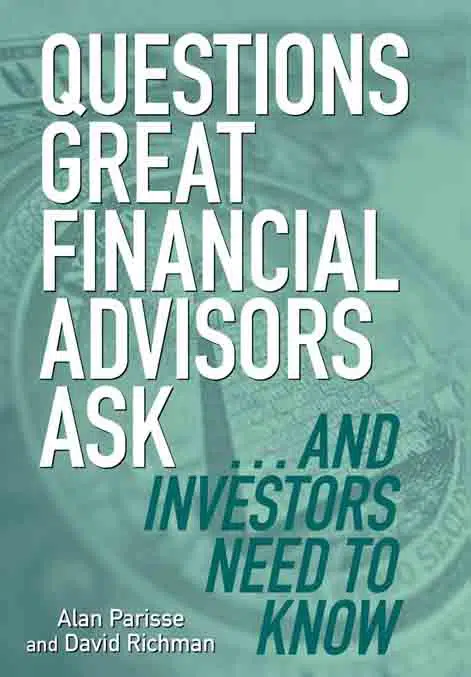
3. Questions Great Financial Advisors Ask by Alan Parisse and David Richman
This book came out on June 1, 2006, by Kaplan Business. Alan Parisse and David Richman, coauthors of Questions Great Financial Advisors Ask And Investors Need To Know have compiled the great advisors' questions that spark the in-depth, private conversations required to identify and comprehend clients' and potential clients' deep-seated financial feelings. That is how excellent advisors assist clients in removing emotion from the investment process and putting them on the path to attaining their financial objectives.
This book is filled with questions, advice, and anecdotes from some of the best financial counselors in the world, including a section of "excellent questions to ask" that are arranged according to the subject.
It emphasizes the value of asking excellent questions when teaching advisers about sales approaches. Together with exceptional listening abilities, good questions let you delve deeper and uncover your prospect's or client's genuine wants. This book will teach you how to form close bonds with your customers. It includes a number of insightful and illuminating questions that will benefit advisors of all experience levels.
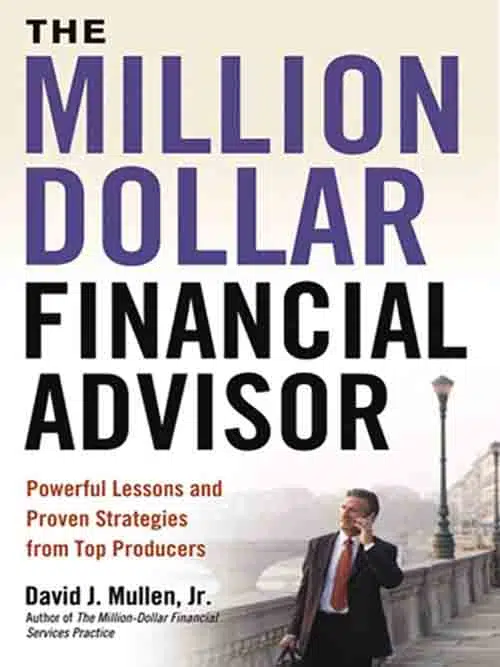
4. The Million-Dollar Financial Advisor by David J. Mullen
This book was firstly published on November 1, 2009, by Amacom Publishers. The Million-Dollar Financial Advisor summarizes the universal success strategies. The top financial advisors have the tools necessary to be successful in any market. Each is step-by-step detailed for both seasoned and fresh financial professionals to apply right away. Two detailed case studies are included in the book as well. The "best of the best" counselor comes first, whose extraordinary success exemplifies the strength of all the book's concepts acting in unison. The second tells the story of a surprising and motivational job change and shows that it isn't ever late to start over. The Million-Dollar Financial Advisor is a fantastic success tool for all financial advisors, full of expert perspectives from his interview subjects and practical guidance from the author.
Includes universal concepts to help both seasoned and beginning financial professionals achieve quick success.
The success principles are condensed into thirteen specific, step-by-step lessons in The Million-Dollar Financial Advisor.
Show readers how to develop and concentrate on customer relationships, have a top advisor attitude, and more.
The notion that, once you reach approximately 100 clients, you should continually add to the top of your firm and drop from the bottom was one of the most revolutionary ideas from Mullen.
5. Common Sense on Mutual Funds by John C. Boyle
Publication of this book happened in 1999 by Wiley Publishers. In the mutual fund industry, John C. Bogle's "Common Sense on Mutual Funds" has become regarded as a kind of sacred book. Investors can combine their assets through an investment portfolio to purchase securities, most often stocks or bonds.
Due to the fact that they make asset allocation easier and more accessible, they are essential in the world of investing. The revised edition offers insights on a variety of topics, including the fundamentals of mutual fund investing, recent regulatory changes, and how to create a portfolio of investments with longevity.
A limited index fund maintained over a lifetime, with distributions reinvested and purchases made using dollar cost averaging, was Bogle's ideal investment vehicle. Bogle argued in favor of a straightforward, sensible approach to investment.
These are his eight fundamental guidelines for investors:
Select low-cost funds
Take into account the additional costs of counsel.
Don't exaggerate previous fund performance
To assess consistency and risk, consider prior results.
Watch out for stars (as in, star mutual fund managers).
Watch out for asset size.
Avoid having too much money.
Purchase and hold your fund portfolio.
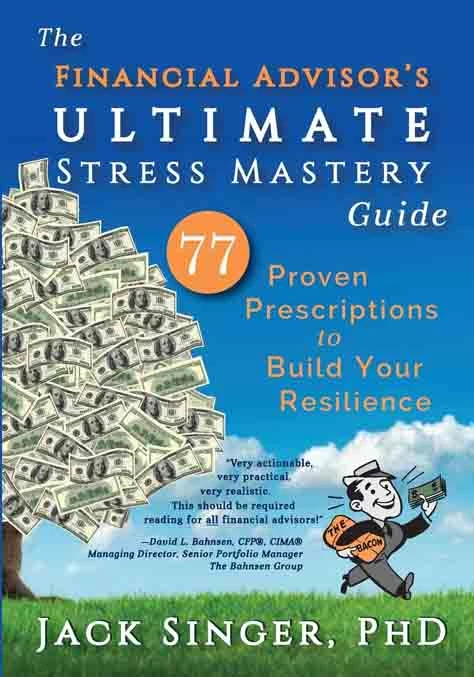
6. The Financial Advisor's Ultimate Stress Mastery Guide By Dr Jack Singer
This book was initially published on February 13, 2014. The Financial Advisor's Ultimate Stress Mastery Guide explains how to influence your health, how to consciously boost your psychic immunity, and how to maintain your optimism in order to successfully attract and retain high-value clients, regardless of uncertain markets and economic conditions.
This book is fantastic. It offers 77 tried-and-true remedies for financial advisors to lessen stress and toughen up. Despite the unavoidable stressors you experience in your profession, you want to develop your resilience and emotional stamina to avoid experiencing excessive stress and burnout. It is rich with examples, simple but effective behavioral tips, and easy-to-understand concepts.
The author provides the following in a relaxed manner:
Creating strategies to control each sort of stress you experience.
Success tales and examples from very successful experts who have thrived despite the pressures of their industry.
Successful tactics are based on cutting-edge cognitive, behavioral and resilience research from leading psychologists.
Don't let the difficulties of financial counseling depress you for one more day.
You may accomplish your career objectives, meet any problem head-on, and rekindle your enthusiasm for work with the aid of this success blueprint.
7. The Alchemy of Finance by George Soros
This book was originally published in 1987. "The Alchemy of Finance" by George Soros gives readers a clear view of the current financial markets and the dynamics that shape them. In The Alchemy of Finance, Soros outlines a new paradigm for understanding the financial market along with a theoretical and practical explanation of contemporary financial developments. Soros provides information about his methods for making decisions, his methods for investing, and his viewpoints on the issues that affected those decisions.
The book was difficult in two ways. It suggested that the philosophical foundations of the success of the research methodology might be used to shed light on historical processes, of which the stock markets are a tiny subset, and that financial dogma (as now taught) is based on incorrect premises.
Soros outlines the financial tactics that have helped him become the most influential and successful entrepreneur in the world right now. He shows the mental models he created to better comprehend social situations using several real-world examples from his profession. It is based on the idea of reflexivity. Additionally to the specific economic and political history of the present, he offers a great guide to the market.
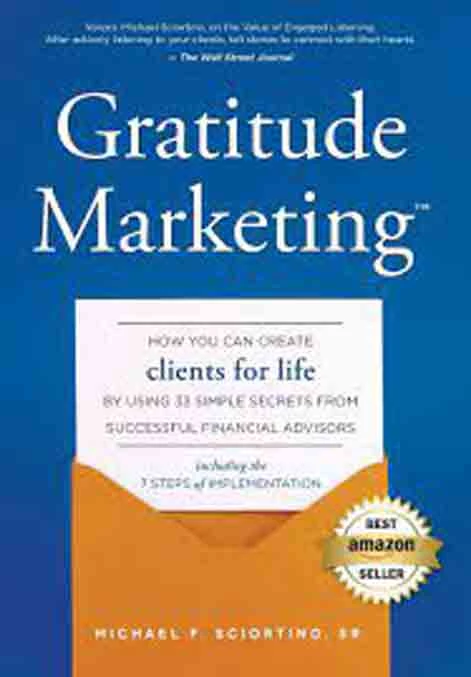
8. Gratitude Marketing by Michael F. Sciortino
The publication of this book happened in 2015. Every now and then, a book appears that outlines the major problems facing a certain industry and provides acceptable solutions. That book is this one. Financial advisors need quick answers to two crucial issues as the threat posed by automated financials increases every day.
Traditional marketing addresses its audience. People are involved and connected through gratitude marketing. The knowledge of tested experts who have used proven cutting-edge, practical concepts to grow their businesses is drawn upon by Gratitude Marketing.
You'll learn how a well-managed Gratitude Marketing strategy will put you consistently in command of your clients' business when change takes place and they will need your skills to increase. You may develop customers for life by fusing relationship-building strategies with persistent nurturing. For the investment bankers who have employed the principles shared with you, they have consistently delivered results.
"The appetite for a sincere thank you is unlimited," Sciortino says. Businesses are under a lot of strain these days as marketing costs rise. Gratitude Marketing is a company committed to discussing with you the most tried-and-true, cost-efficient methods for expanding your business via fostering deep, lasting relationships.
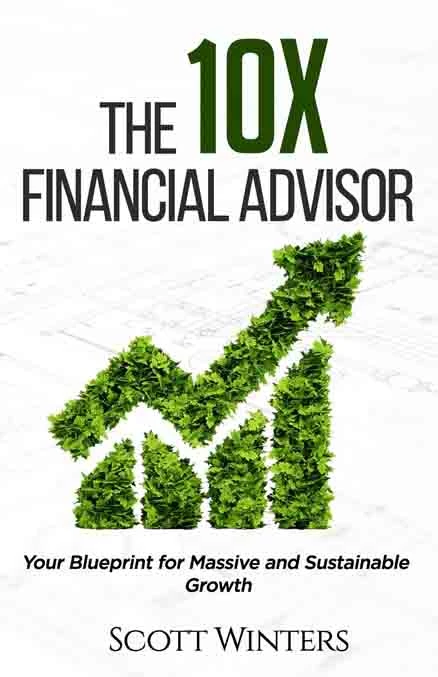
9. The 10X Financial Advisor by Scott Winters
This book was originally published on February 4, 2020. This book will guide you through the exclusive Quantum Leap Success Model created to aid financial advisers in achieving rapid and long-lasting development. A producer with a multimillion-dollar budget, if required. You are given a success plan by the 10X Financial Advisor. There is a group of individuals in practically every profession who are the best of the best.
You will discover a clear, straightforward, formulaic strategy to dramatically expand and develop your financial services firm from the 10X Financial Advisor by Scott Winters. By the time you've finished reading this book, you'll have the road map necessary to transform your operation into a thriving, long-term business. You may be the employee who everyone in your organization admires and gets up to. You will be equipped with the knowledge needed to reach the very top of success in the financial services industry.
10. The Quants by Scott Patterson
This book was released on February 2, 2010, by Crown Business. The book provides an overview of the field of quantitative analysis and the different hedge funds that employ it. The Quants by Scott Patterson compare Wall Street hedge fund managers' trading approaches to their gambling methods by describing an actual, yearly, high-stakes poker competition between them.
It concentrates on a variety of topics, including the subprime loans crisis in 2007 and how it contributed to the abrupt and widespread unwinding of sophisticated, overleveraged quantitative methods.
The book also examines some of the major flaws in many quantitative techniques, including their propensity to create jammed trades and their underestimation of the chances of chaotic, unpredictable market movements.
Conclusion
Our list of the top 10 financial coaching books is now complete. These books were picked because they each have something special and distinctive to offer coaches at every point of their careers. We sincerely hope that you found this list helpful as you searched for the best books to read to better your coaching career.
Regardless of their degree of experience or want to broaden their knowledge base, everybody eager in becoming a financial coach must read these ten books. Coaching success is inevitable when you have the right tools.
Frequently asked questions
Which is the best overall book to read on financial coaching?
Many businesses keep at minimum two types of financial records: one for the SEC and tax authorities, and one for stockholders. The Intelligent Investor is the best overall book to read on financial coaching.
How does reading books help in strengthening concepts of financial coaching?
Your physical and mental health will benefit from reading books, and these advantages can last a lifetime if you read books on the topics that you want to become in future. From early adolescence to senior years, your concepts will strengthen.
What are some techniques to effectively practice theoretical knowledge on clients?
Hold a focused client. Choose a model. Talk to a client. Educate. Put the model into action.