
Emotional Intelligence: The Definitive Guide
Last updated: March 2026
EMOTIONAL INTELLIGENCE
The Definitive Guide
Emotional intelligence (EI) is an important life skill that helps us navigate emotions – not just in ourselves, but also in others.
With the global move to holistic living and remote working; EI is of utmost importance in the modern workplace.
A recent paper published in the Journal of Leadership and Organisational Studies has revealed that individuals with generally higher levels of emotional

intelligence experienced lower levels of stress while leading remotely during the pandemic.
This article will highlight the fundamentals of EI on personal and professional fronts.
So if you want to:
(a) Understand EI and its components
(b) Incorporate day-to-day practices of EI
(c) Recognize the levels of EI, personally and professionally
(d) Harbor long term benefits of EI
This article will be of real value to you.
Let’s get right into it!
Don’t have time to read the whole guide right now?
No worries. Let me send you a copy so you can read it when it’s convenient for you. Just let me know where to send it (takes 5 seconds)
Contents








Resources
Chapter 1:
The Fundamentals (EI or IQ)
Emotion is the natural precursor to thought.
An emotionally heightened situation results in a change not only in decision-making and interpersonal skills but also has a diminishing effect on cognitive abilities.
This unique process allows for the development of self-awareness and reflection in aspects in and out of the office. Especially the ability to reflect and impact individuals within one’s sphere of influence.

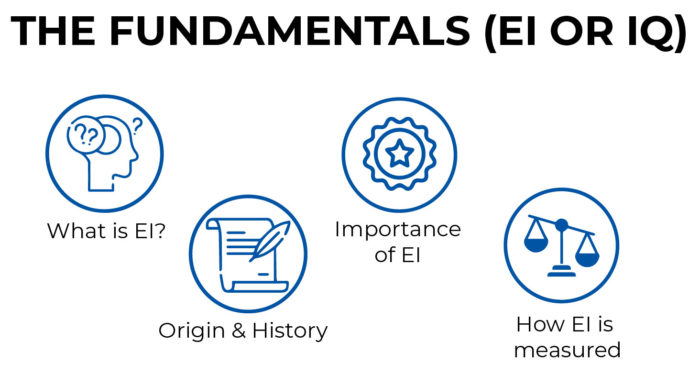
What is Emotional Intelligence?
Emotional Intelligence (EI or sometimes EQ / Emotional Quotient) is a relatively modern concept and was only fully developed in the mid-1990s.
Mayer & Salovey, the pioneers of the concept of EI, define it as – Emotional intelligence is the ability to perceive emotions, to access and generate emotions to assist thought, to understand emotions and emotional knowledge, and to reflectively regulate emotions to promote emotional and intellectual growth.
The Origin & History of the Term
As early as the 1930s, psychologist Edward Thorndike described the concept of "social intelligence" as the ability to get along with other people.
Mayer, J. D., Salovey, P., & Caruso, D. R. (2004). Emotional Intelligence: Theory, Findings, and Implications. Psychological Inquiry, 15(3), 197–215. http://www.jstor.org/stable/20447229
During the 1940s, psychologist David Wechsler proposed that different effective components of intelligence could play an important role in how successful people are in life.
In 1990, psychologists Peter Salovey and John Mayer published their landmark article, Emotional Intelligence in the journal ‘Imagination, Cognition, and Personality’.
They defined emotional intelligence as "the ability to monitor one's own and others' feelings and emotions, to discriminate among them, and to use this information to guide one's thinking and actions."
The Importance of Emotional Intelligence
“The emotions we create and how we manage them to play a most significant role in determining how we perform internally and, then, externally,” said Parker et al in their 2016 paper.
Emotions drive thoughts – thoughts drive behavior – behavior drives action.
The thing with emotional intelligence is – it permeates every aspect of your life.
Being emotionally intelligent is associated with academic and professional success, financial stability, fulfilling relationships, life satisfaction, as well as better physical and mental health.
Every endeavor in life requires you to make decisions. And if you let your emotions, without intelligence, consistently ruin your decisions, you likely won’t get very far.
A logical assumption is that people with higher IQs will be more successful at work and throughout life. This assumption has been proven incorrect – there is more to success than simply being ‘clever’.
EI has consistently been shown to be a critical factor in leadership effectiveness – from managing change to working with teams to navigating interpersonal relationships.
In his 1995 bestseller ‘Emotional Intelligence,’ Daniel Goleman argued that EI outweighed cognitive intelligence as the best predictor of business success
Bratton, J., Gold, J. (2017). Human Resource Management, 6th Edition: Theory and Practice. United Kingdom: Macmillan Education UK.
According to Shaner (2010), EI has been found to differentiate the top 20% of leaders in any field.
How is it measured?
For a relatively modern concept, the fact that there is so much extensive research into its parameters tells us one crucial thing:
Emotional intelligence is scientifically measurable. It is also learnable and valid.
Assessment types for Emotional Intelligence tend to fall between two categories: self-reported test and capacity test.
They measure levels of variables that aid emotional intelligence.
Self-reported tests are the easiest to administer and, hence, are most widely used. For these tests, participants are required to rate their own behaviors, often in comparison with others.
Capacity tests, on the other hand, rely on active responses to curated situations where they demonstrate their abilities. These are then assessed by a professional.
Two of the most common scales used to gauge emotional intelligence are:
ESCI is an older mechanism that relies on a comprehensive Self-Assessment Questionnaire; this requires a rating system on various emotional competencies.
The test is based on social and emotional proficiencies and, hence, determines how emotionally adept one is.
- Mayer-Salovey-Caruso Emotional Intelligence Test (MSCEIT)
Based on the parameters born out of Mayer and Salovey’s definitive work, this test measures ability through task performance.
It measures the ability to accurately perceive, identify, understand, and — finally — to manage emotions.
Additionally, there are plenty of online resources and tests that help scratch the surface and hold up a mirror to one’s emotional aptitude.
Chapter 2:
Models & Components of EI
Cognition has always been viewed as a convoluted and complex aspect of the human psyche (Ekman and Davidson, 1994).
Recently, however, studies into emotion have evidenced the construct that the mind works in an interactive and bidirectional way.
In fact, neuroscientists have revealed complex levels of interdependence between cognition and emotion (Phelps et al., 2014).

Hence leading the scientific community to discover that emotions and cognitive processes such as memory, decision making, or even attention display correlations (Lerner et al., 2015).
5 Main Models of EI
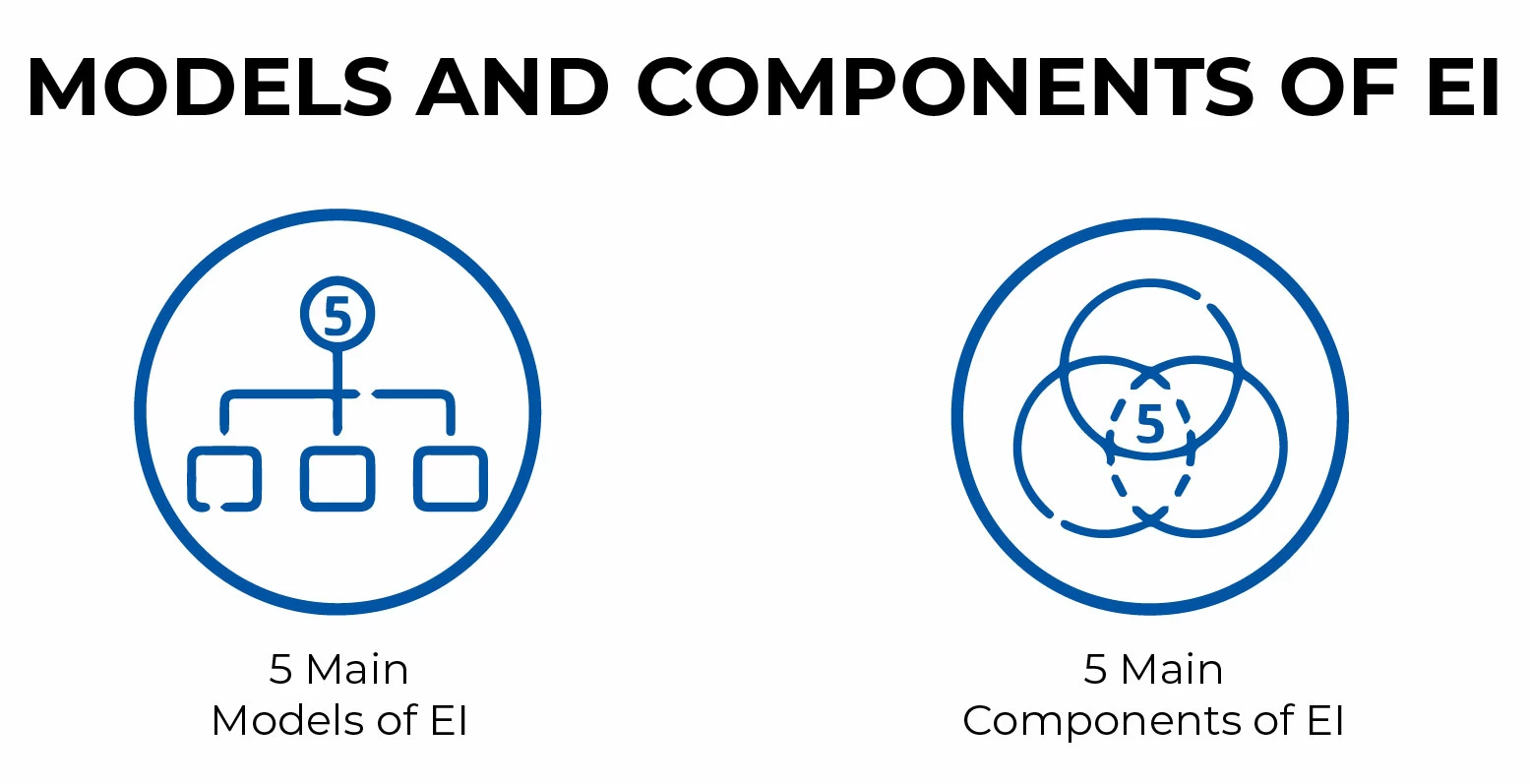
So far, there are five main models of emotional intelligence —
For the sake of simplicity, let’s explore the Mixed Model which was introduced by Daniel Goleman
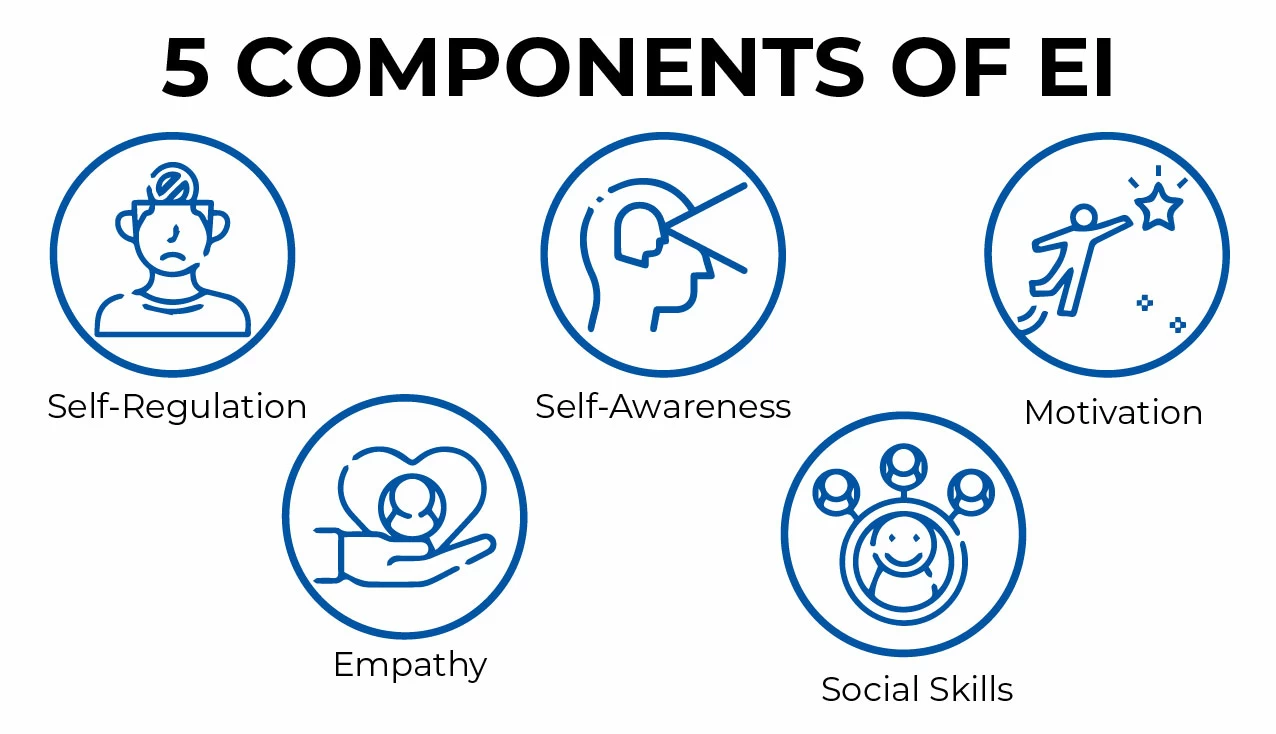
5 Components of EI based on the Mixed Model
The Mixed Model bases itself on characteristics that immediately and eventually affect one's impact on others and themselves.
The model taps into a certain level of intuition to guide decisions and the effect alteration of behavior can have on the emotions of others.
Here are the five components of Emotional Intelligence —
1. Self-awareness
The first component of emotional intelligence is self-awareness.
What is self-awareness?
It is the human capacity to understand one’s moods and emotions and, in turn, the effect they have on behavior.
Self-aware leaders are very realistic and confident. They are upfront about their mistakes and are aware of the extent of their abilities.
This is why self-aware leaders can navigate situations with minimal disagreement.
Emotionally intelligent people can listen to conflicts, react pragmatically, and do not let their emotions dictate their behavior.
2. Self-regulation
Self-awareness gives rise to self-regulation.
Self-regulation refers to your ability to control, or reconfigure, disruptive impulses and moods.
An accurate identification allows for appropriate responses. By reacting calmly in the face of adversity, it allows for rational thought to drive work culture.
Hence, leaders with a strong sense of self-regulation exhibit malleability and openness to change.
This skill encourages upholding a commitment to a safe and trustworthy ecosystem that carefully considers each outcome.
3. Motivation
Here’s a word we are all familiar with.
But what does motivation have to do with Emotional Intelligence?
Emotional intelligence enables leaders to be excited, and not afraid, of competition. Their internal drive is consistent and tends to extend beyond the project at hand.
They work past negative triggers since the driving force is motivation!
Leaders with strong motivation are fueled by the fulfillment that comes with aiding personal and professional advancement; not just for themselves, but for everyone around them.
4. Empathy
An Emotional Intelligence component that deals with relationship building is empathy.
Empathy allows for a sharing of inter-personal feelings that is imperative for relationship-building.
Leaders that inspire empathy encourage feelings of trust, patience, and honesty within their sphere of influence.
5. Social Skills
Social skills are the most over-arching of the components.
Even though it is empowered by the other four, it remains a component in itself since it deals with the navigation of social situations.
Building strong relationships entails managing expectations, thoughtfulness, and encouragement.
Research has shown that mixed model emotional intelligence and trait measures of personality have shown to be substantially correlated.
A mixed model EI model seems to offer incremental validity; something extremely hard to find in theoretical studies.
Next up – I’m going to be talking about the implications of varying EI levels in the workplace.
Chapter 3:
Implications of Varying EI Levels at Work
Emotional Intelligence is essential to build stronger relationships. Hence, varying levels of EI has direct consequences to achieving your career and personal goals!
EI helps turn intention to action and make informed decisions about what matters most, i.e you.

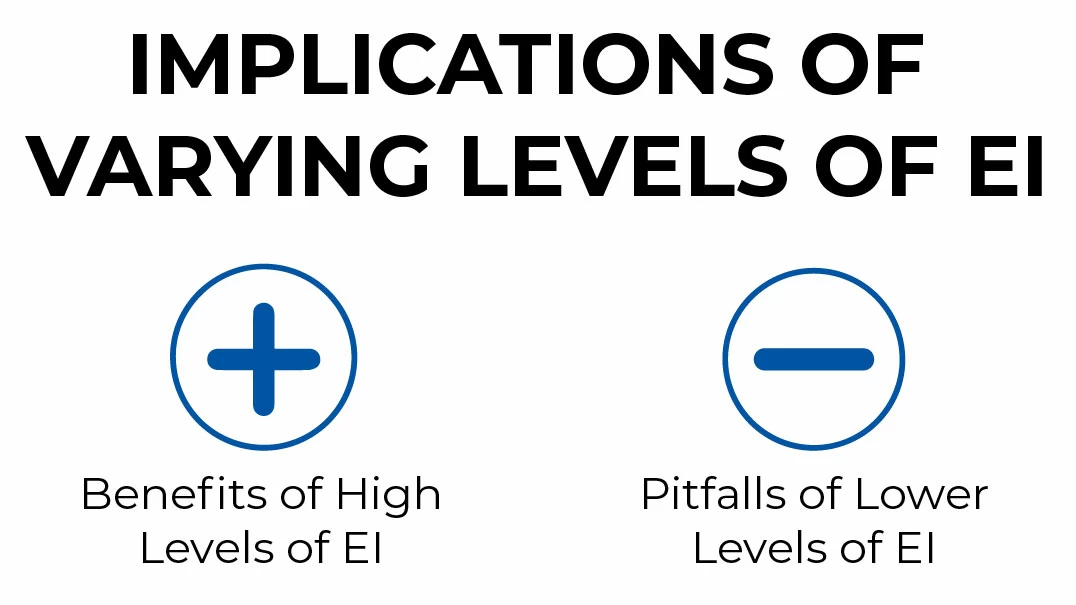
Benefits & Impact of High EI
Engaging in a higher EI results not only in an effective leadership style but also lays the foundation for a high-functioning workplace.
Here are the benefits of an environment fostering high EI:
1. Genuine Connections
Humans are inherently social animals and, as such, evolution has helped us cultivate methods to distinguish interest.
Active listeners and authentic curiosity are ranked high on characteristics that are positively responded to. These are generally found in individuals with active EI.
Comfort with striking up conversations and an ability to read social and nonverbal cues are all highly coveted and desirable characteristics, both in and out of the workplace.
Additionally, sincere advice-giving is also prompted by these qualities.
2. Stay Keen
Seizing opportunities requires leaders to be quick on their feet.
Complacency is the leading cause of complacency or plateauing for the most agile of leaders. It's important that a leader remains consistently curious and open to growth and evolution.
A lack of curiosity, optimism and initiative takes away from the fluidity and malleability of a leader.
3. Honesty Over Ferocity
Work ethics go a long way.
Business can be demanding and test a person on very fundamental levels.
Hence, a person with high Emotional Intelligence, will almost always find themselves on the receiving end of feedback (not just criticism).
A good leader will not falter from taking on responsibility, and that, in fact, is one of the cornerstones of finding success.
4. Facing Feelings
It’s not always a cakewalk.
Any form of social interaction constitutes trying and testing times; this often requires one to remain calm.
For cooler heads to prevail, anger and frustration must be channelized rationally.
Awareness of feelings, both personal and empathetic, leads to a humble and modest leader; these are, in fact, two core traits of an emotionally advanced leader.
They can zero in on the cause of discontent, and are forthright about apologies.
Allowing these leaders to seem more personable and careful with the power that their position demands.
5. Blinkers On
Staying solution-focused is easier said than done; it requires a certain sense of steadfast emphasis on results.
Rather than getting consumed by the semantics, Emotionally Intelligent leaders pay attention to how to improve, correct, and encourage situations in a way so as to herald them towards the desired direction.
Staying focused on an outcome-driven attitude results in faster problem-solving, without the fear of demoralization.
6. Receptive to Criticism
Individuals with higher EI look at critical evaluations as constructive.
They are not ignorant of the continual process that is self-improvement; it is this very realization that gives them confidence that sets them apart from the crowd.
Highly emotionally intelligent people are attuned to their strengths and leverage them when working in a group or an assignment.
They are open to their own drawbacks, and are not beyond solutions that are outside their understanding or intuitive style.
The path to discoveries and self-improvement is paved with vulnerability for those with a higher EI.
7. Level-headedness
Overexertion and lack of a work-life balance lead to burnout in many young leaders.
Successful leaders learn to balance the strain of work with the required unwinding demanded by mind and body.
Emotionally Intelligent people know how to conserve and exert their energy as the situation demands.
Pitfalls of Low EI
As has been established, EI is essential to behavioral outcomes.
While we have just highlighted the pros of an EI inclined mindset, it is also important to note the drawbacks of a low EI induced mindset.
Here are some of the pitfalls:
1) Stubborn Constitution
People with low Emotional Intelligence tend to be inflexible and stubborn.
There is something to be said about structure, but remaining insensitive to variables is a possibility when you are blind to change.
While structure is extremely helpful to maintain discipline and longevity, inflexibility renders leaders incapable of appreciating multiple perspectives of problem-solving at the same time.
2) Overestimating Oneself
Realistic timelines are crucial to success.
A blurred understanding of limits and expectations leads to an incoherent and unfavorable work environment.
3) Being Guided by Emotions
A reactive personality steers a complicated ship.
Almost every self-help book out there will ask you to “take a breath” before reacting. Poor emotional intelligence fuels a poor grasp on composure.
Now that I have explained the implications of varying EI levels at work, let me take you through the day-to-day uses of EI.
Chapter 4:
Day-to-Day Uses of EI
The implications of EI can seem intimidating.
My advice is — begin with small steps towards employing your EI daily and build from there!
EI is not just a professional skill, it is very much a life skill. Here are some of the day-to-day uses of Emotional Intelligence:

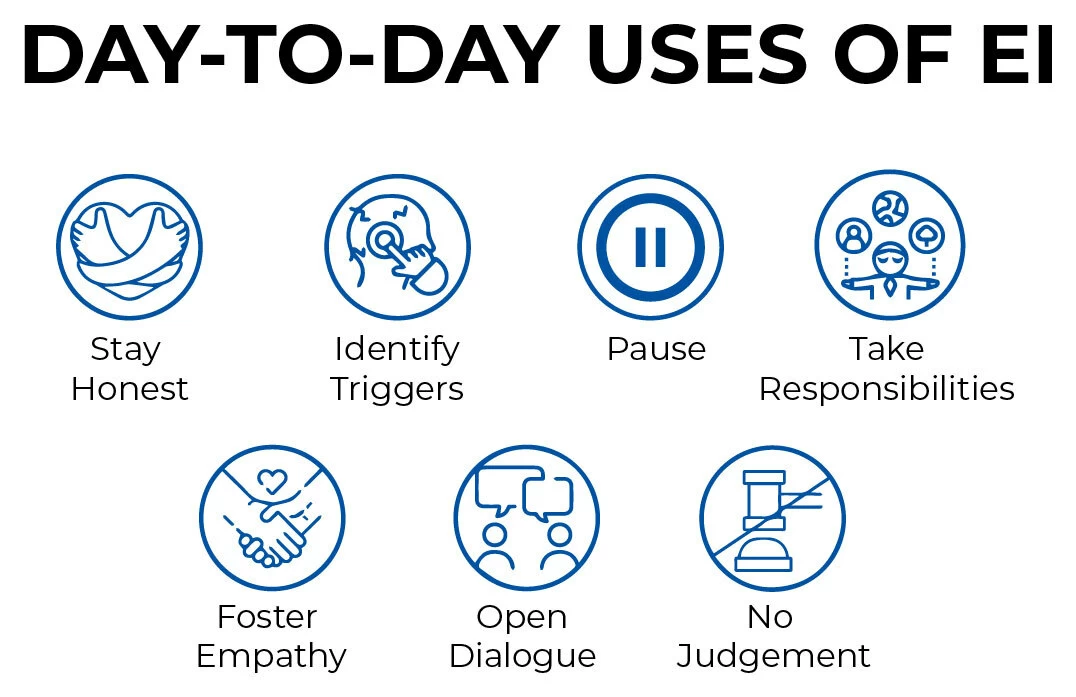
Stay Honest, Know Yourself
The first step can be the hardest.
It is important to be familiar with the vastness of emotional spectrums and recognize your responses to them.
Identify Triggers
Recognition leads to identification.
By accurately identifying situations that result in your reactions, you can follow simple steps to reroute your responses.
Pause
This simple yet effective practice is immensely powerful.
By taking the opportunity to delay a response, verbal or physical, you can integrate thought and reaction.
Take Responsibility
Re-framing your vocabulary can be an active way of engaging EI.
This allows you to take stock of language that is constructive for communication and allows you to be aware of subconscious signals
Foster Empathy
Empathy begins with curiosity.
When you deliberately explore the motivations behind an action, rather than make a snap judgment, it leads you to the underlying stimulus.
Open Dialogue around EI
Criticism can hurt and that, in turn, can shape behaviors and responses.
To strengthen your EI you must focus on what is being conveyed, and how that aids in your enhancement.
No Place for Judgment
The paradox of EI is that it is a constant process.
Exhibiting perfect control all the time is a difficult, if not impossible, task.
Allowing for some peaks and stumbles in your journey will help you do the same for someone else.
Let’s move on to the long-term benefits of Emotional Intelligence.
Chapter 5:
Long- Term Benefits of EI
Emotional Intelligence is a sign of an evolving leader.
The demands of a business are ever-changing and, most importantly, unpredictable.
So it is not particular skill sets that distinguish an outstanding leader but, rather, it is the ability to apply pre-existing skills in a manner that adds value.

Hence, EI is a highly respected and sought after quality in a leader.
The long-term key benefits of it have been identified as:
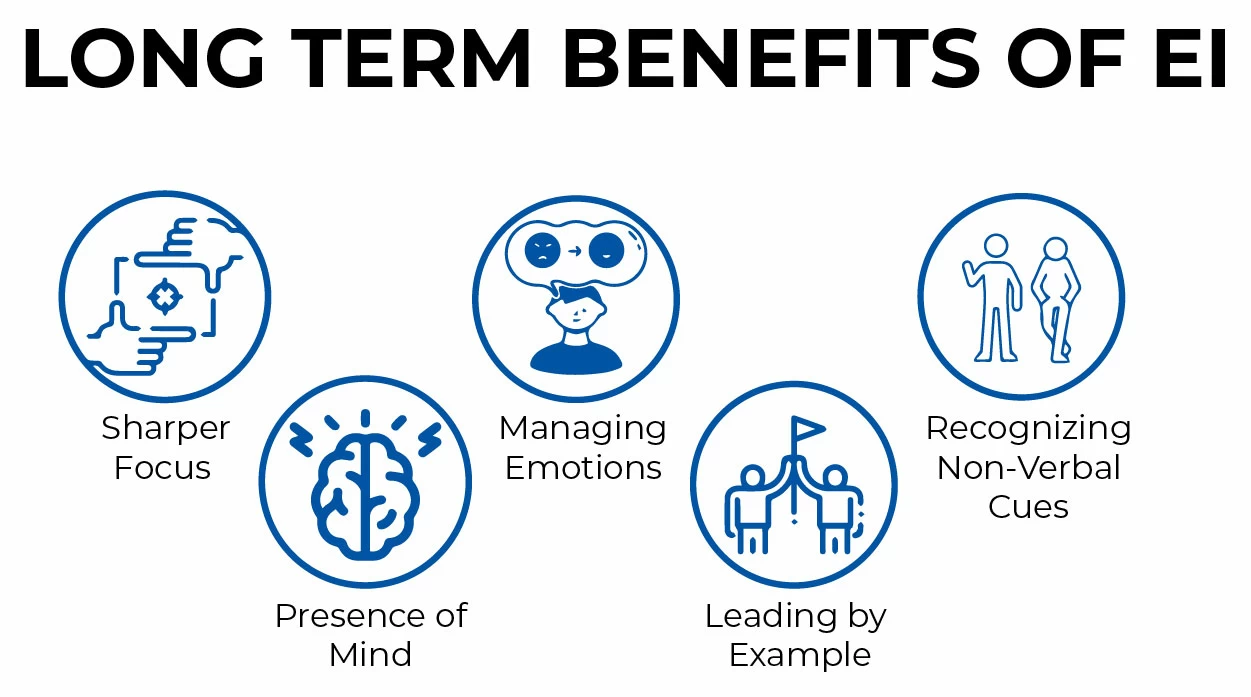
Sharper Focus
Individuals who work on their EI are superior at visualizing ambitions and targets.
They are also able to pragmatically work back from said targets, and break up the process in clear, convenient steps.
Managing Emotions
EI also allows individuals to identify and play to their personal strengths and temper their weaknesses.
Such leaders are notably accomplished at creating and fostering supportive environments.
Recognizing Non-verbal Cues
Leaders with a higher EI are also skilled at perceiving nonverbal cues and, hence, navigating situations in a way that is vigilant and compassionate.
This, in turn, maximizes learning.
Such leaders are also very encouraging of participation, without necessarily requiring it.
Presence of Mind
Any stressful situation needs a sensible approach from the leadership.
EI encourages leaders to not be overwhelmed by a challenge, but to rely on the skills learned on the job.
Leading by Example
Modeling yourself on desirable behavior allows for enhancing insight into conduct.
This leads to an organizational culture that is forgiving of mistakes and supportive of learning.
Now that I have taken you through the long-term benefits of Emotional Intelligence, I’m going to be delving into how Emotional Intelligence comes in handy in the workplace.
Chapter 6:
The Power of Manifestation (EI at Work)
I touched briefly upon the models and components of Emotional Intelligence in Chapter 2.
Building upon that, here are some ways to improve EI at the workplace.
This can be done by following simple steps that are helpful, not just on an individual level, but on a team or organizational one!

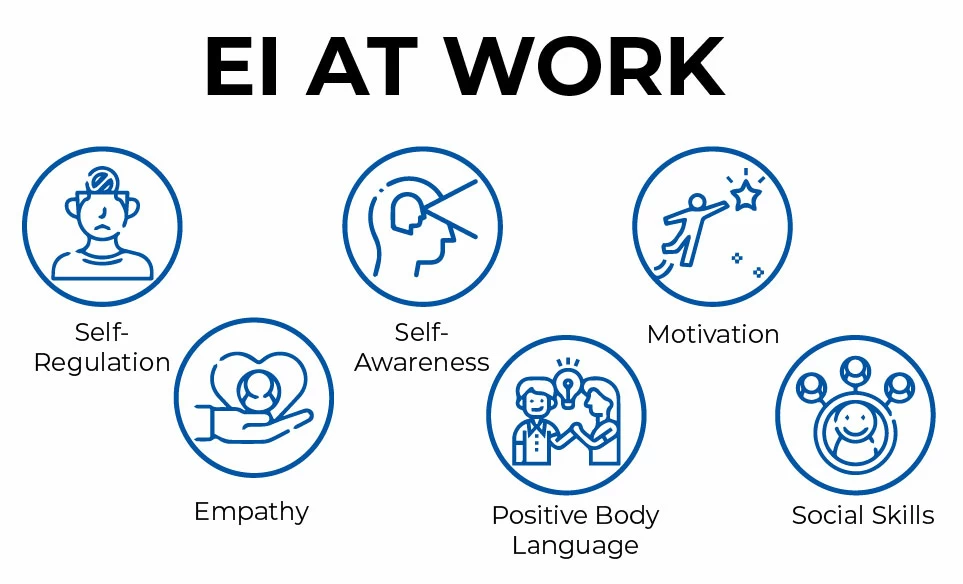
Self-awareness
Ask for feedback.
Whether it be with friends, family, supervisors, or colleagues; it is always a good idea to ask for feedback!
Feedback can be derived from asking about impressions, from exchanges, from informal settings.
It is important not to force feedback, but to earn it.
A keen curiosity and an attitude that is receptive to interpreting criticism as constructive can prove beneficial to leaders in multiple ways.
Self-regulation
Self-regulation requires realistic expectations.
Having measurable goals that start simple, allow for variables, and outline steps towards a greater goal are strides towards achieving this.
Journaling and going back to notice patterns is a great starting point.
Motivation
Motivation to fulfill a task or assignment at hand requires a clear thought process.
Practicing undivided attention, limiting distractions, and considering various perspectives and courses of action are all vital to motivation.
Clarifying expectations and working backward often help create frameworks that can guide one to staying motivated.
Empathy
Empathy is heard as much as it is seen.
Lending an empathetic ear can be done by using a neutral tone and practicing active listening.
Active listening is the process of repeating or rephrasing what is being said to exhibit understanding.
Additionally, it is valuable to stay mindful of the energy behind the interaction.
Exhibit Positive Body Language
Stay aware of nonverbal cues.
Be aware of your body language, as well as that of the employee.
Pay attention to stance, facial language, and other body language cues. While this will require extra effort, it can go a long way.
Social Skills
A lack of social/communication skills is the barrier that stands between those with EI being able to actually show it.
Regular public speaking develops great communication habits.
Additionally, it assists in pinpointing how and where to express yourself. Good posture, maintaining eye contact, and a neat appearance are all part of positive social cues.
Now that I have taken you through the benefits of Emotional Intelligence in the workplace, I’m going to expand on the requirement of EI in the workplace.
Chapter 7:
Why We Need EI at Work
EI is not just for CEO’s and managers; it is a quality that affects the DNA of an organization.
According to a study by CareerBuilder, 71% of employers say they value Emotional Intelligence over IQ.
And this trend is rooted in a very good reason.

Emotional intelligence has been studied to be twice as important as cognitive ability in predicting outstanding performance. (Cote & Miners, 2006).
Additionally, EI is also seen to have a direct correlation with employee retention and higher job satisfaction. (Prati, et al., 2003).Companies with a higher performance index also tend to cultivate Emotional Intelligence boosting initiatives (Coate & Hill, 2011).
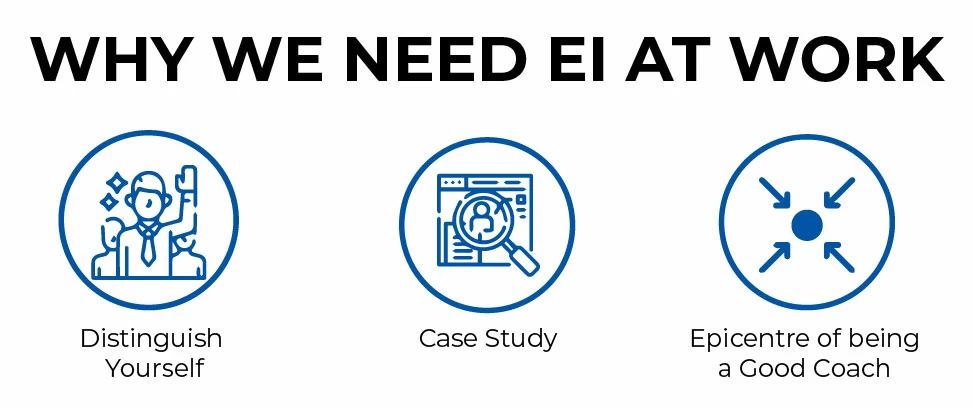
Emotional Intelligence is perceived in the workplace through:
Personal Outcomes
Research shows that displaying higher Emotional Intelligence can have an immediate effect on your life.
A study by breakthrough ROI suggests that a single raise in Emotional Intelligence points could result in an annual increase of around $1,300 annually.
Employees who display higher Emotional Intelligence levels stand to make around $30,000 more than employees with lower levels.
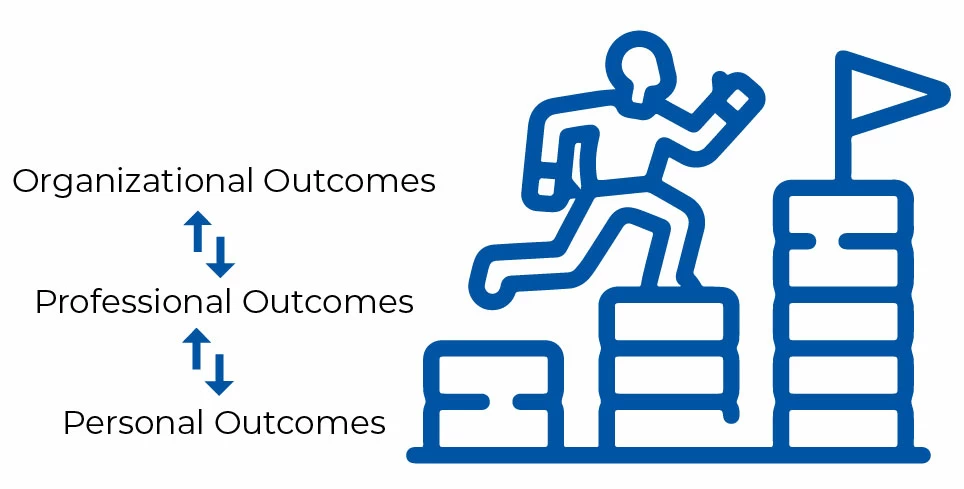
Professional Outcomes
Companies that nurture Emotional Intelligence create safe environments that lead to greater, smoother workplaces which foster collaboration.
This, in turn, improves productivity and, hence, success rates.
86% of employees and business leaders state the lack of collaboration, or ineffective communication, is the root cause of workplace failures.
Organizational Outcomes
Emotionally Intelligent company cultures attract and produce effective workers.
The holistic approach to catering to their needs leads to a staggering increase in output.
Studies show that companies with loyal employees earn 33% higher revenue than companies that have a poor company culture; this directly affects your bottom line.
Johnson & Johnson: A Case Study of EI at Work

Emotional Intelligence has now become commonplace in many large, successful companies.
An example of just how influential Emotional Intelligence is can be derived from the workings of one of the world’s largest healthcare companies: Johnson and Johnson.
After Goleman’s work caught the interest of executives at Johnson & Johnson, they decided to conduct an internal investigation of their own.
1,415 employees across 37 countries were selected to assess their managers on:
1. J&J leadership competency model
2. the Standards of Leadership
3. the Emotional Competence Inventory, based on the works of Goleman.
The findings of the study concluded that higher ratings in social, emotional, and relational competencies pointed at higher-performing managers.
The most “emotionally competent” leaders were also the highest performing leaders.
This obvious correlation resulted in an unflinching hold Emotional Intelligence has had on Johnson and Johnson HR policies and those of the industry overall.
Why is EI at the epicenter of being a good coach?
When it comes to coaching, emotional intelligence is essential.
We must understand one fundamental thing when it comes to coaching; it deals with two parties of people.
There is a receiver (person being coached), and there is a giver (the coach).
Both parties in a coaching relationship play important roles, and emotional intelligence development can serve both parties well.
First, the coach who demonstrates a high degree of Emotional Intelligence will be received extremely well.
Second, the person being coached will be more likely to develop Emotional Intelligence and improve performance and behaviors.
To demand a change while creating a space that supports, exemplifies, and acknowledges Emotional Intelligence ensures that the work put into facilitating this change is sustained.
3 Tips for Coaches to Incorporate EI into their Work
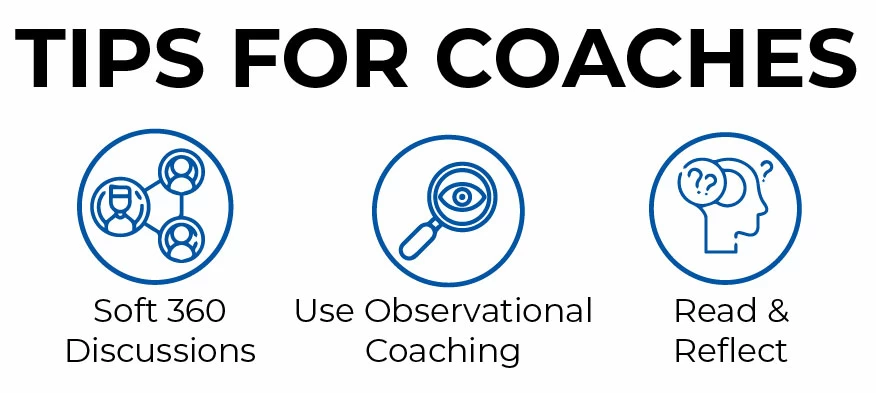
Emotional Intelligence is something that needs constant TLC, it needs to be worked on and improved upon every step of the way!
Coaches and students alike greatly benefit from sharpening their levels of Emotional Intelligence.
To make the process easier here are some quick tips for coaches to check how they can incorporate EI into their work:
Soft 360 Discussions
When it comes to coaching, emotional intelligence is essential.
We must understand one fundamental thing when it comes to coaching; it deals with two parties of people.
There is a receiver (person being coached), and there is a giver (the coach).
Both parties in a coaching relationship play important roles, and emotional intelligence development can serve both parties well.
First, the coach who demonstrates a high degree of Emotional Intelligence will be received extremely well.
Second, the person being coached will be more likely to develop Emotional Intelligence and improve performance and behaviors.
To demand a change while creating a space that supports, exemplifies, and acknowledges Emotional Intelligence ensures that the work put into facilitating this change is sustained.
Use Observational Coaching
Have the person being coached observe someone who demonstrates their desired skill or behavior.
Have them journal their observations.
This builds awareness outside of coaching sessions and the coach (you). It also allows you to learn from someone else’s qualities.
Read and Reflect
One of the most powerful things to do is to find motivational material and read it together.
Then, you can collectively answer insightful questions such as "What did you learn about yourself?” or “Are you committed to improving one of those things?"
This allows for shared reflection.
Chapter 8:
Resources
As I mentioned earlier, Emotional Intelligence can prove to be highly effective if incorporated correctly.
With that in mind, in this chapter, here are some of the resources I drew from for this article that might help you delve deeper into understanding Emotional Intelligence.
Start with testing yourself: http://globalleadershipfoundation.com/geit/eitest.html

The Global Emotional Intelligence Test uses 40 questions which are derived from the Global EI Capability Assessment instrument, which contains 158 items.
These are based on Goleman's four-quadrant Emotional Intelligence Competency Model (2002).
Short EI quizzes such as this are meant to be fun, and to give you a guide to which EI areas you are doing well in and those which perhaps you need to focus on for development.
Research Articles
- Measuring trait emotional intelligence Adrian Furnham: https://d1wqtxts1xzle7.cloudfront.net/
- Emotional Intelligence and Employee Performance: An Intervention Based Experimental Study Muhammad Munira, Rauf I Azamb: Journal of Business & Economics Vol. 9, No. 2 2017, pp, 1-19
- Harvard Business Review Everyday Emotional Intelligence Big Ideas and Practical Advice on How to Be Human at Work
https://www.google.co.in/books/edition/_/RNsuDwAAQBAJ
Harvard Business Review, Daniel Goleman, Richard E. Boyatzis, Annie McKee, Sydney Finkelstein
: McKee, A., Boyatzis, R. E., Finkelstein, S., Review, H. B., Goleman, D. (n.d.). Harvard Business Review Everyday Emotional Intelligence: Big Ideas and Practical Advice on How to Be Human at Work. United States: Harvard Business Review Press.
Books
- Goleman, D. (1995). Emotional intelligence. New York: Bantam Books.
- Goleman, Daniel. (2002). Primal leadership: realizing the power of emotional intelligence. Boston, Mass.:Harvard Business School Press.
- Bradberry, T., & Greaves, J. (2009). Emotional Intelligence QuickBook 2.0. TalentSmart.
Videos
- Daniel Goleman Introduces Emotional Intelligence.
From the very pioneer himself, understand what Emotional Intelligence entails and what this means for humanity and future generations.
- What is Emotional Intelligence?
This School of Life video breaks down the importance and requirement of Emotional Intelligence in our lives. The animated video is an excellent example of the overarching need of EI.
- Developing Emotional Intelligence
This MindToolsVideo is an excellent overview of the steps needed to be taken by oneself to develop Emotional Intelligence. Highlighting one’s own agency in creating an Emotionally Intelligent outlook
- Emotional Intelligence: Using the Laws of Attraction | D. Ivan Young | TEDxLSCTomball
This Tedx video straight from Ivan Young speaks to the science of Emotional Intelligence directly affecting what you attract into your life.
Conclusion
Congratulations on finishing this guide!
Now that you have developed a deep understanding of Emotional Intelligence and its utilization, you can use it to help your clients navigate productivity more effectively.
Start off by taking all the action steps in this guide.
Don’t just read, begin implementing! No time like the present.
I would love to know which aspect of Emotional Intelligence surprised you the most or what methods you found most effective in testing yourself.
Have you addressed your emotional intelligence?
Do you think there is something I have missed?
Do you have any questions which were left unanswered?
Leave me a comment and I would love to address them.
