

All you need to become a successful EFT practitioner
Fear of failure is not letting you take a step forward towards becoming a professional EFT practitioner. Attend my session to discover how an EFT practitioner makes a minimum $25000 a month, enable your business, client needs, solve loopholes and a lot more.
Click here, and learn all about starting your own EFT practice and setting up your coaching business.
Last updated: March 2026
Who is an EFT practitioner?
An Emotional Freedom Technique (EFT) practitioner is a professional therapist who helps clients in treating their emotional or physical ailments using emotional freedom technique.
The practitioner not only applies EFT, but also helps the clients to identify their core issues, counsel them, and remove their mental blocks that could hinder the healing.
Often an EFT practitioner offers a mix of techniques such as Matrix Re-imprinting or Hypnotherapy, along with EFT to get the best results in healing.
The History of EFT
Although we first heard the term in the early 90's, this technique has its roots in ancient Chinese medicine called acupuncture.
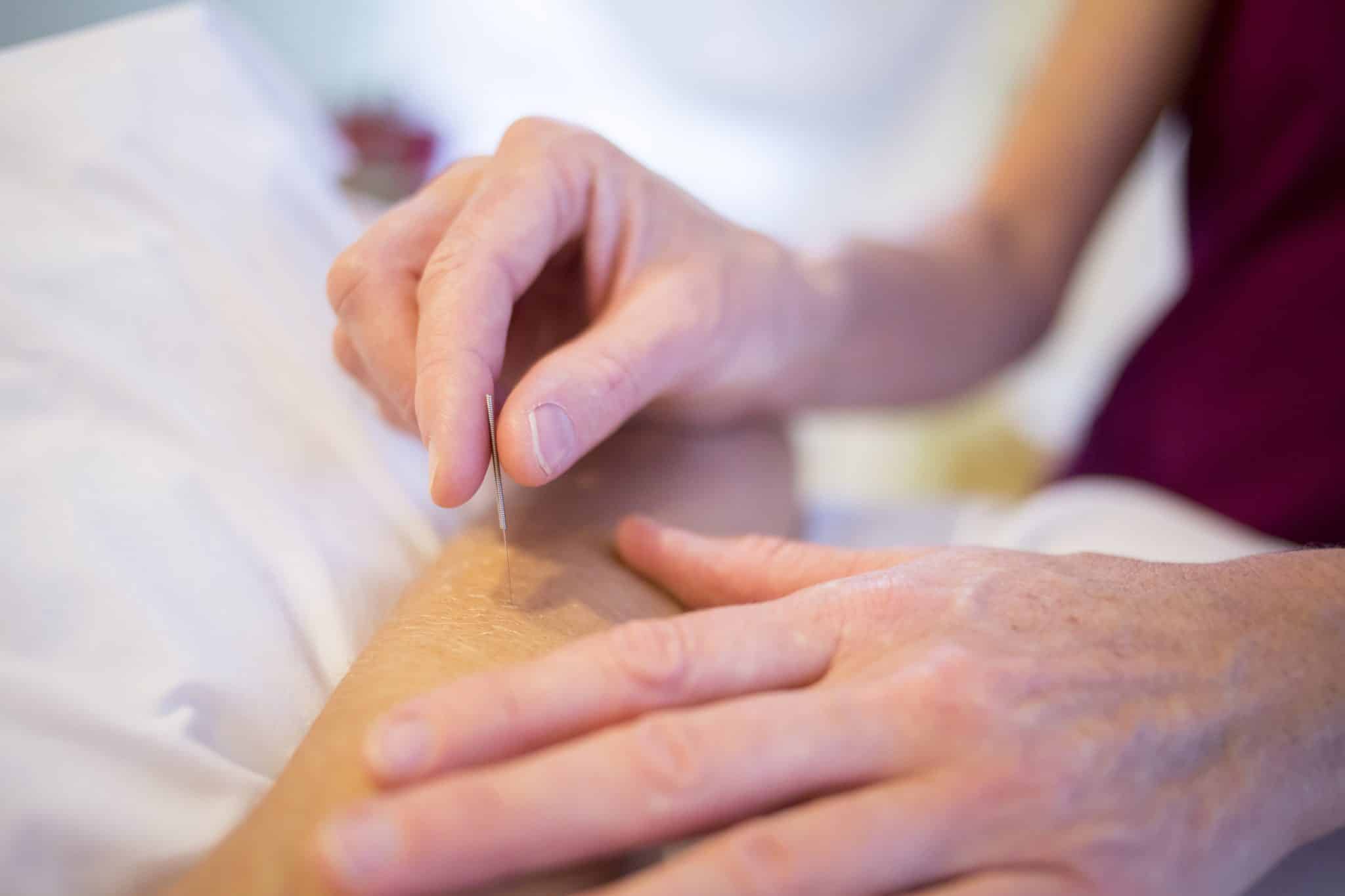
The acupuncture, which was initially developed to cure physical ailments, uses needles to tap on the energy meridians (or energy pathways).
This approached intrigued various therapists in the West, who then learnt that tapping into these meridians, could even heal emotional problems. Soon it became a subject of thorough research, which was then improved, modified and refined.
Today we call this "Emotional Freedom Technique", or "Tapping".
What are the real benefits of EFT?
Firstly EFT is very easy to apply/ learn, gives quick results, and costs much less than conventional therapies. The best part is that EFT can be applied to almost anything.
Yes, even though the name suggests the Emotional Freedom Technique, it benefits a wide range of troubles even beyond the realm of emotional troubles.
Here are a few cases where EFT has been proven to do wonders (supported by science)
Reduction in stress, anxiety and depression: 2014 study (by APA) shows that 30% of working professionals are affected by stress. Research studies have validated that EFT helps in reducing the levels of cortisol (aka, the stress hormone), among other significant biological effects.
Trauma and PTSD Management
EFT has been proven very effective for treating veterans suffering from PTSD. Studies show the positive effects of EFT only after the first 3-4 sessions. Today, 43% of users prefer this technique to overcome a traumatic experience.
Reduction in chronic pains
This technique has also helped to alleviate symptoms for patients suffering from tension headaches, fibromyalgia and other chronic pains. These effects have been backed up studies conducted on patients treated with EFT.
Fighting your Phobias
EFT is also known to help patients overcome their fears and phobias, be it a simple fear of public speaking, to severe phobias like Hydrophobia and fears of heights. Doctors have even witnessed patients conquer their childhood fears completely using this technique.
De-Addiction

Many therapists nowadays resort to EFT for helping their clients to get over addictive behavior. This therapy has shows quick results and provides immediate relief, thus making it a popular choice amongst the patients.
The list goes on, be it a weight loss issue, enhancing sports performance, to even relationship management, EFT offers solid results in broad domains.
How does EFT work?
First I would go back to the basics of EFT and the science behind the therapy.
EFT is primarily a combination of acupuncture and psychotherapy. Here, the practitioner taps into specific energy meridians with fingertips (of course, not needles) while saying a positive affirmation out loud.
Voicing out affirmations tunes the body into a state of emotional distress, while simultaneously tapping on the meridians releases the blocked energy from these energy channels. As a result, this downgrades the effects of a trauma biologically and brings harmony between mind and body.
How is EFT performed?
Using fingertips to tap! As there are energy meridians present on the tips of your fingers, so to get the best outcome it is advisable to use these.
Tapping is usually done with index and middle finger, but there are no hard and fast rules for this.
Remember to tap for around 3-7 times at each location. Although it is not critical, tapping at a meridian for at least one full respiration cycle is more beneficial.
NOTE: Please don't hurt yourself. Tapping should only be done firmly in a controlled manner once you have completed the EFT course.
Now lets us find where to tap.
We have 10 points in the basic recipe approach
KC - Karate chop point
Located at the outer edge of the hand, the fleshy part on the opposite side of the thumb. The part which is used to deliver a karate chop
TH - Top of the head
Right at top of the skull, exactly at the centre.
EB - Eyebrow points
You can find the these at the beginning of each eye-brows on the inner/thicker side
SE- Side of the eye
Located at the outer side of the eyes, just before the temples.
UE- Under the eye
This point is right below the eye, on the hard bony region adjoining the cheekbone.
UN-Under the nose
You can spot this just below the nose and above the upper lip.
CP-Chin
Located at the hallow region just below the lower lip and above protruding part of the chin.
CB-Collar bone point
To find this one, first, locate a 'U' shaped notch (where you wear a tie) in the throat region. From this spot move an inch downwards, and then an inch towards right/left. (The fleshy part just below the collarbone)
UA-Under Arm
You can find this point 4 inches below the arm, on the sides of the ribs.
Key Points about EFT
Not hitting the right spot
Yes, it important to know the exact location of the points. Though tapping in the near proximity of these points would also work.
There is no sequence
You may start the tapping from any of the above-mentioned points and go in any order you wish to (after the initial tapping of karate chop point).
Start from any side
The points that are located symmetrically on the face or body, can be tapped on either side. You may even switch sides during the process, it's totally up to you.
Left, right or both
you may use right hand or the left one depending upon your comfort. Each hand can be intermittently used during the tapping process.
Summarizing the EFT Process
Identification

In this step, you simply pinpoint your pain area, which could be a real physical issue or emotional pain. One should try to be specific while selecting the issue, as EFT is more effective for individual issues.
Estimation
Once you have turned away from a disturbing thought or emotion, now it's the time to stay in the present moment and simply feel your body.
Try to quantify the intensity of feeling (could be pain, discomfort or heaviness) on a scale of 0-10. Write it down!
This will help you assess the effectiveness of the technique you will perform.
Designing an affirmation
In this step, you get to select a phrase which would help you to acknowledge the problem, and ensure self-acceptance.
A usual phase is like:
“Even though I have * this problem *, I deeply and completely accept myself”.
* This problem * could be " this craving", "this anger towards my father", "this pain in my neck", and so on.
It is important that you try to say this affirmation aloud with good conviction to get the best outcome.
The tapping begins
First, continue tapping on the karate chop point while chanting the affirmation 3-4 times.
Now repeat the affirmation tapping 3-7 times on the remaining 8 points. It's is advisable to go from top to bottom during the tapping cycle; i.e. from top of the head to the eyebrow point, to side of the eye and so on
Note: During subsequent rounds of tapping on the same issue, you may use a 'reminder phrase' instead of complete affirmation. Reminder phrase is simply stating the actual problem, like " this drug addiction".
Re-assessment
Now after the initial rounds of EFT, it's time to check the current intensity of emotion. See if there is a significant reduction in discomfort level as compared to the original score before you started EFT.
If discomfort still remains high, do go for another round of tapping.
That’s all, that easy!
Why does a client seek a professional EFT practitioner?
Even though performing EFT looks really simple and there are a lot of online tutorials, it sometimes becomes crucial for a client to take professional help. Here are a few cases where the role an EFT practitioner becomes important
Make you feel safe

Clients often find it difficult to express traumatic or painful experience. A good EFT practitioner makes a client feels secure and comfortable about opening up about these repressed emotions, which makes the healing easier.
Clear the blockages
Many times there are subconscious misplaced beliefs that hold back a client from resolving the issues. It could be a feeling being undeserving to get a problem, or feeling of distrust towards the therapy. Its the responsibility of a practitioner to identify and break these destructive beliefs.
Reach to the core
An EFT practitioner knows how to probe asking the right question until one reached the heart of the problem. Once the core issue is identified, then the therapy can offer better relief.
Therapists know better
Of course, as a professional EFT practitioner is not only an expert in performing this technique but also knows about the additional tapping points and advanced methodology.
The Essentials to Build a Successful EFT Practice
Passion to help
This is one thing that will keep you going through thick and thin. Moreover, clients can easily sense the motives of a practitioner, and always prefer someone who is keen to help. You could demonstrate this by giving free 25 minutes sessions to new clients over the phone.
Specialization and finding a niche
It's quite valuable for an EFT practitioner to attain specialization in a certain domain, could be in weight loss, or de-addiction etc. It also very useful to acquire skills in various different therapies like Matrix Re-imprinting, Cognitive Behavioral Therapy (CBT) etc. This could be very attractive from the client's point of view.
Relevant experience
A client always prefers to work with an experienced practitioner. You would have to do some voluntary work and gain some hands-on experience using EFT before starting your practice. This will not only add to your credibility but also polish your skills.
Marketing your practice
With clients taking EFT sessions over Skype and phone, EFT has a global market. It is essential that you have an impressive website, displaying your all your special, skills and experience loud and clear. You could even use YouTube as a medium to demonstrate what you have to offer.
Get certified
It's a must! Doing a full EFT practitioner course could make you a certified practitioner; this would definitely enhance your market value.
How to become a certified EFT practitioner
Unlike the most other courses for life coaches, EFT is simple to learn, not time-consuming and costs much lesser.
EFT training workshops are conducted for different levels (beginners, professionals & advance).
Certification from EFT Universe
· 4-day pro workshop: It consists of 16 modules that clearly outline the science behind EFT. Students are also taught the physiology of stress, different techniques to deal with emotional pain, along with 8+ hours of practice.
This workshop may cost you around $800
· 2-day experimental workshop: This gives you 2 days experience to practice EFT under the supervision of expert professionals. You get to witness the powerful effects of EFT life.
This workshop costs around $250.
Once you are done with both these courses you can apply certification.
Totally cost of certification (including training workshops) is about $3000-4000.
