Top 10 Must Read Books on Cognitive Behavioral Coaching
Before everything else, Cognitive Behavioral Therapy (CBT) is a psychosocial method of addressing mental health concerns. It is a study that focuses on enhancing patients' mental health by first identifying the source of the issues. People who experience mental health issues or inner demons that keep making their daily life worse may do so for a variety of reasons.
This article will review some of the key and best books on cognitive behavioral therapy that will make it easier for you to understand this subject. These are the best books, regardless of whether you are a client or a clinician, know a little bit about CBT, or know nothing at all.
Last updated: March 2026
In Brief : Top 10 Must Read Books on Cognitive Behavioral Coaching
The CBT Toolbox: A Workbook For Clients And Clinicians – Jeff Riggenbach - Released in November 2012, this workbook guides readers through research-backed exercises, offering diverse approaches to address various symptoms and achieve lasting improvement; available on Amazon (price not provided).
CBT For Chronic Pain And Psychological Well-Being By Mark Carlson - First released on April 15, 2014, this therapeutic manual integrates evidence-based CBT techniques for addressing psychological issues caused by chronic pain, incorporating DBT, ACT, and motivational interviewing skills; available on Amazon (price not provided).
The Anxiety, Worry, And Depression Workbook By Jennifer L. Abel - Published on January 31, 2018, this user-friendly workbook by Jennifer L. Abel provides proven techniques, worksheets, and exercises to manage worry, anxiety, and depression; available on Amazon (price not provided).
How Cognitive Behavioral Coaching Books Help a Coach
The goal of cognitive-behavioral coaching is to assist clients in gaining perspective on whatever is causing them problems. Together, the coach and client try to figure out what might be holding someone back from realizing their full potential and what steps they should take to take control of their circumstances.
A potent coaching approach that uses psychological models grounded in scientific evidence is called Cognitive Behavioral Coaching (CBC). Self-defeating ideas, feelings, and behaviors can be recognized and overcome with the use of the techniques, exercises, and activities that are employed. Negative behaviors have an impact on a person's physiology because they are caused by negative thinking, negative emotions, and negative behaviors.
10 Books for Every Cognitive Behavioral Coaching Coach
As cognitive behavioral coaching relies on books that contain knowledge about various situations and crises, as well as their solutions, we have compiled the top 10 books on this subject after examining these factors. The following books are essential readings for cognitive behavioral coaching. You can get assistance in this subject from the list of essential books below. Here we go :
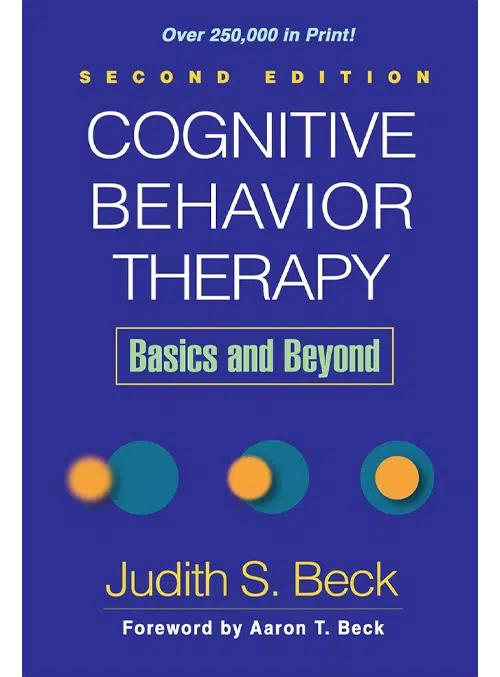
1. Cognitive Behavior Therapy, Second Edition: Basics and Beyond – Judith S. Beck and Aaron T. Beck
This book was originally released by The Guilford Press on May 19, 1995. This excellent teaching manual makes cognitive therapy easily understandable to students and professionals who are new to cognitive therapy because of its clear, step-by-step writing style.
The book places a strong emphasis on:
developing cases
making judgments during therapy sessions
identifying issues during therapy
employing cutting-edge strategies to alter underlying assumptions and basic beliefs
Instructors will value this emphasis. Every chapter includes transcripts that vividly portray the story. To show how to conceive patients using the cognitive model, arrange treatment, carry out an initial session, structure therapy inside and between sessions, incorporate homework, and apply cognitive and behavioral strategies, the author presents a single case example.
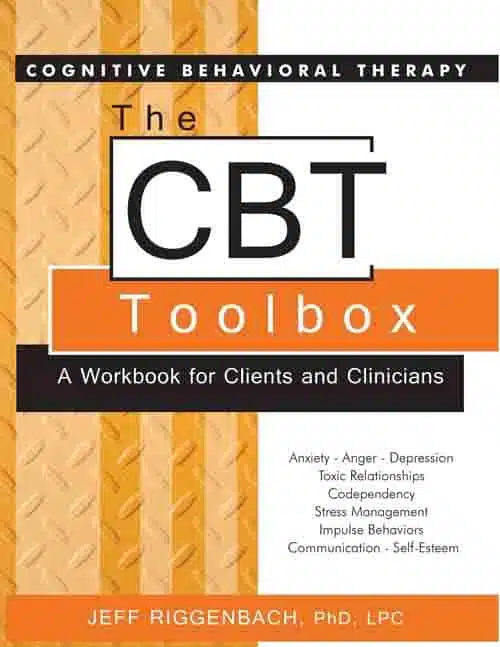
2. The CBT Toolbox: A Workbook for Clients and Clinicians – Jeff Riggenbach
This book was released in November 2012. The CBT Toolbox walks you through exercises backed by research while remaining pragmatic and simple to use as you travel the path to recovery. The CBT Toolbox is not a book with only one approach. Instead, you will be given activities that combine research with real-world applications for certain symptom combinations and have the depth needed to effect lasting improvement.
This book will instruct readers on how to break free from unhealthily ingrained behavior patterns by offering novel and tested methods to:
pinpoint the causes of a variety of psychological issues.
develop step-by-step strategies for enhancing self-worth
disregard dysfunctional thought
keep an eye on your rage - remain composed under pressure
end depressive tendencies and unhealthy relationship patterns
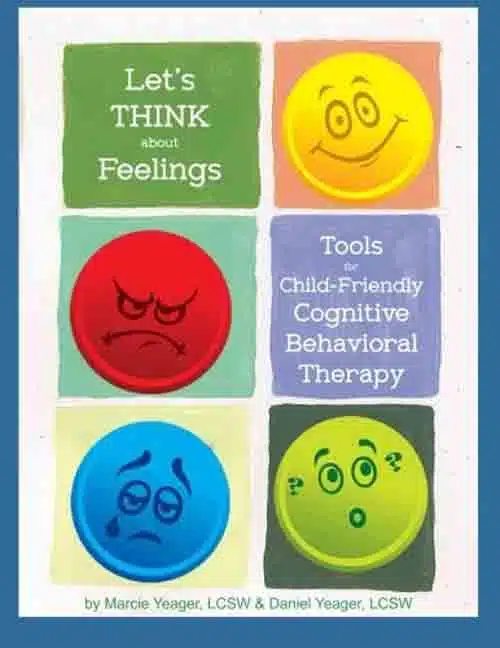
3. Let’s Think About Feelings: Tools for Child-Friendly CBT – Marcie Yeager LCSW and Daniel Yeager LCSW
Golden Path Games published this book in 2016. Cognitive-behavioral therapists can access kid-friendly tools through Let's THINK About Feelings (CBT). Theoretically solid theoretical knowledge of CBT and a library of CBT procedures that they employ with clients are expected of therapists who use this resource. Let's THINK About Feelings adds to such therapies by giving young people activities and visual aids that make the CBT principles more approachable.
This book has two parts that are following:
Children can use the skills in Part 1 to help them distinguish between emotions and recognize stressors.
Tools for helping kids control their emotions and behavior are provided in Part 2, with an emphasis on reaction inhibition, cognitive flexibility, self-calming and self-monitoring, and problem resolution.
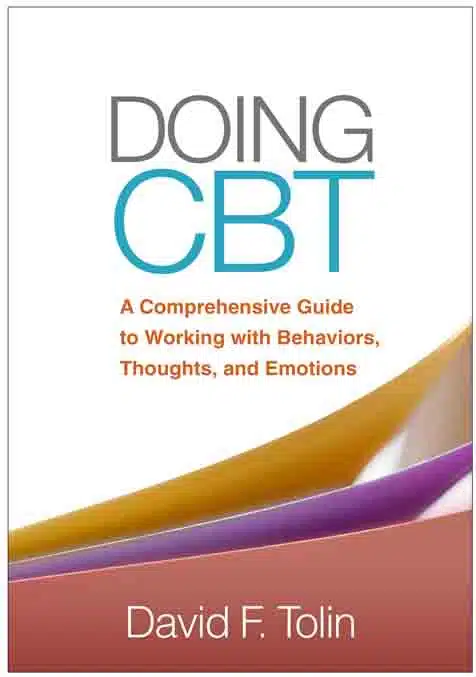
4. Doing CBT: A Comprehensive Guide to Working with Behaviors, Thoughts, and Emotions – David F. Tolin
This book was published on December 8, 2016. The art and science of cognitive-behavioral therapy are fully introduced in this approachable work and practitioner resource (CBT). David F. Tolin explains key ideas and offers practical approaches for addressing the behavioral, cognitive, and emotional components of psychological issues in a funny, straightforward manner.
The book closes with three chapter-length case illustrations and vivid instances of several clients. Readers acquire critical abilities for conceptualizing a case, formulating a treatment strategy, and carrying out therapy from start to finish. Purchasers get access to a Web website where they may download and print all 39 reproducible tools in a handy 8 1/2" x 11" format. Reproducible forms and worksheets are provided.
Educational Qualities
Try This, The Science Behind It, Adapting the Process, and more are just a few of the interesting sidebars.
End-of-chapter Personal Target Worksheets that let you practice your fundamental CBT techniques on your own.
Short definitions of important words.
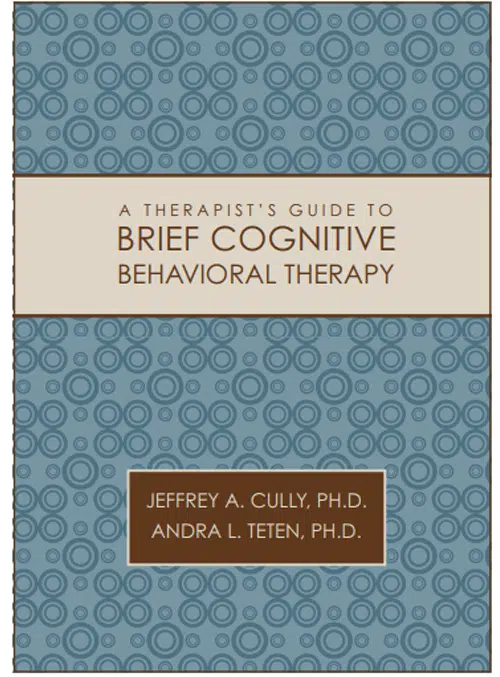
5. A Therapist’s Guide to Brief Cognitive Behavioral Therapy – Jeffrey A. Cully
This book was published in 2008 by the South Central Mental Illness Research, Education, and Clinical Center (MIRECC), Department of Veterans Affairs. The book is nicely organized and includes excellent information regarding the components of CBT that is backed up by useful examples. Really fun and fascinating, with the ideal ratio of theory to practice. The goal of this booklet is to provide mental health professionals with a strong foundation in cognitive behavioral therapy (CBT) techniques. In order to help users become more at ease doing CBT, the manual's concepts ("Practicing CBT 101") outline the fundamental actions that must be taken.
To ensure proper application of the training materials and prompt feedback, which are seen as crucial to the development of CBT skills, the instructional material in this software is created to be used within the framework of a therapeutic supervisory relationship.
This manual's content is a compilation of essential CBT texts, such as Judith Beck's Cognitive Therapy: Basics and Beyond from 1995, with the addition of crucial CBT therapist-development skills. The knowledge is distilled and packed to be quickly learned from and highly appropriate for usage in a brief therapy approach.
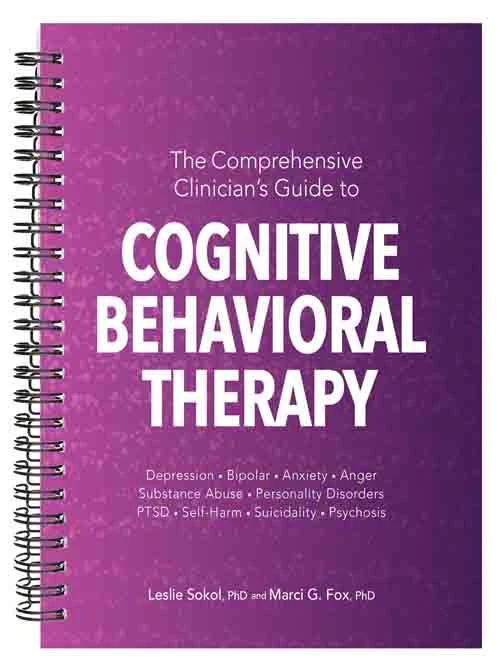
6. The Comprehensive Clinician’s Guide To Cognitive Behavioral Therapy By Leslie Sokol And Marci Fox
This book was first released in November 2019. Without a doubt, this book falls within the practice optimization category. Despite appearing straightforward, CBT contains a lot of moving parts, a wide range of therapist competencies (such as collaboration and guided discovery), as well as some highly specific treatments. Some therapists, like myself, might at times find this a little daunting. This book lays down the elements of CBT into extremely tangible and specific therapist behaviors and skills, serving as an example of successful CBT practice. This comprehensive workbook will be extremely helpful to both beginning CBT therapists and, also, to more seasoned and experienced practitioners who will gain "new ways of looking at old issues" due to its practical yet sophisticated presentation of CBT in a non-formulaic and client-customized manner. We wholeheartedly endorse Leslie Sokol and Marci Fox's expertly written book, Cognitive Behavior Therapy: Basics and Beyond (2011), as well as Judith Beck's book Cognitive Behavior Therapy.
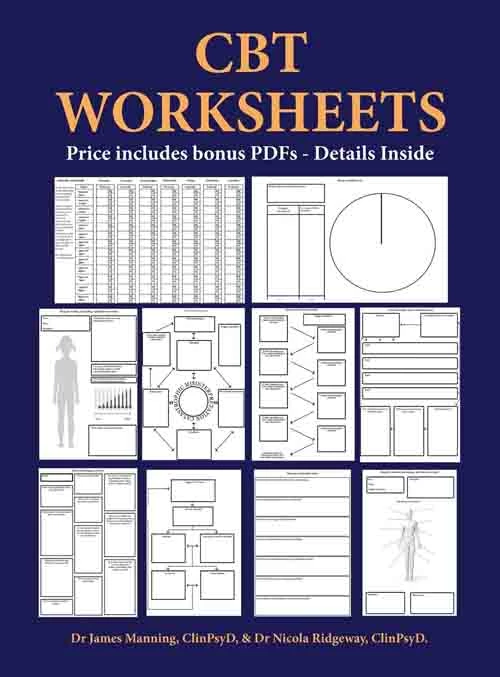
7. CBT Workbook For CBT Therapists In Training By Dr. James Manning And Dr. Nicola Ridgeway
This book was published on May 26, 2020. This book is intended for CBT therapists who are currently in training as well as those who would like a portfolio of worksheets that is simple to access. The worksheets in this book may be copied and distributed to your clients at your discretion. It includes a variety of exercises and diaries so that you can select the worksheets you believe are most pertinent for the particular issues you are working on.
This book frequently provides explanations of the activities and samples of worksheets that have been successfully completed. A variety of handouts that you can give clients before or after your CBT sessions are also available.
8. Mind Over Mood, Second Edition: Change How You Feel by Changing the Way You Think – Dennis Greenberger, Christine A. Padesky, and Aaron T. Beck
This book was first released on May 26, 1998. More than 1,000,000 people, according to the book's writers, have used it to overcome a range of problems, including eating disorders, anxiety, and addiction. The effectiveness of CBT is supported by 20 more years of research in this second edition.
The book contains a number of CBT-based tactics and exercises you can do to get rid of whatever is impeding your well-being, including tailored exercises for problems like guilt and despair. This is a great alternative for anyone who prefers tried-and-true products because it has long been a popular CBT book for non-clinicians. You may change your life by learning powerful, effective tactics from Mind Over Mood.
To overcome despair, anxiety, wrath, guilt, and humiliation, adhere to step-by-step strategies.
9. CBT For Chronic Pain And Psychological Well-Being By Mark Carlson
This book was first released on April 15, 2014. The first therapeutic manual containing evidence-based CBT techniques for dealing with psychological problems caused by chronic pain, derived from modern techniques like DBT, ACT, and motivational interviewing.
The following are the main key points of this book:
The first skills training guide for chronic pain and mental health issues is to provide doctors with a configurable integrated session-by-session schedule.
Adaptive and evidence-based, it combines DBT, ACT, behavioral activation, and motivational interviewing skill sets to cater to the particular needs of each chronic pain sufferer.
Clinicians can apply the method to their work by choosing the most relevant techniques and sessions, or they can use the manual as the basis for a complete treatment program.
10. The Anxiety, Worry, And Depression Workbook By Jennifer L. Abel
This book was published on January 31, 2018. It's challenging to combat stress, anxiety, and depression? and trying to face and get through those concerns alone is much more difficult. Because of this, Jennifer Abel, Ph.D., an authority on anxiety, has put up a workbook that you may use to manage your fear, worry, and melancholy. This user-friendly manual is packed with useful, tested worksheets, self-monitoring forms, exercises, and scripts to help you start changing your habits and your life. It is supported by science and over 25 years of therapeutic experience.
Proven Techniques for:
Worry (it causes anxiety and depression)
Anxiety disorders in general l
Depression and generalized anxiety disorder
Procrastination
Perfectionism - Lack of initiative
Superstitious beliefs
Hypochondriasis
Catastrophic thinking - Hypochondriasis
Refusal
Conclusion
CBT is an engaging therapy that may be utilized with or without a therapist's help and has a wide range of intended aims. These books are all excellent resources for learning about CBT, however, some of them serve particular objectives better than others (for example, treating anxiety rather than eating disorders).
Before choosing a book about CBT, be sure to do some research so that you may learn about it in a way that will be most helpful to your particular situation. These all books will help you a lot in this regard.
Frequently asked questions
Which is the best overall book to read on Cognitive Behavioral Coaching coaching?
Mind Over Mood, Second Edition: Change How You Feel by Changing the Way You Think - Dennis Greenberger, Christine A. Padesky, and Aaron T. Beck - This is the greatest CBT book of the ones listed as this book contains a number of CBT-based tactics and exercises you can do to get rid of whatever is impeding your wellbeing,
How does reading books help in strengthening concepts of Cognitive Behavioral Coaching coaching?
Reading books can help you understand the principles of CBT coaching, which is what really matters. Books provide information about things and can be helpful in various ways. It functions in a variety of ways and aids coaches in completing their coaching.
Techniques to effectively practice the theoretical knowledge on clients
Instructors provide Awareness. Coaches assist you in becoming aware of actions that promote or inhibit growth. The foundation of an action plan, and written SMART goals are created with the assistance of coaches. They give you a timeline to follow to achieve your desired results. It takes effort and adjustment to put theory into practice. Although it is dangerous, you will want to learn more once you start to see results.