One of the most effective ways to relax the mind and lower stress levels is to read. The 10 Best Business Coaching Books are summarized below for your reading pleasure.
When we're searching for fantastic books to read, we peruse best-seller rankings, browse around Instagram and reading forums, and ask the experts to suggest the best books within their disciplines.
If you have not read them before, enjoy them now!
Last updated: March 2026
In Brief :Top 10 Must Read Books On Business Coaching
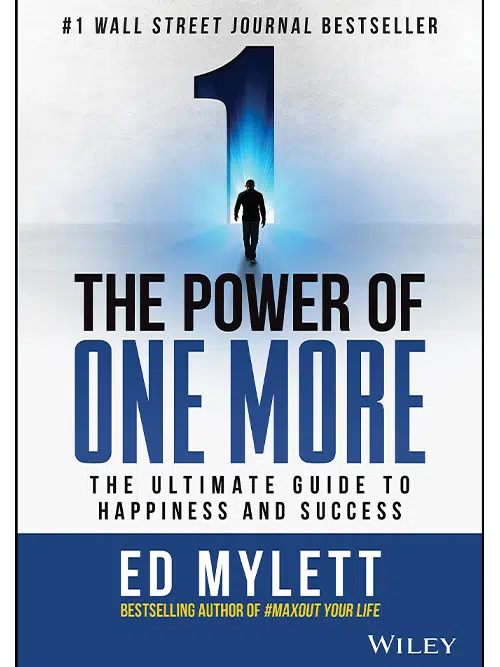
The Power Of One More - Strategies from Ed Mylett's coaching and entrepreneurial experience; available for purchase.
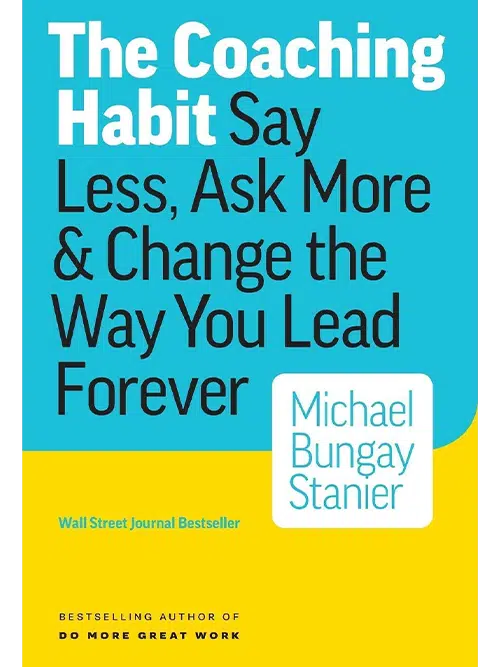
The Coaching Habit: Say Less - Published in 2016, guides leaders with seven essential coaching questions; available for purchase.
Coaching books educate business coaches on how to influence people effectively and pass on the skills necessary for development in the working environment. One of the most satisfying aspects of the coaching session is seeing the positive influence that one's guidance has had on the professional and personal lives of one's mentees. These guides can assist in making that happen.
Reading coaching books is an excellent way to improve your fundamental abilities in areas like leadership, training, and development. You can better grasp best practices and learn how to prevent mistakes that require a lot of time and effort by reading these books.
10 Books for Every Business Coach
There are thousands of books available if you want to be a coach. Access to various books from different writers can confuse you, so here's a list of the best coaching books. You will get to learn everything step by step.
1.The Power of One More
The Power of One More, published in June 2002 by Ed Mylett, is for many people who have feelings of being overwhelmed and stuck since they believe there are a lot of things, they need to reach their goals.
In this book, he draws on his thirty years of knowledge as a coach and an entrepreneur to top entertainers, athletes, and business leaders to reveal powerful strategies that help you live an extraordinary life.
The reader is equipped to develop one more habit, combat one more inconvenience, create one further identity, and build one more connection from reading this book, which details dozens of appropriate strategies for transforming an ordinary life into an extraordinary one.
THE POWER OF ONE Greater is an all-encompassing guidebook for people looking to find more success, pleasure, and tranquility in their lives. It doesn't matter if you're a CEO, the owner of a small business, a parent, an athlete, or anybody looking to improve their connections with their family, friends, or coworkers; these tactics apply to everyone.
2. The Coaching Habit: Say Less
The coaching habit was published in 2016 and is one of the most helpful coaching books for business. This guide teaches leaders how to incorporate coaching into their day-to-day activities so that it eventually becomes second nature to them. The book outlines seven essential categories of coaching questions, each generating in-depth talks that lead to improvements in performance. Although Bungay corroborates these ideas with evidence from the fields of science and business, the book's mood is basic, easy to understand, and fun. The Coaching Habit demonstrates how to start making coaching a natural part of everyday life and providing employees with ongoing support.
Important Quotation: "When you create a coaching habit, you can easily break out of 3 vicious spirals that affect our workplaces: creating overdependence, getting overwhelmed, and becoming disengaged."
The book teaches us to say, Less, Ask More and Change the Way You Lead. It is a book that was created by merging core principles of coaching strategy with the findings of neuroscience and behavioral economics. You will gain insightful knowledge that will not only save you time, our most important resource but also assist your clients in progressing more quickly and going further. Discover how to get the most out of each coaching session by using these tried-and-true questions that will assist you in achieving the desired outcomes.
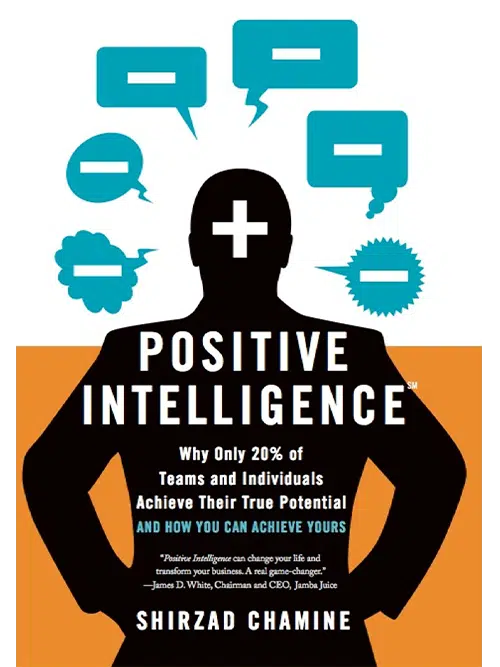
3.Achieve Their True Potential AND HOW YOU CAN ACHIEVE YOURS
Achieve their true potential was published on April 1, 2012, by Shirzad Chamine. In it, Chamine discusses how our thoughts are manipulated by ten different beings, whom she refers to as "Saboteurs," each of which has unique goals and reasons for doing so.
Do you never manage to accomplish what you set out to do, regardless of the means you employ to get there? Do you spend much time thinking about what tomorrow might bring, keeping you up at night? You probably have an extremely weak Positive Intelligence Quotient, which means that you tend to pay more attention to the discouraging voices in your head rather than the voices that support you.
Former coach-trainer and seasoned CEO Shirzad Chamine prepared an easy-to-follow manual on enhancing your Positive Intelligence Level, ultimately increasing your success. Therefore, be prepared to learn how to access all of the potential that lies within you properly.
The 10 arbitrary Saboteurs, as their title suggests, sabotage our mental well-being by distorting our thinking and, as a result, are responsible for a significant portion of the agony and grief that we experience throughout our lives. For instance, the Judge is the chief Saboteur, and all of the other Saboteurs exist to provide service to the Judge. Your employer's responsibility is to mercilessly mock and criticizes you for every mistake to encourage you to make the necessary improvements. Does this ring a bell?
The advice given to you by Chamine is to provide your Judge with a name to identify it. This will allow you to discredit it if it seems to hijack or "wreck" your thought process. He discussed the imaginative names that people assigned to their Judges, such as "the Destroyer" and "the Executioner," to provide just two instances.
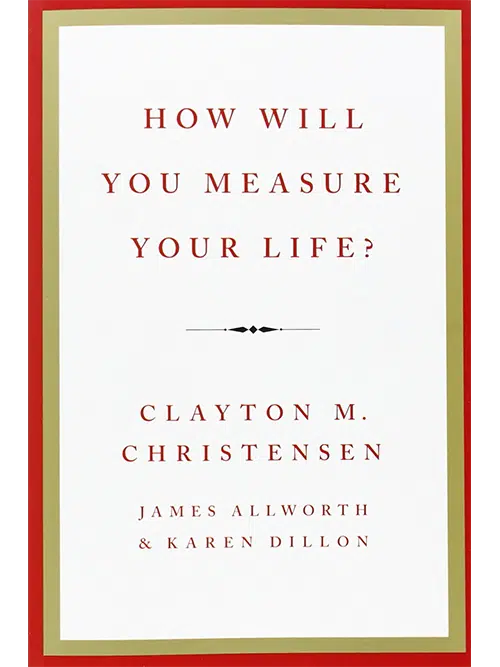
4. How Will You Measure Your Life?
How will you measure your life was published on 10th May 2012, and it takes a thought-provoking look at what it means to be successful. The book begins with an analysis of various metrics that can be used to evaluate our lives. Still, it quickly transitions into a conversation on how we can discover genuine happiness independent of our material possessions or social standing. In the final portion, an investigation of what it meant for people at various ages and phases to live successful lives is conducted.
The book written by Christensen touches on a wide range of subjects. Yet, one of the overarching ideas is that most people go through life operating mostly in a reactive rather than an active mode. Additionally, it offers guidance on how to create improvements in one's life that are for the better. He contends that the level to which an individual can concentrate on things that bring them happiness rather than on what would satisfy their parents or what will make their employer happy is the most important factor in determining whether or not they will find fulfillment in their lives.
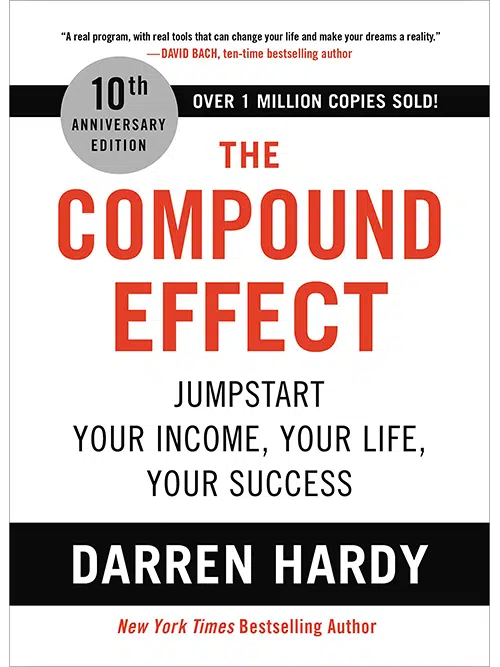
5. The Compound Effect: Jumpstart Your Income
The Compound Effect was originally published in 2010 and is referred to as the approach of reaping enormous advantages from little activities that seem to have little significance. Before you can enhance something, you have to measure it first. Always remember that you are one hundred percent responsible for everything in your life.
The name pretty much sums up everything. This book is about making subtle adjustments to your lives that, when added together after some time, can substantially impact the quality of your life. It also addresses the negative routines or responsibilities we prefer to put off and the long-term impact these things have on our life. Everyone looking for a motivational push to change their behavior should read this book since it is a fantastic read. It makes no difference if your objective is to enhance your relationships' quality, financial status, or fitness level.
The Compound Effect is a concise and straightforward read that can be finished in one sitting.
Darren Hardy put the ideas into practice on his own, demonstrating that they are effective. It is not difficult to grasp the fundamental idea behind the compound effect.
The use of illustrative examples is important and has an impact.
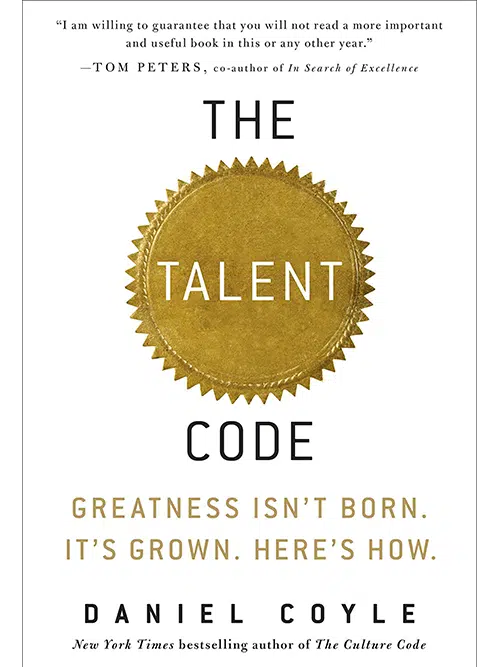
6. The Talent Code: Greatness isn't born. It's grown
The Talent Code was published in April 2009 and analyses the factors that nurture and expedite growth. Daniel Coyle uses a journalistic method to investigate a small number of "talent hotbeds" worldwide. He then examines the environments in order to identify trends and qualities that contribute to brilliance in certain locations.
Deep practice, the spark of enthusiasm, and master coaching are the three primary variables identified in this book as necessary for developing extraordinary talent. The book also demonstrates to leaders how to foster these conditions. The examples and recommendations that Coyle provides are supported by scientific facts, particularly neuroscience research. The Talent Code is a how-to guide that may be used to improve an organization's workforce and foster an atmosphere conducive to education.
Notable Quote: "Master coaching entails something more ethereal: more art than science." It is a warm, messy game of words, gestures, and expressions in the room between two individuals.
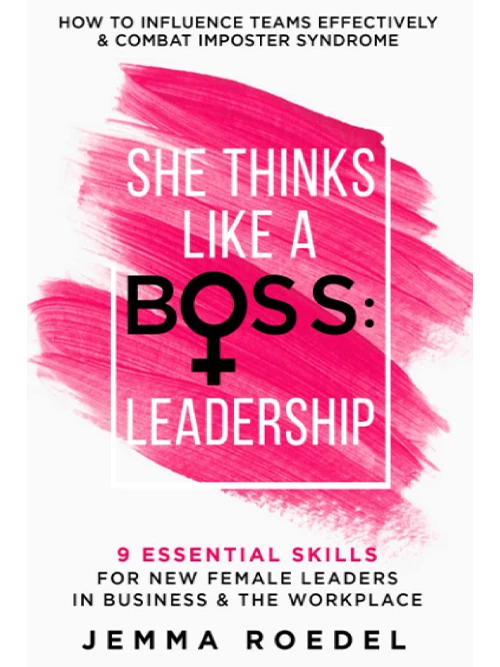
7. She Thinks Like a Boss
She Thinks Like a Boss, published on 21st July 2021, and this book is a fantastic introduction for aspiring leaders and a handy refresher for seasoned executives. It's written from a woman's perspective and discusses how female leaders are distinct from their male counterparts. The emphasis on women illustrates the unique obstacles women in leadership must overcome.
When it comes to business leadership, women bring special qualities to the table. Women, for instance, are typically more considerate and cooperative than their male counterparts in the workplace. In comparison to their male counterparts, 43% of female executives promote a more welcoming and secure workplace. In addition, women are more likely to pay close attention to detail, develop novel solutions to problems, and rely on their gut instincts. These qualities help women succeed in the workplace and leave a lasting mark. In fact, studies have shown that companies run by women saw faster and more stable expansion over time.
Nonetheless, women confront several additional obstacles in the workplace, which make it harder for them to advance their professions and achieve success. For instance, professional women still face barriers such as low self-esteem and anxiety over social rejection.
Because of these disparities, many women believe they need to put in twice the effort as males to achieve the same level of success. Through her investigation, Roedel not only recognizes these challenges but also outlines a thorough strategy for overcoming them.
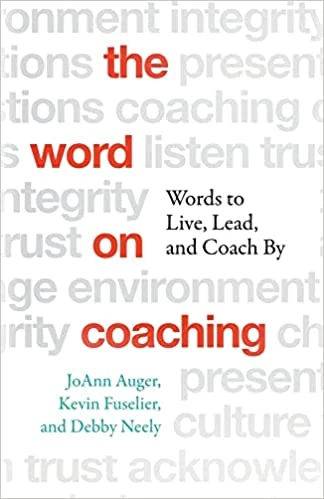
8. The Word on Coaching
The Word on Coaching was published on 21st October. The asks some questions to the readers: Are you achieving the necessary results? Have you established a setting where others feel they are respected, innovative, and safe? Would you prefer to be able to leave the office knowing that the task will be completed to a high standard, even in your absence? Getting there will require you to acquire the skills of a leader-coach.
We are aware that leading can be challenging. We are also aware that receiving coaching will be beneficial. The three coaches in the book will provide you with the benefit of their many years of leadership and coaching development experience. Take it word by word until you have it down. Think about how you can make it work in your favor. Journaling pages are supplied to assist you in gaining even further insight from the content you have read.
Gain access to the expertise and experience of three highly successful coaches.
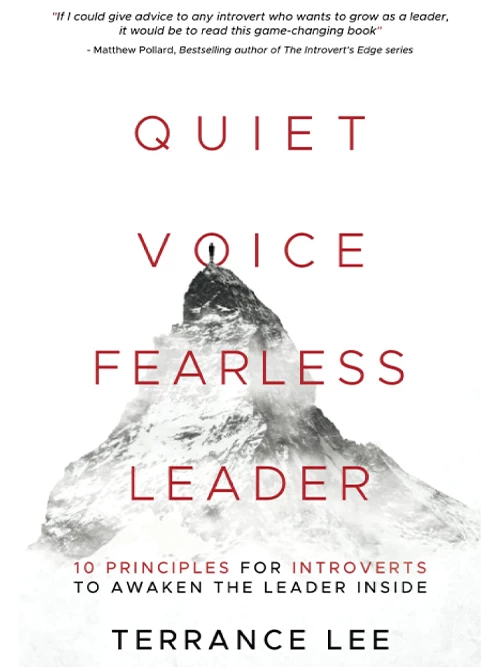
9. Quiet Voice Fearless Leader: 10 Principles
Quiet Voice Fearless Leader was published on 27th October 2021, to pump introverted people to jump into the business industry. Introverts lack strength and are too quiet to lead. Have you ever given this any thought?
When you consider an introvert, what kind of character comes to mind? When you consider a leader, what kind of person comes to your mind? Rarely are the two words used together. People with introverted personalities are frequently described as one of the following by society: quiet, shy, restrained, or timid. Leaders are characterized as being forceful, enthusiastic, extroverted, and ambitious.
But what if society is entirely mistaken? The book Quiet Voice Fearless Leader was created to refute the widespread misconception that introverts cannot be effective leaders. This book will not only debunk that misconception but will also argue that an introvert is frequently the best kind of leader. Each chapter contains a basic leadership idea and several pillars that, when mastered, will transform your life. The subjects included are:
How to be present at work and in business for introverts
How to lead teams well as an introvert
This book was written with you in mind if you've ever doubted your abilities or believed you needed to be outgoing to succeed. It's time to unleash the leader you are since, in reality, introversion is a strength.
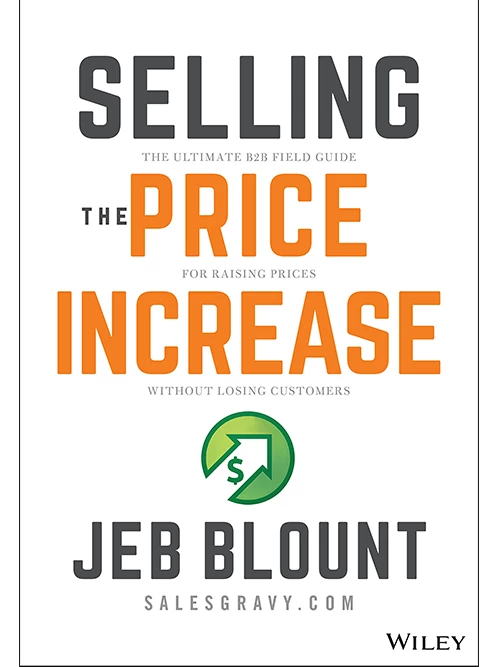
10. Selling the Price Increase: The Ultimate B2B Field Guide
Selling the Price Increase was published on June 7, 2022, and is a step-by-step manual for managing the biggest potential for B2B businesses to expand and enhance profits: price increases
Implementing price rises without driving away clients has enormous financial benefits! Strategic price increase campaigns have a much greater impact on topline revenue and profit generation than new client acquisitions.
The issue is that measures to increase prices, whether they are general or targeted at particular accounts, instill terror and dread in the hearts of salespeople and sales teams who are entrusted with recommending them to their clients. Salespeople dread approaching consumers with price hikes because they worry that doing so would result in lower sales volume or a greater opportunity for competitors.
The renowned sales trainer Jeb Blount shares the ideas, techniques, tactics, and frameworks that enable you to successfully execute price increase initiatives in Selling the Price Increase. This comprehensive book will help you through every stage of the price increase marketing funnel, from developing persuasive price increase statements to safeguarding previously-cement connections.
Conclusion
Think about where you are in your growth as a coach and decide which of these books sounds most appealing to you. These are great books for new coaches since it covers the basics of the profession, but they may also help seasoned managers improve their coaching techniques and the outcomes they achieve.
All of these books have something to offer coaches and mentors. Add one of the following books to your reading list straight away to learn how you may assist others in developing their abilities and growing as people.
Frequently asked questions
Which is the best overall book to read on business coaching?
The Power of One More is the best overall book to read as a Business Coach since it gives you an overview of why you are stuck at some place. Most of us start a business but struggle to thrive in it. This book opens the doors for opportunities to look upon when you are stuck somewhere in your business.
2. How does reading books help in strengthening concepts of business coaching?
Learning the fundamentals of leadership, training, and development can be found in coaching books. In addition to saving you time and effort, the information in these books will help you learn from the experiences of others and implement the best practices you learn about.
3. Techniques to effectively practice the theoretical knowledge on clients
When you read books, you will gain a bird's eye view of other people's blunders in their respective businesses. If your clients choose to make the same mistakes and implement your theories into their business strategy, you will be able to save them from making the faults.