
Recreational Therapy: The Definitive Guide
Last updated: March 2026
Recreational Therapy: The Definitive Guide
Here is a complete and up-to-date Definitive Guide on Recreational therapy.
Recreational therapy can aid in skill restoration, mood improvement, quality of life improvement, and social connection strengthening. Working with the best therapist who specializes in this field can make all the difference.
In this article you will learn about:
- Philosophy behind Recreational Therapy
- The model and the process of Recreational Therapy
- Benefits of Recreational Therapy
- Skills needed to become a Recreational Therapist
- Applying Recreational Therapy in Coaching
And so much more! So let’s dive right in!
Contents

Chapter 1:
The Fundamentals
In this chapter, I will walk you through what is meant by Recreational Therapy and the philosophy behind it.
Moreover, we will also briefly learn about the profession of Recreation Therapy and what are the approaches to it.
What is Recreational Therapy?
Recreational therapy, also known as therapeutic recreation, is a systematic process that utilizes recreation and other activity-based interventions to address the assessed needs of individuals with illnesses and/or disabling conditions, as a means to psychological and physical health, recovery, and well-being.
Recreational therapy, according to the American Therapeutic Recreation Association (ATRA), is a therapy process that uses activities and recreation to address someone's specific health needs.
The purpose of the RT process is to improve or maintain physical, cognitive, social, emotional, and spiritual functioning in order to facilitate full participation in life.
Services are provided or directly supervised by a “Certified Therapeutic Recreation Specialist” (CTRS).
What is the philosophy behind Recreational Therapy?
Recreational therapy includes, but is not limited to, providing treatment services and recreation activities to individuals using various techniques including arts and crafts, animals, sports, games, dance and movement, drama, music, and community outings.
Recreational therapists treat and help maintain the physical, mental, and emotional well-being of their clients by seeking to reduce depression, stress, and anxiety; recover basic motor functioning and reasoning abilities; build confidence; and socialize effectively.
Recreational therapists should not be confused with recreation workers, who organize recreational activities primarily for enjoyment.
How did Recreational Therapy develop?
It has often been said of psychology that it is a field with a long past but a relatively brief history. A similar statement could be made about therapeutic recreation.
While recreation has been used for therapeutic purposes since the time of the ancient Egyptians and Greeks, the profession of therapeutic recreation began to develop only after World War II.
The beginnings of therapeutic recreation as a profession occurred in the aftermath of World War II during the 1940s and 1950s.
The service, then known as hospital recreation, had been provided during WWII by Red Cross recreation workers who offered programs for hospitalized soldiers within military hospitals.
Following the war, similar services soon developed within the Veterans' Administration (VA) Hospital system. The trend accelerated as recreation therapy programs were established in state psychiatric hospitals and state residential schools for persons with mental retardation.
What types of activities does a recreational therapy program offer?
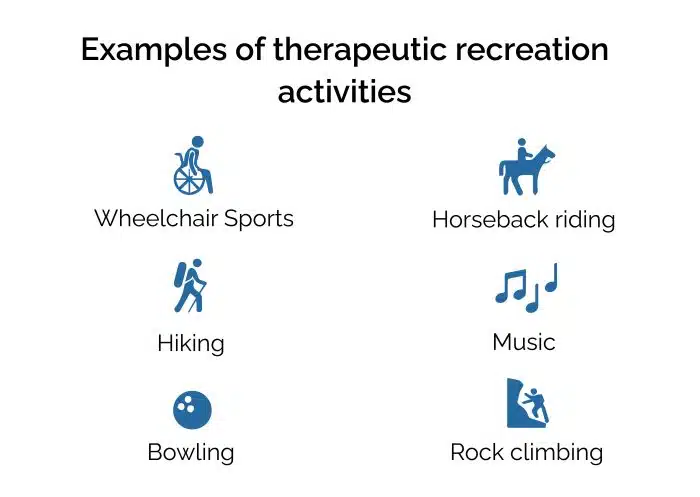
Your recreational therapist usually tries to select activities that match your interests. Some activities that may be part of your recreational therapy program include:
Creative Arts
Offering similar benefits to art therapy, your recreational therapist will use art-based interventions to lead creative arts. You’ll create art to explore your feelings and settle any emotional conflicts.
Your art will help nurture self-awareness and manage behaviors. You'll also develop social skills, reduce anxiety and increase self-esteem.
Music Programs
Your recreational therapist will use music to help you accomplish goals such as reducing stress. Similar to music therapy, these programs can also help improve your mood and elevate your self-expression.
Music therapy experiences may include listening to music to help motivate you to reach for your goals.
Physical Activity
Participating in sports and physical activity like rock climbing isn’t only good for your physical health. It’s good for your mental and emotional health, too. Physical activity triggers various chemicals in your brain.
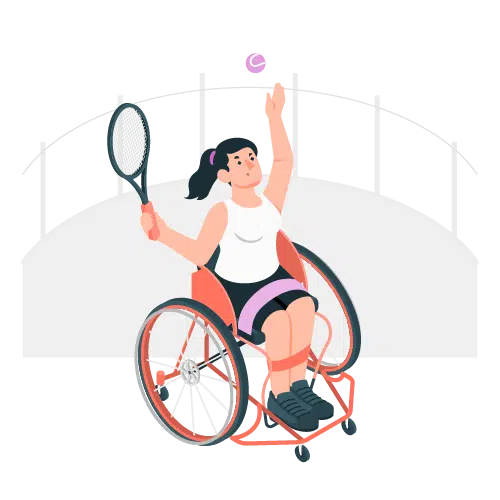
These chemicals have a direct effect on your happiness, self-esteem, and stress. Physical activity may include a range of sports, including adapted sports for people with disabilities.
Games and Puzzles
Board games and jigsaw puzzles provide you with the chance to laugh and socialize. At the same time, you’re learning to engage with others and develop healthy attitudes.
Dance and Creative Movement
Through dance and movement, you’re challenged to move physically. But you’re in a supportive, structured environment. The intimate connection with music frequently makes dance feel less like exercise. You'll find it's more like a leisure activity.
Drama
Participating in drama activities provides an opportunity for you to express your creativity. You also develop new skills and may discover new interests.
Cooking
Participating in a cooking class can foster teamwork. It can also help you become more independent and learn new skills.
Outdoor Activities
Outdoor programming can help you gain independence, learn new skills, and develop self-esteem. Examples include high/low ropes courses, swimming, hiking, and horseback riding.
A big focus of recreational therapy is socialization. While reaching for your functional goals, you may attend many group sessions to help foster socialization with others. This also helps increase your independence in starting your own social conversations and/or activities with others.
The Profession of Therapeutic Recreation
Recreational Therapy has shown tremendous growth and development over the past two decades.
The Certified Therapeutic Recreation Specialist (CTRS) has become the professional standard that exemplifies each professional’s dedication to quality standards and excellence in practice.
Today, the United States Department of Labor projects that there are over 19,000 recreational therapists in the United States. Over 17,000 of these professionals are active, inactive, or eligible for re-entry status by NCTRC.
The CTRS credential is the most professionally advanced credential for the field of therapeutic recreation.
The United States Department of Labor suggests that therapeutic recreation will grow faster in those areas that address the healthcare concerns of older adults.
As the demand for the CTRS increases from acute care hospitals to outpatient facilities, day treatment settings, and community living situations, the certification of increasing numbers of recreational therapists is expected to enhance the recognition of the important role the CTRS plays in today’s healthcare and human services arena.
What are the approaches to Recreational Therapy?
There are four approaches in therapeutic recreation:
- Recreation services: Providing recreation services to people with disabilities for experiencing leisure and its benefits, often this takes a rehabilitation tone in approach to helping clients to reach an optimal level of health and well-being.
- Therapeutic approach: The purpose of this approach is curative in nature. It attempts to lessen and ameliorate the effects of illness' and disabilities, it also can be prescriptive for improving certain functional capacities.
- Umbrella or combined approach: Use of recreation as a subjective continuation of enjoyable activities as well as a recreation service for bringing purposeful change.
- Leisure ability approach: An approach that operates leisure activities therapeutically and engages the clients fully for participation with good dissemination on the benefits of structured leisure/ leisure awareness education.
Eight domains of leisure are leisure awareness, leisure attitudes, leisure skills, community integration skills, community participation, cultural and social behaviors, and interpersonal skills.
To learn more about the eight domains of leisure, head to the article, What is Recreational Therapy? Explained.
Now that you understand what Recreational Therapy is, let’s begin to understand why you need it in the next chapter.
Chapter 2:
Why Do You Need Recreational Therapy?
In this chapter, I will give you in-depth knowledge about why or when you would need Recreational Therapy.
You will learn about what types of conditions are well suited for Recreational Therapy and what kind of locational settings Recreational Therapy can take place in.
What types of conditions are well suited for Recreational Therapy?
Recreational therapy benefits people of all ages. It’s often used to help people who are:
- recovering from a stroke
- rehabilitating from an injury, illness, or surgery
- working to improve motor skills
- learning to carry out the activities of daily living independently
- being treated for cancer
- experiencing anxiety or worry in a hospital setting
- feeling isolated or depressed
- developing the ability to express their thoughts and emotions
- recovering from a substance use disorder
What kind of settings can Recreational Therapy take place in?
Recreational therapists hold about 17,600 jobs. The largest employers of recreational therapists are as follows:
| Hospitals; state, local, and private | 40% |
| Government | 18% |
| Nursing care facilities (skilled nursing facilities) | 14% |
| Ambulatory healthcare services | 8% |
| Social assistance | 7% |
They use offices for planning or other administrative activities, such as patient assessment, but may travel when working with patients.
Therapy may be provided in a clinical setting or out in a community. For example, therapists may take their patients to community recreation centers or parks for sports and other outdoor activities.
Some therapists may spend a lot of time on their feet actively working with patients.
They may also need to physically assist patients or lift heavy objects such as wheelchairs.
Let’s move on to Chapter 3 and unravel the Model of Recreational Therapy.
Chapter 3:
Model of Recreational Therapy
In this Chapter, I am going to critically compare and evaluate the use of the following models in the Therapeutic Recreation Service: The Leisure Ability Model and the Health Promotion/ Health Protection Model.
In doing so I will first describe the two models in detail and then critically compare and evaluate them both.

The Leisure Ability Model
Every human being needs, wants and deserves leisure. Leisure presents opportunities to experience mastery, learn new skills, meet new people, deepen existing relationships, and develop a clearer sense of self. Leisure provides the context in which people can learn, interact, express individualism, and self-actualize.
A large number of individuals are constrained from full and satisfying leisure experiences. It then follows that many individuals with disabilities and/or illnesses may experience more frequent, severe, or lasting barriers compared with their non-disabled counterparts, simply due to the presence of disability and/or illness.
The Leisure Ability Model’s underlying basis stems from the concepts of:
(a) learned helplessness vs. mastery or self-determination;
(b) intrinsic motivation, internal locus of control, and causal attribution;
(c) choice;
(d) flow.
Learned Helplessness
Learned helplessness is the perception by an individual that events happening in his or her life are beyond his or her personal control, and therefore, the individual stops trying. They will eventually stop wanting to participate in activities or participate in any other way.
They will learn that the rules are outside of their control and someone else is in charge of setting the rules. Their ability to take a risk will be diminished and they will learn to be helpless.
Learned helplessness may present a psychological barrier to full leisure participation and it may, conversely, be unlearned with the provision of well-designed services.
Intrinsic Motivation, Internal Locus of Control, and Causal Attribution
All individuals are intrinsically motivated toward behavior in which they can experience competence and self-determination. As such, individuals seek experiences of incongruity or challenges in which they can master the situation, reduce the incongruity, and show competence. This process is continual and through skill acquisition and mastery, produces feelings of satisfaction, competence, and control.
An internal locus of control implies that the individual has the orientation that he or she is responsible for the behavior and outcomes he or she produces.
Typically individuals with an internal locus of control take responsibility for their decisions and the consequences of their decisions, while an individual with an external locus of control will place responsibility, credit, and blame on other individuals.
An internal locus of control is important for the individual to feel self-directed or responsible, be motivated to continue to seek challenges, and develop a sense of self-competence.
Attribution implies that an individual believes that he or she can affect a particular outcome. An important aspect of the sense of accomplishment, competence, and control is the individual’s interpretation of personal contribution to the outcome.
Without a sense of personal causation, the likelihood of the individual developing learned helplessness increases greatly.
Choice
The Leisure Ability Model also relies heavily on the concept of choice, choice implies that the individual has sufficient skills, knowledge, and attitudes to be able to have options from which to choose, and the skills and desires to make appropriate choices.
Flow
When skill level is high and activity challenge is low, the individual is quite likely to be bored. When the skill level is low and the activity challenge is high, the individual is most likely to be anxious.
When the skill level and activity challenge are identical or nearly identical, the individual is most able to achieve a state of concentration and energy expenditure that Csikszentmihalyi (1990) has labeled as “flow.”
Treatment Services
During treatment services, the client generally has less control over the intent of the programs and is dependent on the professional judgment and guidance provided by the specialist.
The client experiences less freedom of choice during treatment services than in any other category of therapeutic recreation service. The role of the specialist providing treatment services is that of the therapist.
Within treatment services, the client has minimal control and the therapist has maximum control. The specialist typically designates the client’s level and type of involvement, with considerably little input from the client.
In order to successfully produce client outcomes, the specialist must be able to accurately assess the client’s functional deficits; create, design, and implement specific interventions to improve these deficits; and evaluate the client outcomes achieved from treatment programs
The ultimate outcome of treatment services is to eliminate, significantly improve, or teach the client to adapt to existing functional limitations that hamper efforts to engage fully in leisure pursuits.
Often these functional deficits are to the degree that the client has difficulty learning, developing his or her full potential, interacting with others, or being independent.
The aim of treatment services is to reduce these barriers so that further learning and involvement by the client can take place.
Leisure Education
Leisure education services focus on the client acquiring leisure-related attitudes, knowledge, and skills.
Participating successfully in leisure requires a diverse range of skills and abilities, and many clients of therapeutic recreation services do not possess these, have not been able to use them in their leisure time, or need to re-learn them to incorporate the effects of their illness and/ or disability.
Leisure education services are provided to meet a wide range of client needs related to engaging in a variety of leisure activities and experiences.
The overall outcome sought through leisure education services is a client who has enough knowledge and skills that an informed and independent choice can be made for his or her future leisure participation.
Leisure education means increased freedom of choice, increased locus of control, increased intrinsic motivation and increased independence for the client.
Recreation Participation
Recreation participation programs are structured activities that allow the client to practice newly acquired skills, and/or experience enjoyment and self-expression.
These programs are provided to allow the client greater freedom of choice within an organized delivery system and may, in fact, be part of the individual’s leisure lifestyle.
The client’s role in recreation participation programs includes greater decision-making and increased self-regulated behavior. The client has increased freedom of choice and his or her motivation is largely intrinsic.
In these programs, the specialist is generally no longer teaching or “in charge” per se. The client becomes largely responsible for his or her own experience and outcome, with the specialist moving to an organizer and/or supervisor role.
Recreation participation allows the client an opportunity to practice new skills, experience enjoyment, and achieve self-expression.
From a clinical perspective, recreation participation does much more. For instance, recreation opportunities provide clients with respite from other, more arduous, therapy services.
Leisure education programs may focus on -
(a) self-awareness in relation to clients’ new status;
(b) learning social skills such as assertiveness, coping, and friendship-making;
(c) re-learning or adapting pre-morbid leisure skills;
(d) locating leisure resources appropriate to new interests and that are accessible. Recreation participation programs may involve practicing a variety of new leisure and social skills in a safe, structured environment.
In designing and implementing these programs, the specialist builds on opportunities for the individual to exercise control, mastery, intrinsic motivation, and choice.
The ultimate outcome would be for each client to be able to adapt to and cope with an individual disability to the extent that he or she will experience a satisfying and independent leisure lifestyle, and be able to master skills to achieve flow.
Health Promotion/ Health Protection Model
The Health Protection/Health Promotion Model stipulates that the purpose of therapeutic recreation is to assist persons to recover following threats to health, by helping them to restore themselves or regain stability. Secondly, optimizing their potential in order that they may enjoy as high a quality of health as possible.
The mission of therapeutic recreation is to use activity, recreation, and leisure to help people to deal with problems that serve as barriers to health and to assist them to grow toward their highest levels of health and wellness.
The health promotion, and health protection model is broken up into four broad concepts which are the humanistic perspective, high-level wellness, stabilization, and actualization and health.
- Humanistic Perspective
Those who embrace the humanistic perspective believe that each of us has the responsibility for his or her own health and the capacity for making self-directed and wise choices regarding our health.
Since individuals are responsible for their own health, it is critical to empower individuals to become involved in decision-making to the fullest extent possible.
- High-Level Wellness
High-level wellness deals with helping persons to achieve as high a level of wellness as they are capable of achieving. Therapeutic Recreation Professionals have a concern with the full range of the illness-wellness continuum.
- Stabilization and Actualization Tendencies
The stabilizing tendency is concerned with maintaining the “steady state” of the individual. It is an adaptation mechanism that helps us keep stress in a manageable range.
It protects us from biophysical and psychosocial harm. The stabilizing tendency is the motivational force behind health protection that focuses on efforts to move away from or avoid negative valence states of illness and injury.
The actualization tendency drives us toward health promotion that focuses on efforts to approach or move toward a positive valence state of high-level health and well-being.
- Health
Health encompasses both coping adaptively and growing and becoming. Healthy people can cope with life’s stressors. Those who enjoy optimal health have the opportunity to pursue the highest levels of personal growth and development.
Under the Health Protection/Health Promotion Model, therapists recognize that helping clients strive toward health promotion is the ultimate goal of therapeutic recreation.
Further, therapists prize the right of each individual to pursue his or her highest state of well-being or optimal health.
TR practice is therefore based on a philosophy that encourages clients to attempt to achieve maximum health, rather than just recover from illness.
- The Component of Prescriptive Activities
When clients initially encounter illnesses or disorders, often they become self-absorbed. They have a tendency to withdraw from their usual life activities and experience a loss of control over their lives.
Research has shown that feelings of lack of control may bring about a sense of helplessness that can ultimately produce severe depression.
At times such as this clients are encountering a significant threat to their health and are not prepared to enjoy and benefit from recreation or leisure.
For these individuals, activity is a necessary prerequisite to health restoration. Activity is a means for them to begin to gain control over their situation and to overcome feelings of helplessness and depression that regularly accompany the loss of control.
At this point on the continuum, Therapeutic Recreation professionals provide direction and structure for prescribed activities.
Once engaged in an activity, clients can begin to perceive themselves as being able to successfully interact with their environments, to start to experience feelings of success and mastery and to take steps toward regaining a sense of control.
Clients come to realize that they are not passive victims but can take action to restore their health. They are then ready to partake in the recreation component of treatment.
- The Recreation Component
Recreation is activities that take place during leisure time. Clients need to take part in intrinsically motivated recreation experiences that produce a sense of mastery and accomplishment within a supportive and nonthreatening atmosphere.
Clients have fun as they learn new skills, new behaviors, new ways to interact with others, new philosophies and values, and new cognition about themselves.
In short, they learn that they can be successful in their interactions with the world. Through recreation they are able to re-create themselves, thus combating threats to health and restoring stability.
- The Leisure Component
Whereas recreation allows people to restore themselves, leisure is growth-promoting. Leisure is a means to self-actualization because it allows people to have self-determined opportunities to expand themselves by successfully using their abilities to meet challenges.
Feelings of accomplishment, confidence, and pleasure result from such growth-producing experiences.
Thus leisure assumes an important role in assisting people to reach their potential. Core elements in leisure seem to be that it is freely chosen and intrinsically motivated.
- The Recreation and Leisure Components
Although recreation and leisure differ in that recreation is an adaptive device that allows us to restore ourselves and leisure is a phenomenon that allows growth, they share commonalities.
Both recreation and leisure are free from constraint. Both involve intrinsic motivation and both provide an opportunity for people to experience a tremendous amount of control in their lives.
Both permit us to suspend everyday rules and conventions in order to “be ourselves” and “let our hair down.” Both allow us to be human with all of our imperfections and frailties.
It is the task of the therapeutic recreation professional to maintain an open, supportive, and non-threatening atmosphere that encourages these positive attributes of recreation and leisure and which helps to bring about the therapeutic benefit.
It had been observed that bolstered efficacy expectations allow clients to have confidence in themselves and in their abilities to succeed in the face of frustration.
Thus, clients feel more and more able to be in control of their lives and to meet adversity as they move along the continuum toward higher levels of health.
It is the role of the TR professional to help each client assume increasing levels of independence as he or she moves along the illness-wellness continuum.
Of course, the client with the greatest dependence on the therapist will be the individual who is in the poorest health.
At this point, the stabilizing tendency is paramount while the client attempts to ward off the threat to health and return to his or her usual stable state.
At this time the therapist engages the client in prescriptive activities or recreation experiences in order to assist the client with health protection.
During prescriptive activities, the client’s control is the smallest and the therapist’s control is the largest. During recreation, there is more mutual participation between the client and therapist. With the help of the therapist, the client learns to select, and participate in, recreational experiences that promote health improvement.
Approximately midway across the continuum, the stabilizing tendency reduces and the actualizing tendency begins to arise. Leisure begins to emerge as the paramount paradigm.
As the actualization tendency increases, the client becomes less and less dependent on the therapist and more and more responsible for self-determination.
The role of the therapist continues to diminish until the client is able to function without the helper. At this point, the client can function relatively independently of the TR professional and there is no need for TR service delivery.
Evaluation of Both Models
The overall intended outcome of therapeutic recreation services, as defined by the Leisure Ability Model, is a satisfying, independent, and freely chosen leisure lifestyle.
In order to facilitate these perceptions, therapeutic recreation specialists must be able to design, implement, and evaluate a variety of activities that increase the person’s individual competence and sense of control.
Thus, the three service areas of treatment, leisure education, and recreation participation are designed to teach specific skills to improve personal competence and a sense of accomplishment.
The therapeutic recreation specialist must be able to adequately assess clients’ skill levels (through client assessment) and activity requirements (through activity analysis) in order for the two to approximate one another.
Given Deci’s (1975) theory of intrinsic motivation which includes the concept of incongruity, therapeutic recreation specialists may provide activities slightly above the skill level of clients in order to increase the sense of mastery.
When this match between the activity requirements and client skill levels occurs, clients are most able to learn and experience higher-quality leisure.
To facilitate this, therapeutic recreation specialists become responsible for comprehending and incorporating the:
(a) theoretical bases (including but not limited to an internal locus of control, intrinsic motivation, personal causation, freedom of choice, and flow);
(b) typical client characteristics, including needs and deficits;
(c) aspects of quality therapeutic recreation program delivery process (e.g., client assessment, activity analysis, outcome evaluation, etc.);
(d) therapeutic recreation content (treatment, leisure education, and recreation participation).
These areas of understanding are important for the therapeutic recreation specialist to be able to design a series of coherent, organized programs that meet client needs and move the client further toward an independent and satisfactory leisure lifestyle.
Again, the success of that lifestyle is dependent on the client gaining a sense of control and choice over leisure options and having an orientation toward intrinsic motivation, an internal locus of control, and a personal sense of causality.
The Leisure Ability Model provides specific content that can be addressed with clients in order to facilitate their development, maintenance, and expression of a successful leisure lifestyle. Each aspect of this content applies to the future success, independence, and well-being of clients in regard to their leisure.
A number of authors have objected to the Leisure Ability Model, having observed that its all-encompassing approach is too broad and lacks the focus needed to direct a profession.
Such experts advocated an alignment of therapeutic recreation with allied health and medical science disciplines, rather than leisure and recreation professionals
Now that you have a basic idea of the what and why of Recreational Therapy let’s get into the how. Let’s understand the process of Recreational Therapy.
Chapter 4:
The Process of Recreational Therapy
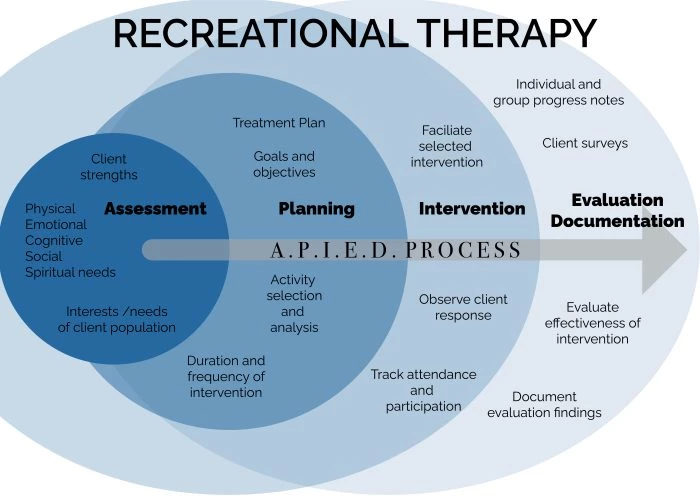
Recreation therapists follow a systematic sequence of assessment, planning the intervention, implementing the intervention, planning for transition, and evaluation to systematically document the outcomes of their interventions.
I will break down these terminologies for you one by one.
Let’s start with the Assessment Phase.
The Assessment Phase
Assessment is the first step undertaken by the recreation therapist. That sets the direction for the “purposeful intervention” by enabling the therapist to focus specifically on the strengths, needs, and health concerns of the individual being served.
Assessment may be defined as a systematic process of gathering and synthesizing information about an individual and his or her world to determine the most-effective course of intervention.
Some assessments are standardized, while some are more flexible, allowing the therapist more latitude in how and when to administer them.
Generally, it is recommended that more than one method be used to gain the most accurate and complete picture of the individual.
An effective assessment will provide information about the individual’s functioning at the beginning of the intervention, his or her desires and goals for intervention, and some possible ways to structure the intervention.
It also provides a baseline against which to measure progress and outcomes.
The Planning Phase
The planning phase is also called as “treatment planning,” “individualized program planning,” or “care planning phase.”
Depending on the setting, the strengths, needs, and goals of the individual, as well as the expertise and contributions of the therapist, are organized into a coherent plan that maximizes the chance that the individual will reach the desired outcomes. Many settings have particular guidelines or requirements for the development and formatting of intervention plans.
In some, the recreation therapist will develop specific recreation goals. For example, the objective for a patient to be able to fish independently is a possible goal for an individual who has experienced a stroke and needs to master the use of adaptive equipment to continue his or her most valued pursuit, fishing.
In other settings, the recreation therapist will develop goals pertaining to aspects of functioning that are more generalized and attainable through participation in recreation.
For example, the objective for the client to reduce perceived levels of stress through increased physical activity is a possible goal for an individual who is experiencing symptoms of anxiety disorder.
The Intervention Phase
The next phase of the recreation therapy process is the implementation or the actual delivery of services. Recreation therapists have many options for their interventions. A significant portion of the recreation therapist’s training is devoted to studying and mastering those intervention options.
Interventions may be conducted one-on-one or in groups. Ideally, the needs and preferences of the client and the professional judgment of the therapist should drive the decision about how services are offered.
Both one-on-one and group contexts have advantages and appropriate uses. One-on-one services allow for maximum flexibility and move at the client’s own pace.
They allow the therapist to devote all attention to the individual client, which may be important when a great deal of hands-on assistance is needed.
Group interventions, on the other hand, allow for the development of interpersonal relationships and for the reinforcement and encouragement that arise from working together with a group of peers.
Services may be provided in a relatively segregated setting, such as a classroom or treatment center, or in an inclusive setting, such as a restaurant or movie theater.
It is common practice in recreation therapy interventions to deliver interventions in both settings in a sequenced manner, so that the client may receive instruction and rehearsal opportunities in the safety of the classroom but then will have the opportunity to master those skills in their natural environment.
Such interventions begin with support and then move toward increased independence.
The Discharge Planning Phase
The next phase of the recreation therapy process is called “discharge planning” in inpatient, residential, or medical-model outpatient facilities or “transition planning” in educational contexts.
It gives the individual and the therapist the chance to look at what has been accomplished, at what challenges will emerge in the future, and at what supports are needed as the individual becomes more independent.
Ideally, transition planning should begin during treatment, so that the client will have the opportunity to plan for and, preferably, visit or experience some of the settings that will be encountered in the next phase of that person’s life.
Comprehensive transition planning involves exploring the places, persons, opportunities, and resources that will be part of the individual’s life and identification of the next steps for that person’s development.
The Evaluation Phase
The final phase of the recreation therapy process is evaluating the intervention’s effectiveness.
As with transition planning, the therapist does not wait until the end of the intervention to evaluate its effectiveness; rather, built-in mechanisms are already in place for evaluation or monitoring along the way.
Various aspects of the intervention may be evaluated depending on the requirements and needs of the setting, including the attainment of identified goals, the effectiveness of the intervention over time, satisfaction with services for clients and families, and the cost-effectiveness of services.
Let’s move on to Chapter 5 and understand what the benefits of Recreational Therapy are.
Chapter 5:
Benefits of Recreational Therapy
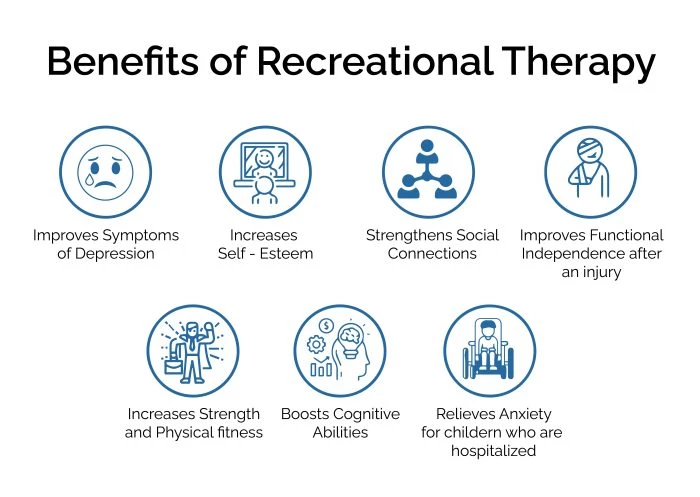
Recreational therapy has wide-ranging positive impacts on your physical and mental health.
This is especially the case when the therapy is designed around your individual interests and needs.
Let’s dive into some of the science-backed benefits of these therapies.
Improves Symptoms of Depression
Many therapeutic recreation programs get people up and moving and stimulate their minds with engaging, creative tasks.
Music therapy, art therapy, drama, and dance also all have positive effects on depression symptoms. Researchers believe the improvement may be linked to endorphins.
These feel-good chemicals are released in your brain during physical movement when you express yourself creatively and during social interactions.
Increases Self-esteem
Research shows that recreational therapy may help improve a person’s self-confidence and self-esteem.
In one small 2018 study, for example, therapists interviewed older adults in a long-term care facility, asking them to select leisure activities based on their interests.
After a structured program where the adults engaged in their chosen activities every week and did simple upper body exercises, they reported improved self-esteem compared with how they felt before starting the therapy program.
Study participants who hadn’t been offered the option of customized activities didn’t experience the same boost to their self-esteem.
Strengthens Social Connections
Illness, injury, and disability can limit your ability to interact with people. Recreational therapy provides opportunities to engage with other people in positive ways, which can counteract feelings of isolation.
In one 2011 study, people with early dementia described feeling uplifted and accepted after participating in a recreational therapy program together.
Stronger social bonds like these are associated with better health outcomes across the board.
Improves Functional Independence after an Injury
In many cases, a serious injury can affect your ability to do routine tasks. Taking care of your home, exercising, and playing with your children or grandchildren — these activities may be difficult or impossible after an injury.
Recreational therapy can make a difference in the level of functional independence after a serious injury.
In one 2012 study, for example, researchers found that people who engaged in greater amounts of therapeutic recreation after a spinal cord injury recovered functional independence at a slightly higher rate than those who didn’t have the same therapy.
Recreational therapy for people with injuries is also associated with more social activity, greater involvement with sports or aquatic activities, and fewer pressure ulcers.
Increases Strength and Physical Fitness
Recreational Therapy often includes exercise, games, dance, yoga, tai chi, and other kinds of movement. A 2014 study found that this kind of recreational movement may help improve your balance, physical strength, and flexibility.
In a 2020 study, 33 preschool children with autism spectrum disorder participated in an 8-week therapeutic program that focused on basketball. At the end of the program, the students had improved speed, agility, and muscle strength, and showed improvements in their social communication skills.
There’s also some evidence that exercise therapy may be a helpful tool in substance use programs.
Boosts Cognitive Abilities
Research from 2011 shows that physical exercise, social engagement, and games that stimulate your brain (such as bridge, chess, and memory challenges) all improve the healthy functioning of your mind.
It’s important to bear in mind that recreational therapy can’t fully restore areas of the brain that have been permanently damaged. But research from 2017 suggests that physical activity, social relationships, and activities that challenge your thinking may all help maintain the healthy functioning of your brain.
Relieves Anxiety of Hospitalized Children
Being treated in a hospital is a stressful, fearful experience for a child. According to a 2013 study, recreational therapy in a pediatric hospital may help reduce those negative feelings. This can be particularly important if a child visits hospitals repeatedly due to a chronic condition.
Therapeutic play gives children opportunities to build positive relationships with hospital staff, talk about their feelings, and develop a sense of control and confidence at a time when they may be feeling vulnerable.
Are you interested in becoming a Recreational Therapist? If so, then Chapter 6 contains all the information you need to start your journey.
Chapter 6:
Becoming a Recreational Therapist
In this chapter you will learn about becoming a Recreational Therapist.
How does one become a recreational therapist, what do they do, where do they work, what skills do you need to become one and many such questions you might have will be answered.
How to become a Recreational Therapist?
A bachelor's degree in recreational therapy is required for most entry-level positions. These programs typically cover areas such as treatment and program planning, human body, physiology, kinesiology, and professional ethics.
Some programs offer the opportunity to specialize in Occupational Therapy, and in the intervention of those that are mentally or physically challenged. Most employers prefer to hire candidates who are Certified Therapeutic Recreation Specialists (CTRS).
Therapists become certified through the National Council for Therapeutic Recreation Certification (NCTRC) or through a provincial regulatory body such as Therapeutic Recreation Ontario (TRO).
To qualify for certification under the Academic Path, applicants must have a bachelor's degree in TR, complete an internship under the supervision of a CTRS, and pass a written exam.
There is also an Equivalency Path A and B for certification. The requirements are slightly different and include a bachelor's degree outside of TR, paid work experience, and successful completion of the written exam.
Continuing Education
Recreation Therapists with the Certified Therapeutic Recreation Specialist (CTRS) credential are required to complete 50 clock hours (5.0 CEUs) of continuing education within a 5-year span as part of the overall requirements to renew national certification through NCTRC.
NCTRC has outlined several ways a CTRS can earn continuing education Continuing Education.
These include
a.) Academic Courses
b.) Teleconferences/Audio Seminars like ATRA's webinar series.
c.) Internet Course Programs: Some online programs identified are on the Therapeutic Recreation Directory website: Therapeutic Recreation Directory: CEU Opportunities.
The largest online providers for RT continuing education are: 1) ATRA- American Therapeutic Recreation Association Webinars 2) Rec Therapy Today 3) SMART CEUs Hub- Success Makers Are Rec Therapists- Unlimited NCTRC Pre-Approved CEUs
d.) Conferences: American Therapeutic Recreation Association (ATRA) and state branches of ATRA. Recreation therapists can attend conferences provided by related professional organizations and earn CEUs (pending the session meets Therapeutic Recreation (TR) knowledge areas required by NCTRC.
e.) Internships & Externships: Supervised guidance to practice.
What does a Recreational Therapist do?
Recreational therapists, or therapeutic recreation specialists, use creative healing methods to help people with illnesses or disabilities become active again. They use arts and crafts, animals, sports, games, dance and movement, drama, music, and community outings to help patients maintain or improve their physical or mental health.
Scope of Practice
Recreational therapists work with doctors, nurses, psychologists, social workers, physical therapists, and occupational therapists to care for patients of all ages, from infants to the elderly. Therapists provide different services for patients depending on where they work.
They may use structured group activities or work individually with patients to develop physical or social skills through exercise, mental stimulation, creativity, and fun.
Some of the things they help their patients with include maintaining their physical, mental, and emotional well-being; reducing depression and anxiety; improving basic reasoning skills; and strengthening confidence.
Specializations
With certification, recreational therapists may choose to specialize in:
- Rehabilitation and physical medicine
- Developmental disabilities
- Geriatrics
- Behavioral health
- Community inclusion services
Where do Recreational Therapists work?
Recreational therapists are typically employed by hospitals, nursing homes, parks, and recreation departments, community health centers, school districts, adult care programs, substance abuse centers, and correctional facilities.
Most recreational therapists work full-time, Monday-Friday; though some people choose to be part-time. Depending on the patient’s needs, some recreational therapists may need to work evenings and weekends.
What skills does a Recreational Therapist need?
As a Recreational Therapist you will need a wide variety of skills in order to be successful, here are some of the skills you may need:
Communication Skills
As a Recreational Therapist you will need to be able to communicate effectively with your patients. You will need to be able to understand their needs and wants and help them understand how Recreational Therapy can help them achieve their goals.
Organizational Skills
You will need to be well organized in order to manage your time and resources effectively. You will also need to keep accurate records of your patients progress.
Interpersonal Skills
You will need strong interpersonal skills in order to build a rapport with your patient and their families. You should be comfortable working as a part of a team.
Problem-Solving Skills
As a recreational therapist you will often face problems that will require creative solutions. You should be able to think outside the box and come up with new ideas that will benefit your patient.
Physical Stamina
Recreation Therapy can be physically demanding at times. You need to be physically fit in order to be able to handle the occasional lifting and moving of equipment.
How long does it take to become a Recreational Therapist?
Becoming a Recreational Therapist is a process that takes time, effort, and dedication. The length of time it takes to become a Recreational Therapist depends on many factors such as your previous education and work experience, the state in which you plan to practice, and the specific requirements of your employer.
In most states, Recreational Therapists must have at least a bachelor’s degree in recreation therapy or a related field. Some states also require licensure or certification.
Many employers prefer candidates who have completed an accredited recreation therapy program and have passed the National Certification exam administered by the National Council for Therapeutic Recreation Certification (NCTRC)
The process of becoming a certified Recreational Therapist can take several years. However, those who are dedicated to helping others improve their quality of life through therapeutic recreation can find great satisfaction in this rewarding career.
Chapter 7:
Recreational Therapy vs Occupational Therapy
In this chapter, we will learn about the crucial difference between Recreational Therapy and Occupational Therapy. Both are similar and can sometimes lead to confusion.
Occupational Therapy takes a completely different approach to improving someone’s life, so let’s find out more.
What is the difference between Recreational and Occupational Therapy?
Recreational and Occupational Therapy take different approaches to improve someone’s quality of life.
Recreational Therapy
Recreational Therapists use activities and community engagement to help improve your overall well-being. Recreational Therapy helps you develop skills, knowledge, and behaviors to improve your daily life and community involvement.
Occupational Therapy
Occupational therapists help you relearn things you used to do but no longer can because of an injury, illness, or other condition.
Occupational therapy combines life science and social science. Occupational therapists know how to support you and use your environment to help you lead a better quality of life.
Chapter 8:
Applying Recreational Therapy in Coaching
Therapeutic Recreation and coaching isn’t all that different. Both use their skills and knowledge to bring out the best in the participants. When their players are doing their best, the team dynamic becomes supportive and cohesive.
A strong team brings opportunities for success. Below you will find coaching tips to help create a therapeutic experience.
How can coaches use Recreational Therapy in their sessions?
Coaches can help clients to become a better version of themselves and assess their growth by using Recreational Therapy in their sessions. Let’s check out some ways in which a coach can make use of Recreational Therapy in detail.
Be the Role Model
Your team picks up on your behavior. If the officiating agitates you, they will mirror that behavior. If you are naturally competitive, and your team is falling apart out there, it may be frustrating to watch. Negativity thrives when the team isn’t doing well. The powerful speech you gave before the game will be instantly forgotten if you lose your cool. Your team sees you as a leader and if you stay positive and supportive, it will help them do the same.
Never, Ever Bring Your Ego Into This
There is absolutely no place for ego in Recreation Therapy coaching. Your job is to teach, enable, and serve the participants. The team’s performance is not a reflection on you as a person.
If your opponents don’t have the same skill set, don’t press for a demoralizing victory. Imagine the bus ride home when your team suffers an embarrassing loss, do you really want that for the other team? Remember, this is Therapeutic Recreation.
Be Observant
You are managing much more than your team. You are in charge of the physical, mental, and emotional well-being of every participant. Know your clients well. Be prepared for any potential medical issues.
See the signs of a meltdown or behavior before it occurs. Take an extra timeout even if you have none available. Nobody is going to give you grief if you avert a crisis situation or medical emergency.
Make Every Participant Valuable
You didn’t draft these players to win the world championship. These participants are here to find value and healing in recreation. Know your participants and all they have to offer.
Realize when there is an opportunity on the field for them to thrive or reach a goal. Setting a client up for success goes a long way in building self-confidence and a positive attitude towards the particular sport. Those goals should be in the back of every RTC’s mind.
Take Some Time to Self-Assess
Meet with any other staff and coaches to check-in. Ask them if they saw any issues you might have missed. Talk about the participants’ progress to build a culture of caring about the people, not the record. Take a few quiet moments to reflect on things you did well and needed improvement. Be as objective as possible.
The roles of a Recreation Therapy Coach vary depending on the population served. As a coach, you are the cornerstone of the team’s success. What determines success is based on your participants and their needs.
What are some helpful ideas you learned while coaching your participants?
Ways in Which Recreational Therapy can Help Clients
Recreational therapy has wide-ranging positive impacts on the physical and mental health of your client. This is especially the case when the therapy is designed around your individual interests and needs.
Let’s get into it
Improves Symptoms of Depression
Many therapeutic recreation programs get people up and moving and stimulate their minds with engaging, creative tasks. Research from 2018 shows that recreational therapy involving physical activity may decrease symptoms of depression.
Music therapy, art therapy, drama, and dance also all have positive effects on depression symptoms. Researchers believe the improvement may be linked to endorphins. These feel-good chemicals are released in your brain during physical movement when you express yourself creatively and during social interactions.
Increases Self-esteem
Research shows that recreational therapy may help improve a person’s self-confidence and self-esteem.
In one small 2018 study, for example, therapists interviewed older adults in a long-term care facility, asking them to select leisure activities based on their interests.
After a structured program where the adults engaged in their chosen activities every week and did simple upper body exercises, they reported improved self-esteem compared with how they felt before starting the therapy program.
Study participants who hadn’t been offered the option of customized activities didn’t experience the same boost to their self-esteem.
Strengthens Social connections
Illness, injury, and disability can limit your ability to interact with people. Recreational therapy provides opportunities to engage with other people in positive ways, which can counteract feelings of isolation.
In one 2011 study, people with early dementia described feeling uplifted and accepted after participating in a recreational therapy program together.
Stronger social bonds like these are associated with better health outcomes across the board.
Improves Functional Independence after an Injury
In many cases, a serious injury can affect your ability to do routine tasks. Taking care of your home, exercising, and playing with your children or grandchildren — these activities may be difficult or impossible after an injury.
Recreational therapy can make a difference in the level of functional independence after a serious injury.
In one 2012 studyTrusted Source for example, researchers found that people who engaged in greater amounts of therapeutic recreation after a spinal cord injury recovered functional independence at a slightly higher rate than those who didn’t have the same therapy.
Recreational therapy for people with injuries is also associated with more social activity, greater involvement with sports or aquatic activities, and fewer pressure ulcers.
Increases Strength and Physical Fitness
Recreational therapy often includes exercise, games, dance, yoga, tai chi, and other kinds of movement. A 2014 study found that this kind of recreational movement may help improve your balance, physical strength, and flexibility.
In a 2020 study, 33 preschool children with autism spectrum disorder participated in an 8-week therapeutic program that focused on basketball.
At the end of the program, the students had improved speed, agility, and muscle strength, and showed improvements in their social communication skills.
There’s also some evidence that exercise therapy may be a helpful tool in substance use programs.
Boosts Cognitive Abilities
Research from 2011 shows that physical exercise, social engagement, and games that stimulate your brain (such as bridge, chess, and memory challenges) all improve the healthy functioning of your mind.)
It’s important to bear in mind that recreational therapy can’t fully restore areas of the brain that have been permanently damaged.
But research from 2017 suggests that physical activity, social relationships, and activities that challenge your thinking may all help maintain the healthy functioning of your brain.
Relieves Anxiety for Children who are Hospitalized
Being treated in a hospital is a stressful, fearful experience for a child. According to a 2013 study, recreational therapy in a pediatric hospital may help reduce those negative feelings. This can be particularly important if a child visits hospitals repeatedly due to a chronic condition.
Therapeutic play gives children opportunities to build positive relationships with hospital staff, talk about their feelings, and develop a sense of control and confidence at a time when they may be feeling vulnerable.
With this, we have reached the end of this informative guide on Recreational Therapy.
Useful Resources
Here are useful resources to complete your Recreational Therapy journey.
Courses:
- Recreation Therapy at Lambton College
- Recreation Therapy at Confederation College
- Recreation Therapy at Niagra College
- Recreation Therapy at Algonquin College
- Recreation Therapy at Canadore College
Videos:
- Recreational Therapists Career Video
- So You Want to Be a Recreational Therapist
- What is recreational therapy?
- Recreation Therapy | Brooks Rehabilitation
- What is Recreation Therapy? | Rogers tv
Conclusion
Congratulations on finishing Recreational Therapy.
Now you have all the tools you require to understand how to cope with the many challenges life throws at you, and how they can benefit you.
But don’t just stop here; start implementing all that you have learned right away. The time to start making the necessary changes in your life is now!
Remember: consistency is key to the journey of becoming a powerful and more importantly, a fair person. Nothing happens in a day.
What did you find most useful about this Article?
What steps are you going to take now toward your journey?
Have you found what you were looking for? Is there something that I have missed?
If there’s something you need more clarity on, feel free to ask me in the comments section below and I’ll be sure to answer them!
