

Dance Movement Therapy: The Definitive Guide
Last updated: March 2026
Dance Movement Therapy
The Definitive Guide
Dance Movement Therapy (DMT) is a type of psychotherapy that uses movement and dance to promote physical, emotional, and mental well-being. DMT is based on the principle that mind and body are connected and that engaging in purposeful movement can be used to improve mental health and well-being.
In this guide, we will briefly explore the following:
- What Dance Movement Therapy is.
- DMT history and its type.
- How DMT works.
- The benefits of DMT.
- DMT techniques.
- Who can benefit from DMT.
- And more!
Keep reading to learn more about DMT and how it can help you improve your mental health and well-being.
Contents
The Benefits of Dance Movement Therapy
Chapter 1:
Dance Movement Therapy Fundamentals
This chapter will explore the basics of Dance Movement Therapy (DMT). We will cover what DMT is, its history, types, and everything else you need to know about this therapy.
By the end of this chapter, you will have a good understanding of what DMT is and how it has evolved over the years.
So, What Exactly Is Dance Movement Therapy?
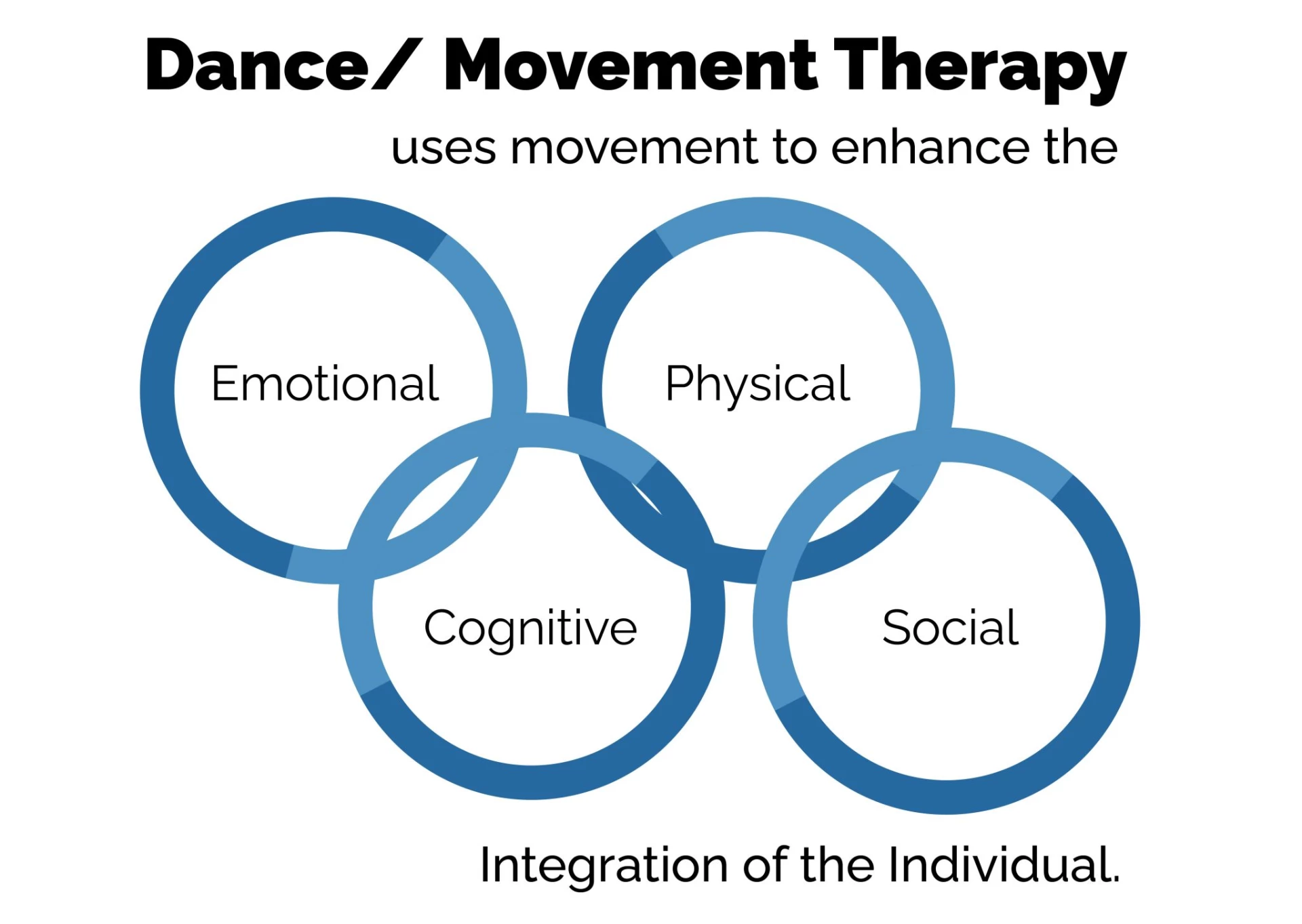
The basic definition provided by American Dance Therapy Association (ADTA) defines Dance/Movement Therapy (DMT) as "the psychotherapeutic use of movement and dance within a therapeutic relationship to promote emotional, social, cognitive, and physical integration of the individual."
Dance therapy is a type of treatment that uses dance movements to help people with mental and physical disabilities experience emotional stability and prevent the disease from happening or getting worse due to its effects on the body's health. It can also be used as an approach for managing stressors in life by providing unmatched relief through movement.
DMT increases strength, coordination, and mobility while decreasing muscular tension. Dance movement therapy is a way to improve your physical health and mental and emotional well-being.
This form of dance promotes self-awareness in addition to increased coordination that can help individuals live more comfortably on their own terms while learning new skills for everyday life demands!
The Different Types of Dance Movement Therapy
Dancers are the best at helping people with mental health disorders like depression and anxiety. DMT can help you move your body in a therapeutic way for both the mind and muscles. Following are the different settings where DMT can be practiced:
- Nursing homes
- Health promotion programs
- Daycare centers
- Prisons
- Mental health facilities
- Hospitals
- Schools
- Rehab facilities
- Private practice
The History of Dance Movement Therapy
Dance therapy has its roots in the 19th-century modern dance movement. This form grew from an idea that dances could go beyond simple entertainment and be used to communicate emotions through movement, emphasizing expressivity over efficiency or style.
In the 20th century, dance became more than just an art form-it helped heal people. By infusing emotion into their choreography and paying attention to how certain moves make us feel emotions such as joy or sadness through movement patterns recognizable even when done differently from what we are used to; modern dancers laid down the groundwork for later pioneers like Mary Whitehouse, Marian Chace, and Trudy Schoop.
Many different theories have influenced dance therapy since its inception, but at one point, it heavily relied on psychodynamic theory. This is especially true during the 1940s and 1960s when researchers discussed how movement could be used as an indicator for mental health issues like anxiety or depression that wasn't verbalized in words alone; this idea helped shape dance-based practices quite a bit.
The development of dance therapy training and certification standards came in 1966 when American Dance Therapy Association (ADTA) was established.
Theoretically speaking, all dance therapists must pursue graduate training to become certified; however, you can earn either one of these credentials: registered (R) or board certified (BC). The journey towards your goal will be well worth it when people recognize something unique about themselves through movement.
The Premises of Dance Movement Therapy Practice
I’ve covered the premises of Dance Movement Therapy in a concise manner to help you understand this:
- Movement is not only the medium of expression for those who lack words but also our first language. Nonverbal and movement communication begins in utero and continues throughout life on earth as we speak with each other through dances or gestures that tell stories about what's happening inside us without having to verbalize at all! Dance/Movement therapists believe this form and communication should be just as necessary, so they use both forms when working towards healing goals.
- The mind, body, and spirit are indistinguishably linked.
- Movements are natural and essential parts of the human experience. They can be functional, developmental, communicative, or expressive - but they must always emerge in our relationship with them through observation as it happens during sessions!
- The use of this tool and movement's place in the treatment plan is both an evaluation tool and a key component of therapy.
Dance movement therapists use body movements, the core component of dance, as their primary means to reach psychotherapy. Dance/movement therapists approach individual, couple, family, and group sessions by observing and assessing both their clients and their own movements, using verbal and nonverbal communication to create and implement interventions that will address the emotional, social, physical, and cognitive integration of an individual.
Dance Movement Therapy Techniques
DMT is a journey of self-discovery that takes place in your own mind. It can be anything from mostly verbal to nonverbal language, and everyone has their own individual way of experiencing it. In a session, the therapist will:
- Assist you in discovering and making meaning of the link between movement and your emotions
- Encourage monitoring of bodily feelings and breath.
- Assist the healing process, and use various physical and verbal treatment techniques.
- Show you how to express yourself and interact freely in dance.
- Use this to help you work through the emotions that originate from the dance.
Mirroring is a technique used by dance therapists to help people feel more connected and empathetic for one another. The mirroring process involves copying another person's movements or actions, which can lead them to think about how it would be if they were doing those things themselves instead.
Some people feel like they don't deserve to have a voice or choice in their own lives, but movement therapists help them find ways of having power over themselves.
They offer space for individuals who may not always get this from other sources and provide compassionate support as well so that clients can explore what it means "to be okay" without fear.
Chapter 2:
An Overview & The Purpose Of Dance Movement Therapy
Now that we know what DMT is, how it was derived, and the main techniques, let's get to know about its overview and purpose! With all the different types of therapies out there, it can be difficult to understand how one could be more beneficial than the other.
However, what sets DMT apart is its healing process through the use of movement as its core focus.
How Does Dance Movement Therapy Work?
Letting go of the need to control and perfectionism are common struggles people face. The goal of dance movement therapy is not to get people to achieve a "perfect" level of performance but rather to allow for the experience of self-expression and creativity.
This therapy can help people feel more comfortable in their own skin and become more attuned to their bodily sensations. It can also assist in the development of a stronger sense of self-awareness and identity.
According to the American Dance Therapy Association (ADTA) dance therapy helps people maintain their health by bringing together and unifying all elements of their being. It includes:
- Social
- Cognitive
- Physical
- Emotional
To be successful, the therapist must create a safe environment where the client feels comfortable expressing themselves. The therapist will often use props such as balls, scarves, and beanbags to help facilitate the movement.
There are many beliefs and ideas that underlie the intervention. One of these is to believe it's impossible for us physically, mentally, or emotionally to separate ourselves from our bodies - so any change in one will affect both aspects equally. The ADTA also adds these premises:
- Dance is not only a way to communicate with others through movement but can also be used as an outlet for those looking to express themselves more creatively.
- Movement is a dynamic and creative way for the human being to explore their surroundings, learn new skills, and develop gross motor abilities like running or throwing. It also allows them to create unique patterns with objects in front of an audience.
- Movement can be used as a tool for assessment and intervention.
- It can help identify areas of strengths and weaknesses and potential areas for improvement.
We've all had moments where we feel uncomfortable in our own skin. Maybe it was during a time of high stress or after a major life event. For some people, these feelings of unease can be so overwhelming that they start to experience anxiety and depression. Dance movement therapy can help to alleviate these symptoms by increasing self-awareness and providing an outlet for expression.
The Research on Dance Movement Therapy
Dance has been shown to help people with mental health issues, including eating disorders, depression, and anxiety. Following are the studies that support these claims:
- The journal The Arts in Psychotherapy has found that dance therapy is an effective way to treat symptoms of depression.
- Dances can be empowering, healings, and even combat violence. A study by the American Journal of Dance Therapy found that 54 students participating in a dance therapy program for victims' aggressors had lower rates of aggression than before they began dancing with others.
- DMT has been shown in a study at the University of Leeds to improve memory recall for people who have dementia.
- In a recent ADTA study, it was found that DMT could potentially be an autism spectrum treatment for children.
Principles of Dance Therapy
DMT sessions often include a warm-up and assessment phase to identify what the client needs help with. Structured interventions follow this and, finally, an observation where you can see how they are adjusting after taking this new information in their mindsets towards themselves or others around them, which could lead to more conversation about personality types, etcetera.
The following are the objectives and key principles that all certified dance/movement therapists follow.
Objectives
- Identify, diagnose, and treat any health problems obstructing normal functioning.
- Examine and evaluate the client's present situation and medical history. Create treatment objectives based on these findings.
- Implement planned strategies.
- Adjust your treatment as needed to continue satisfying the client's demands.
Key Principles
- Because the body and mind are linked, a change in one impacts the other.
- Movement may reveal aspects of the individual's personality.
- Some of the communication in a therapeutic relationship is not spoken.
- Symbols are used to convey intangible material/processes.
- Experimentation and movement innovation may lead to new ways of being.
Things to Consider If DMT Is Right for You
Dance therapy is not for everyone. It's important that you consider the following before signing up for a session:
Comfort and Safety Are Key
The therapist should make you feel comfortable and safe before beginning any type of therapy. You may be asked to perform movements out of your comfort zone, but you should never feel unsafe, or like you are being forced to do something you don't want to do.
It’s Okay to Be Skeptical
It's okay to be skeptical of any new treatment, especially one that involves movement and touch. If you have any reservations, be sure to discuss them with your therapist before beginning any type of therapy.
Health Limitations
Unlike traditional forms of therapy, DMT requires that you be able to move your body physically. If you have any health limitations preventing you from doing so, DMT may not be the right treatment.
Difficult Feelings
Despite the positive research, DMT may not be right for you if you're not ready to face difficult emotions. DMT may help you access emotions you've been avoiding, which can be difficult for some people.
Dance therapy can be very effective for treating eating disorders, but it should not replace professional care. Dance helps patients express themselves creatively while healing and learn new ways of coping with their emotions- all things that will help them get better faster.
Now, in the next chapter, I will explore the benefits of Dance Movement Therapy.
Chapter 3:
The Benefits of Dance Movement Therapy
DMT has been shown to be an effective treatment for a variety of mental and physical health conditions.
This chapter will be entirely based on the research findings on the benefits of DMT.
Effective For Various Psychological Issues
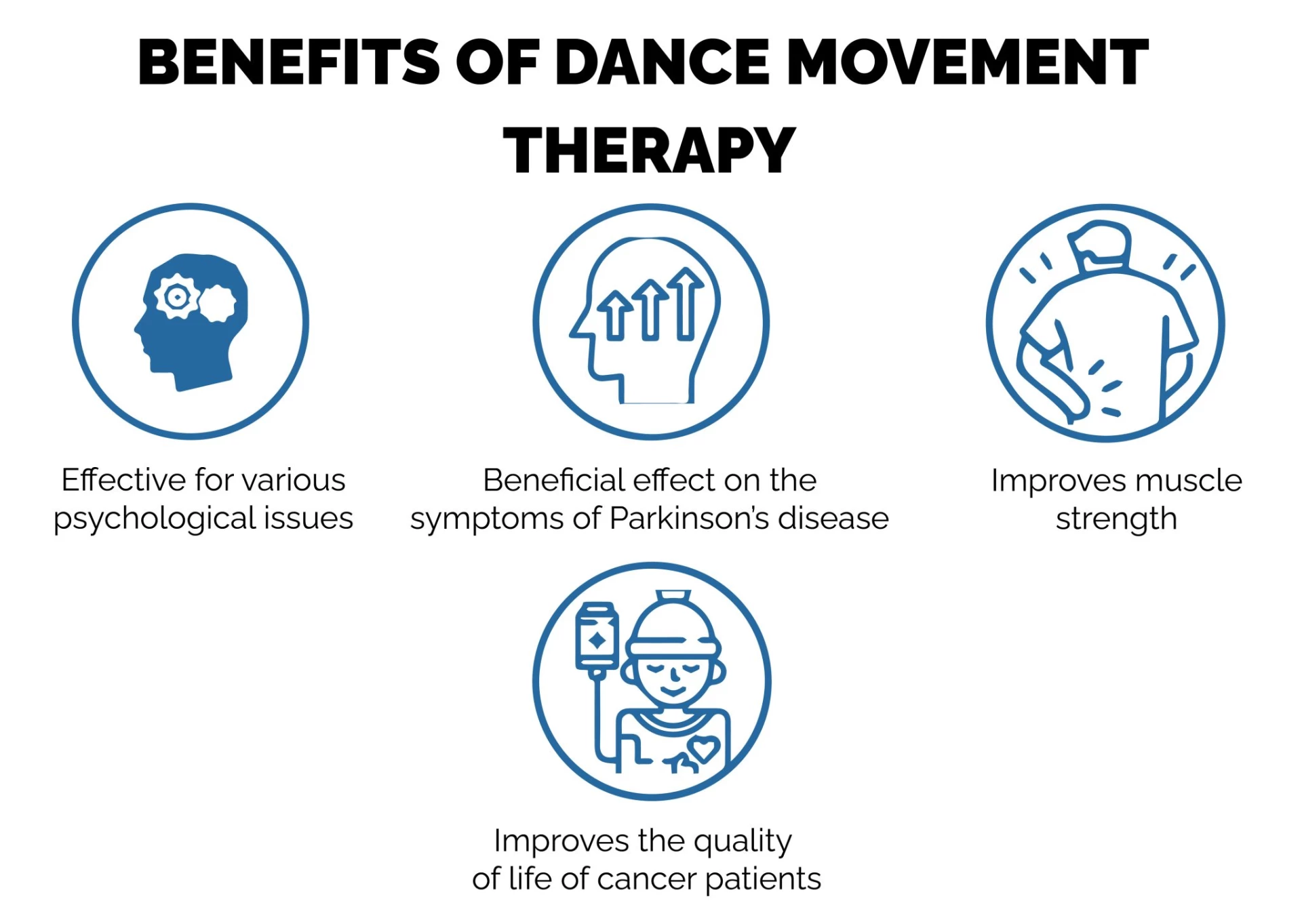
Researchers have found that dance therapy is effective for various psychological issues, including depression and anxiety. The 2019 meta-analysis looked at 41 clinical trials with 2374 participants who showed great results.
Results from the meta-analysis showed that dance therapy is an effective treatment for depression, interpersonal skills, quality of life, and anxiety, The researchers found similar results for anxiety and cognition in the long term.
Fights Depression
The 2019 review found that dance therapy is an effective way for people with depression to alleviate their symptoms. It explored eight clinical trials which involved 351 adults and showed how this form of treatment could help them better cope with the condition.
The evidence is moderate to high quality, but it's not enough for children or teenagers. The authors could only judge the effectiveness in adults because most studies were limited by their inclusion criteria, excluding other demographics like older people with depression.
In conclusion, this means there may be an effective treatment available through interventions such as cognitive therapy-be aware that more research needs doing.
Beneficial Effect on the Symptoms of Parkinson's Disease
Loss of balance, slurred speech, and tremors are just a few symptoms of Parkinson's disease.
The reviewer of this 2018 study noted that dance and music are known to have a beneficial effect on the symptoms of Parkinson's disease.
The results showed improvement in gait after participants were treated with these therapies, which suggests they may be able to help prevent falls due to impairment such as a walker or cane limitations caused by the physical disabilities-related disease process.
Fall Prevention
Dance has been a popular pursuit among older adults for years, but did you know that it may be able to prevent falls? A 2017 review looked at 10 clinical trials with 680 participants who measured the effect of dance on balance and gait. The authors found evidence suggesting this form of activity improved muscle strength as well as reaction time.
This is good news for an aging population as the research showed that dance might have a role to play in preventing falls, and The authors of this study clearly state that due to the preliminary nature and lack of long-term data, they cannot draw firm conclusions about dance's safety or well-being benefits in older adults. However, based on their findings so far - they appear to include 'no negative side effects' from ballroom dancing, among others things!--we're inclined to think it might be worth trying out these fun exercises.
Reduces Blood Pressure
Like other forms of exercise, dance can help reduce blood pressure. Because it's weight-bearing and helps reduce body fat, it also has the potential to help prevent osteoporosis.
The meta-analysis of five clinical trials found that dance therapy effectively reduces blood pressure in people with hypertension. The results hint towards this being due, at least partly, because it trains your body to relax through body movement and express emotions more fully while also increasing muscle strength by doing exercises like salsa or tango; these physical changes can reduce stress levels which then affect hormone production.
Effective for Cancer Care
Waking up from surgery, starting chemotherapy, or dealing with the side effects of radiation- cancer treatment is hard on the body and mind.
Cancer treatment has been shown to significantly impact mental health, as it can make people feel isolated from their friends and family. To address this issue, many cancer centers now offer psychosocial services that help patients cope with the emotional trauma they experience during diagnosis or through other aspects of living life while being treated for the disease.
A 2015 study investigated the advantages of dance therapy for cancer and evaluated three clinical trials involving a total of 207 persons with breast cancer. The research revealed varying results, but it suggested that the intervention may help by:
- Improving the quality of life.
- Increasing vitality.
- Reducing somatization, or the appearance of numerous physical symptoms resulting from psychological causes.
Dance therapy has been shown to improve the quality of life among people with breast cancer, but it's more effective when paired with other treatments such as relaxation or cognitive-behavioral therapy.
Frequently Asked Questions
How is dance therapy different from regular dancing?
Getting proper treatment from a qualified dance therapist can help you improve your mental well-being, social skills, and communication. It can also reduce stress, anxiety, and depression. Most importantly, you'll have fun and confidence while you're doing it!
What is movement therapy?
What are the 7 movements of dance?
1.Sauter (to jump)
2.Plier (to bend)
3.Glisser (to glide)
4.Relever (to rise)
5.Etendre (to stretch)
6.Tourner (to turn)
7.Elancer (to dart).
What are the basic elements of dance movement?
1.Body (shape)
2.Space
3.Time
4.Energy.
Who can benefit from Dance Movement Therapy?
Conclusion
Congratulations! You've made it to the end of our guide on Dance Movement Therapy. It's a real-life saver for so many people.
If you or someone you know is struggling with a mental disorder, consider giving DMT a try. It's a fun and effective way to improve your overall well-being. Unlike other forms of therapy, DMT requires no previous experience or skill level. Almost anyone can do it; just read the section "Things to Consider If DMT Is Right for You" in chapter 2 of this guide.
Here we have some interesting questions for you:
Which part of the guide was most helpful for you?
What are your thoughts on dance therapy after reading this guide?
Would you recommend dance therapy to others?
What other questions do you have about dance therapy?
Please let us know in the comments below!
