
French and Raven’s Bases of Power: The Definitive Guide
French and Raven’s Bases of Power
The Definitive Guide
This is the ultimate guide to French and Raven’s Bases of Power.
Division of power and the way power is used affects both my life and yours.
Power affects almost all our choices in life, our homes and our work. It is used everywhere and by everyone.

So if you want to:
- Learn more about the types of power and where they come from.
- Learn about how power is available to us.
- Understand what the different styles of leadership are.
- Gain an in-depth understanding of the bases of power.
- Learn about the advantages of using power bases in leadership.
- Figure out which power base is most effective.
- Understanding power tactics.
Then you’ll love this guide.
Let’s get started!
Don’t have time to read the whole guide right now?
No worries. Let me send you a copy so you can read it when it’s convenient for you. Just let me know where to send it (takes 5 seconds)
Yes! Give me my PDFContents



Chapter 3
Availability of Power



Chapter 6
Power Corruption and How to Eliminate it
Chapter 1:
The Fundamentals
In this chapter, I will be discussing what power is and where it comes from in the workplace.
This will help you understand the basics which will act as a foundation for the information that follows ahead.

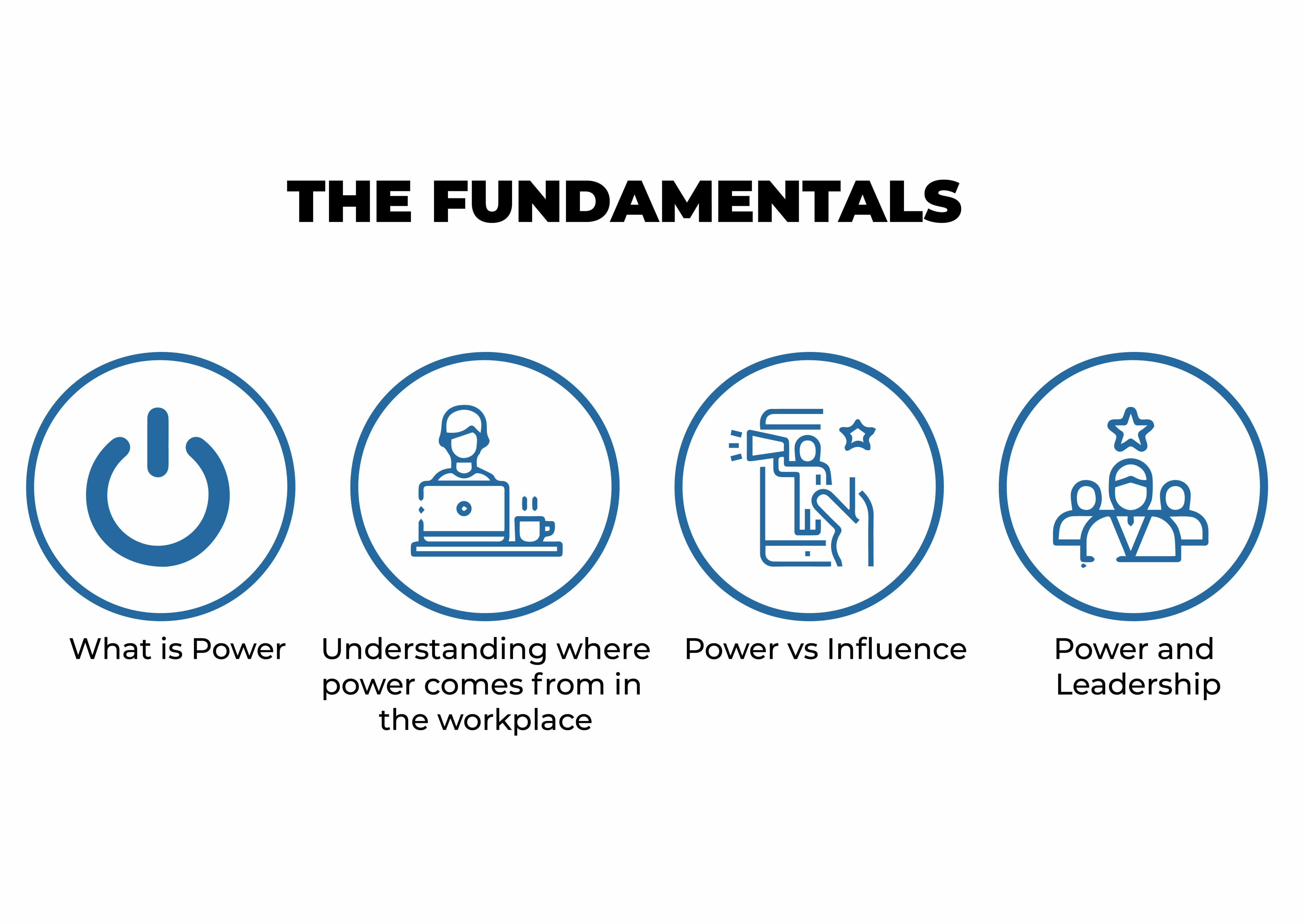
What is Power ?
Simply, power means having the capacity or ability to act in certain ways or impose your will on others.
But in a work context, people interpret the concept of power in different ways.
Some people see power as something they receive from an external source. This could be an assigned title or position that gives someone control and authority over others.
Other people believe power is an innate quality that can be cultivated internally and that manifests externally. In this sense, a person’s personal power grows as they develop.
No one is right or wrong, it all depends on the situation you use power in to gain the most results.
We’ve all seen leaders who let power go to their heads.
They rule with an iron fist, believing their position gives them the authority to do so.
These leaders might succeed in imposing their will on their employees in the short term.
But eventually, this management style leads to lower employee engagement, which is bad for business.
True power is a combination of both internal and external power. This means that anyone can access a certain amount of power, regardless of their position in the hierarchy.
Power vs Influence
Influence according to the Oxford Dictionary is the capacity to have an effect on the character, development, or behavior of someone or something, or the effect itself.
In today’s digital age of social media, you and I have access to a lot of people online. We have a voice, we have platforms where we can be heard and seen if we want to. This access, if used well, gives us a chance to influence people.
Both power and influence can help you change the actions and behaviors of your peers. However, they do so in significantly different ways.
Power uses force to convince someone to perform an action. When you influence someone, however, a person will typically not feel pressured or forced to do anything.
Influence is not about ruling with an iron fist, but more about guiding individuals during the decision-making process.
Power can be costly to businesses when employees come to resent it, or feel they are acting against their beliefs solely because they ‘have to.’
On the other hand, influence can help improve employee retention in an organization. When people are positively influenced, they feel that they are acting in ways they believe are right.
Managing only with power often creates a one-way conversation between a leader and a subordinate.
Managing through influence, however, opens up space for a two-way conversation between peers.
Power and Leadership
The most powerful leaders have clarity and self-discipline.
This allows them to lead by example.
By modeling disciplined behaviors, they encourage and inspire their team members to do the same.
And when employees are self-disciplined, they require less micro-management. This, in turn, increases the leader’s power, creating a virtuous cycle of trust and self-leadership.
Insightfulness is another key aspect of a leader’s power. An insightful leader has the capacity to see the bigger picture and communicate that vision. Their insights give them greater power and influence over their team members. The greater the impact a leader can have, the more they will be perceived as powerful by their employees.
Using your creativity to find solutions, make decisions, and set organizational goals can increase your perceived power among your employees.
Confident leaders also have more power and influence over their subordinates.
You can cultivate confidence by acting in line with your values and defending your positions.
Now that you have a basic idea of power and influence and leadership, let's really get into the meat of this article and dissect the various Bases of Power in chapter 2.
Chapter 2:
The Bases of Power
The Bases of Power differ according to the manner in which social changes are implemented, the permanence of such changes, and the ways in which each bases of power is established and maintained.
The effectiveness of power is situational. Given there are six bases of power, it is very important to know the situational uses of each power, focusing on when each is most effective.

According to French and Raven, "it is of particular practical interest to know what
